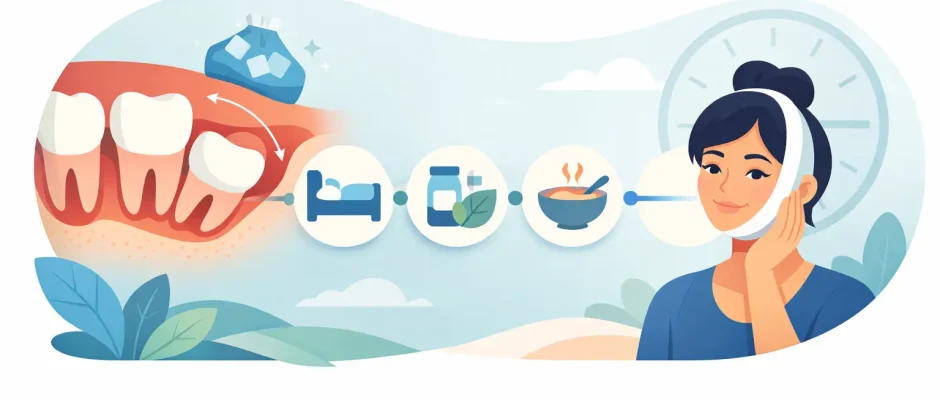
The first 72 hours after surgery usually matter more than the procedure itself. Most patients are surprised not by the extraction, but by the questions that come after it: Is this swelling normal? When can I eat normally again? Why does one side hurt more than the other?
With an impacted wisdom tooth, recovery is often less straightforward than after a simple extraction. The tooth may be trapped under gum or bone, angled against the neighboring molar, or close to a nerve or sinus. That changes the surgical approach, and it changes healing. A careful plan, precise technique, and disciplined aftercare usually make the difference between a predictable recovery and a difficult one.
What makes impacted wisdom tooth extraction recovery different
An impacted tooth is not simply “harder to remove.” In many cases, the surgeon needs to raise a flap, remove a limited amount of bone, and divide the tooth into sections to protect surrounding structures. This is a controlled and standard surgical process, but it creates more tissue trauma than a routine extraction.
That is why impacted wisdom tooth extraction recovery often includes more swelling, tighter jaw muscles, and a longer return to normal chewing. The exact course depends on several factors: the position of the tooth, the depth of impaction, your age, whether there was existing inflammation, and how closely postoperative instructions are followed.
Lower impacted wisdom teeth usually produce a more noticeable recovery than upper ones. The lower jaw bone is denser, access is more limited, and the chewing muscles nearby can become reactive after surgery. Upper wisdom teeth can heal faster, but if a tooth sits close to the sinus, your surgeon may give additional precautions.
The typical recovery timeline
Day 1
The main goals on the day of surgery are clot stability, pain control, and rest. Mild bleeding or pink saliva is common during the first several hours. Numbness from local anesthesia may last longer than expected, and it is wise not to chew until sensation returns so you do not accidentally bite the cheek or tongue.
Pain usually begins when the anesthetic wears off. If medications are started before discomfort becomes intense, recovery is generally smoother. Ice packs during the first day can reduce swelling, but they help most when used early rather than after swelling is already established.
Days 2-3
This is often the most difficult phase of impacted wisdom tooth extraction recovery. Swelling typically peaks around 48 to 72 hours, not immediately after surgery. The jaw may feel stiff, opening may be limited, and swallowing can feel strange if the area is inflamed. This is common and not automatically a sign that something is wrong.
Bruising can also appear during this period, especially in adults and after deeper lower impactions. Some patients notice that pain radiates toward the ear or throat on the operated side. That pattern can still be normal because the surgical area shares muscular and nerve pathways with nearby structures.
Days 4-7
If healing is progressing normally, swelling begins to decline and pain becomes easier to control. Many patients can return to work earlier, but that depends on the type of job. Office work is often possible within a few days. Physically demanding work, heavy lifting, or sports may need to wait longer because increased blood pressure can trigger renewed bleeding or throbbing.
By the end of the first week, the socket is still healing, even if you feel much better. The gum may look uneven, food may catch near the extraction site, and the area can remain tender. That does not mean recovery is delayed.
Weeks 2-4
Soft tissue healing continues, jaw opening improves, and chewing becomes more comfortable. If sutures were placed, some are removed while others dissolve on their own. Deep sockets may still collect debris, which is why cleaning instructions matter even after the first week.
Bone healing takes much longer than gum healing. Patients often feel almost normal before the underlying tissues are fully recovered. This is one reason premature return to hard foods or smoking can create problems even after the acute pain has passed.
What is normal, and what is not
A normal recovery can include swelling, limited mouth opening, mild bad taste, slight oozing, and discomfort when chewing or swallowing. Temperature sensitivity in nearby teeth and tenderness at the injection site can also happen.
What deserves attention is a worsening pattern rather than a stable or improving one. Severe pain that intensifies after day 3, foul odor, persistent bad taste, fever, increasing swelling, or difficulty swallowing and breathing are not symptoms to ignore. The same is true for ongoing numbness that does not gradually improve, especially after lower wisdom tooth surgery.
Dry socket is one of the better-known complications, but patients often misunderstand it. It is not simply pain after extraction. It is usually a distinct increase in deep, throbbing pain several days after surgery, often with pain radiating to the ear and temporary relief that never lasts. It happens when the clot in the socket is lost or breaks down too early. It is treatable, but it requires evaluation.
Eating, cleaning, and activity during recovery
The best diet after surgery is not just “soft food” in a general sense. Texture, temperature, and effort of chewing all matter. During the first day, cooler and softer foods are usually best. Yogurt, mashed potatoes, eggs, soup that is not hot, smoothies eaten with a spoon, and soft pasta are common options. Hard grains, chips, nuts, crusty bread, and foods with small seeds can irritate the site or lodge in the socket.
Hydration matters, but straws should be avoided in the early phase because suction can disturb the clot. Alcohol is also best avoided while tissues are healing and while taking pain medication or antibiotics.
Oral hygiene should continue, but gently. Patients sometimes avoid brushing altogether because they are afraid of damaging the area. That usually makes recovery less comfortable, not more. Teeth away from the surgical site should be brushed normally. The extraction area should be handled according to the surgeon’s instructions, often with gentle rinsing starting at the appropriate time rather than vigorous spitting.
Physical activity is another point where “it depends” matters. Light walking is usually fine quite early. High-intensity exercise, gym training, swimming, and contact sports may need to be postponed for several days or longer depending on the extent of surgery and the risk of bleeding.
Why some recoveries are easier than others
Technique matters. An impacted wisdom tooth removed with careful soft tissue handling, controlled bone removal, good irrigation, and precise wound closure generally heals more predictably than a traumatic extraction. Adjuncts such as PRF can be useful in selected cases to support soft tissue healing and patient comfort, though they do not replace proper surgical protocol.
Patient factors matter too. Smoking, poor sleep, uncontrolled diabetes, existing infection, and poor compliance with instructions can all prolong recovery. Age also plays a role. In younger patients, wisdom tooth roots are often less developed and bone is more forgiving. In patients in their 30s, 40s, or beyond, surgery may still be routine, but recovery can be more noticeable and slower.
This is one reason an individualized plan is important. A deeply impacted lower third molar near the mandibular nerve should not be discussed the same way as a partially erupted upper wisdom tooth. Good surgery begins with accurate imaging, risk assessment, and a clear explanation of what recovery is likely to look like in your case.
When to contact your surgeon
The safest rule is simple: if symptoms are not following the expected direction, ask. You should contact your surgeon if bleeding remains active despite pressure, swelling suddenly increases after initial improvement, pain becomes significantly worse after day 3, or you develop fever, pus, or trouble opening the mouth to a degree that is getting worse rather than better.
It is also reasonable to call if you are unsure about medications, eating, cleaning the area, or whether a symptom is normal. Good postoperative care is not limited to the time spent in the surgical chair. It includes follow-up, accessibility, and the ability to adjust recommendations when the recovery does not follow the standard script.
For patients seeking treatment in Tel Aviv, this is one of the practical advantages of working with a surgeon who routinely manages complex extractions and gives a structured postoperative plan. At Implantolog.co.il, that emphasis on protocol and patient comfort is part of making surgery feel predictable rather than uncertain.
Most impacted wisdom tooth extraction recoveries are uneventful, but they are rarely identical. The goal is not a perfectly symptom-free week. The goal is steady healing, controlled discomfort, and early recognition if something needs attention. When patients know what to expect, recovery becomes much less stressful.


Comments (0)