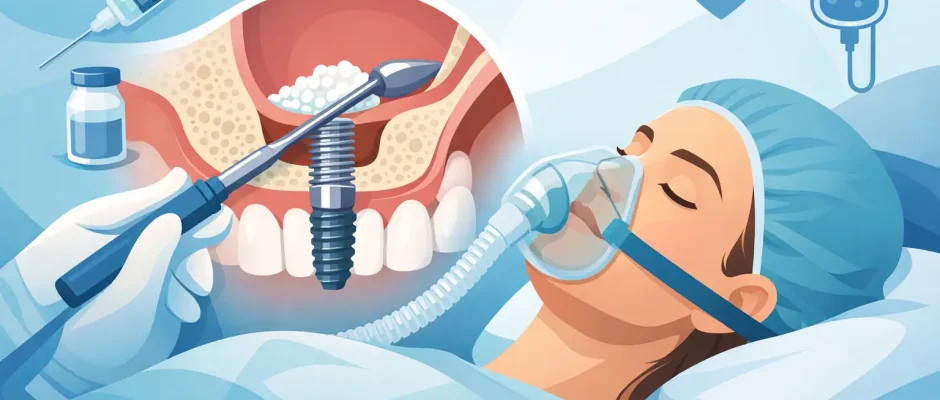
The question most often asked by patients is simple and quite reasonable:Is it painful to do a sinus lift under anesthesia?? In most cases, no – you should not feel any sharp pain during the procedure. People usually feel pressure, vibration, movement, and sometimes a strange awareness that something is happening in the upper jaw. This difference matters because many patients expect either “nothing at all” or “horrible pain,” when the reality usually lies somewhere in the middle: a technically controlled, well-pained, but still surgical procedure.
Sinus lift surgery is often recommended ifnot enough bonein the upper posterior jaw for predictable implant placement. The goal is not to simply add bones. The goal is to create sufficient vertical volume for a stable implant and long-term results. When properly planned, the procedure is routine for the implant surgeon. For the patient, the main concern is comfort – both during the operation and in the first few days after it.
Is it painful to do a sinus lift under anesthesia during surgery?
Local anesthesia very effectively numbs the surgical area. The gums, the entry point into the bone and surrounding tissues lose pain sensitivity, but pressure receptors continue to work. This is why patients may notice jolts, tapping, or a feeling of fullness in the cheekbone area. These sensations may seem unusual, but they are not the same as pain.
If the patient says, “I felt something,” this does not automatically mean that the anesthesia was unsuccessful. In oral surgery we distinguish between pain and mechanical sensation. A properly performed sinus lift should not cause sharp or burning pain. If so, the surgeon pauses and adds anesthesia before continuing.
This is one reason why communication between surgeons is important. A calm explanation before the procedure reduces anxiety, and decreased anxiety usually makes the same physical sensations easier to bear. Patients who come in expecting every sound and every change in pressure to mean pain often have a more difficult experience than those who understand that this is normal.
Why pressure can be strong even without pain
The upper jaw is a limited anatomical region. During a sinus lift, the surgeon works close to the sinus membrane and the lateral wall of the upper jaw. Even when the tissues are numb, pressure can be transmitted through the bones. Some patients describe it as “someone pressing on the inside of my face.” This description is normal and not alarming.
The second factor is sound conductivity. Dental surgery on bone often sounds louder to the patient than it seems from the outside. Vibration and sound can increase tension, especially in patients who have previously had difficult dental experiences. This is where gentle technology comes inmicrosurgical controland a steady pace makes a big difference.
What anesthesia is usually used
In most cases, sinus lift surgery is performed under local anesthesia. For many patients this is quite enough. Modern local anesthetics provide deep numbness, and the surgeon can supplement them as needed during the procedure.
Some patients also benefit from sedation. Sedation is not always medically necessary, but it can be very helpful for people with high dental anxiety, a strong gag reflex, a long planned surgery, or a difficult dental history. Sedation reduces emotional stress and changes the perception of time. Patients often remember the procedure much easier than they expected.
The right choice depends on the case. Limited elevation of the internal sinus during implant placement is not the same as largeSide window sinus liftwith vaccination. Anatomy, expected duration, number of implants, and the patient’s underlying anxiety all play a role.
Local anesthesia versus sedation
Local anesthesia controls pain. Sedation controls anxiety and awareness. These are different goals, and patients often confuse them. A person can be completely numb and still feel afraid. Another patient may feel relaxed due to sedation, but will still need excellent local anesthesia because sedation alone is not a means of pain control.
That’s why the safest and most convenient approach is to plan individually, rather than promise “one size fits all.”
Does sinus lift pain occur after the anesthesia wears off?
This is a more useful question for many patients. During surgery, good anesthesia usually keeps pain under control. After surgery, discomfort is normal, but severe pain is not standard.
Most patients describe the first 24 to 72 hours as pressure, swelling, cheek tenderness, and tenderness when chewing on the opposite side or moving the face. Some report a sensation similar to sinus congestion or fullness rather than a classic toothache. This makes anatomical sense since the operation is performed adjacent to the maxillary sinus.
Pain levels vary depending on the technique used. A small transcrestal lift is usually simpler than a large lateral sinus augmentation. The amount of graft material, tissue processing, membrane stability, and simultaneous placement of implants can all affect recovery.
If the postoperative course proceeds normally, the discomfort gradually decreases every day. If the pain gets worse instead of getting better, especially with increasing swelling, fever, bad taste, or nasal symptoms, the patient should be evaluated. A good operation is not only about the procedure itself. It is also about follow-up and recognizing when healing falls outside the expected pattern.
What influences the pain of an experience?
The same operation can cause different sensations in different patients. Pain is not just a tissue event. It is also influenced by anxiety, sleep quality, previous traumatic dental treatment, inflammation before surgery and individual pain sensitivity.
Surgical technique is equally important. A carefully planned sinus lift with CBCT-based assessment, atraumatic tissue management, precise membrane elevation, and stable graft placement is usually easier on the patient than a rushed procedure. Less unnecessary trauma usually means less swelling and less post-operative discomfort.
The initial clinical situation also matters. If the sinus anatomy is complex, there is minimal residual bone, or the membrane is thin and fragile, surgery may take longer and require more delicate manipulation. This doesn’t mean it will be painful, but it may affect the recovery process.
When patients tend to have a smoother recovery
Recovery is often easier if the case is well chosen, there is no active sinus disease, the patient follows instructions closely, and the surgeon uses a controlled protocol. Patients who avoid nose blowing, smoking, strenuous exercise, and other activities that increase sinus pressure usually feel better in the first week.
This is why proper consultation is important. A sinus lift should not be offered as a routine pre-implant adjunct. This is a specific surgical step with clear indications, anatomical limitations and a recovery protocol that must be explained in simple terms.
How to usually relieve discomfort after surgery
Postoperative comfort does not depend on the case. Patients are typically given a treatment plan based on the extent of surgery, medical history, and protocol from the treating physician. Ice the first day, keeping your head elevated, eating soft foods, and avoiding changes in sinus pressure help reduce symptoms.
Predictability is important here. Patients cope much better when they know what is normal: mild nosebleeds may occur in some cases, swelling often peaks around the second or third day, and a feeling of pressure near the sinus is common. Uncertainty increases fear. Clear instructions reduce this.
In a practice focused on dental surgery and implantology, comfort also depends on the organization. When the patient knows how to get to the clinic, when testing is scheduled, and what signs need attention, recovery seems more manageable. This is one reason why detailed preoperative and postoperative management is part of quality care rather than an administrative additional function.
When the answer is not just yes or no
So, is sinus lift surgery painful under anesthesia? The most honest answer is: usually not during the procedure and can usually be managed afterward, but the exact outcome depends on the extent of surgery, anesthesia plan, anatomy, and the patient’s anxiety level.
A slight sinus lift performed with implant placement may be remembered as an easier operation than tooth extraction. A large lateral sinus lift in a patient with severe bone loss may result in a more noticeable recovery. Both can be performed comfortably with careful planning and adherence to a disciplined surgical protocol.
Patients often feel relieved when they hear a direct answer instead of a marketing promise. No responsible surgeon should tell you that you will feel absolutely nothing and will not recover at all. But it is equally wrong to portray sinus lift surgery as a very painful procedure by default. In experienced hands, with proper anesthesia and clear instructions for further treatment, the procedure is usually much more tolerable than patients expect.
If you are considering getting implants in your upper jaw and have been told you may need a sinus lift, the best next step is to not guess based on horror stories online. This means getting a proper examination, reviewing the imaging results, and asking the very practical question of what exactly will be done in my case and how my comfort will be ensured from start to finish.


Comments (0)