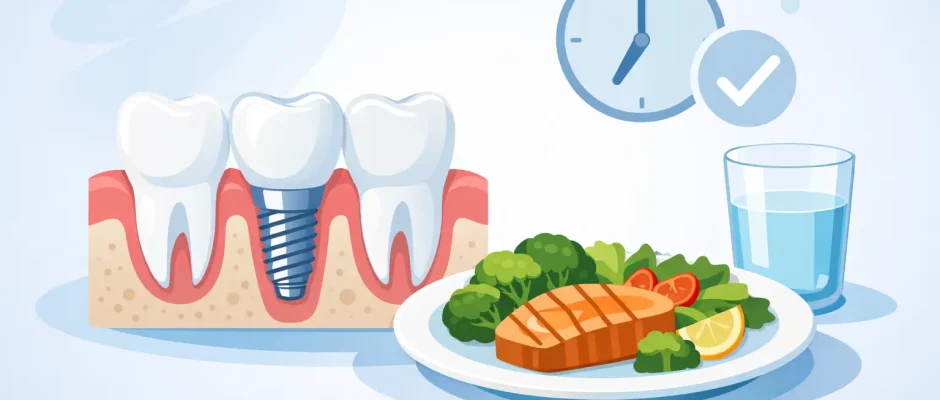
The first meal after implant surgery is where many patients get anxious. Pain is usually manageable, swelling is expected, but the question “when can you eat after a dental implant” feels personal and urgent because one wrong step seems like it could affect the result.
The short answer is this: most patients should wait until the anesthesia has fully worn off, then start with cool or lukewarm, soft food on the opposite side of the mouth. In straightforward cases, that means eating a few hours after surgery, not immediately. But the exact timing depends on what was done – a single implant in dense bone is one situation, while immediate implantation after extraction, bone grafting, sinus lift, or multiple implants is another.
Когда можно есть после имплантации зуба – the real timeline
For the first 2 to 3 hours after surgery, it is usually better not to eat at all. During this period, the clot is stabilizing, the soft tissues are vulnerable, and local anesthesia may still be active. If you eat too early, you can bite your cheek, lip, or tongue without noticing, and hot food may increase bleeding.
Once numbness is gone, most patients can have a soft meal. Think of texture first, not calories. Yogurt, mashed potatoes, scrambled eggs once cooled, soft fish, oatmeal at a lukewarm temperature, or a smoothie eaten with a spoon are usually reasonable options. Very hot food, crunchy food, and anything that requires strong chewing should wait.
The first 24 hours are the strictest window. During this time, the goal is not just comfort. It is to protect the surgical site from pressure, heat, and mechanical irritation. If the implant was placed with flap elevation, sutures, graft material, or a healing abutment, the tissues need a quiet environment.
By days 2 to 3, many patients feel well enough to expand the diet slightly, but this does not mean a full return to normal chewing. Softer rice, pasta, tender chicken cut small, soft vegetables, cottage cheese, and soups that are warm rather than hot are usually easier to tolerate. If chewing creates pressure in the implant area, that is a sign to step back.
By the end of the first week, diet progression depends on healing rather than the calendar alone. Some patients can eat fairly normally while avoiding the surgical side. Others, especially after bone augmentation or multiple implants, still need a cautious soft diet. This is why good postoperative guidance matters more than a generic internet timeline.
What changes the answer
Not all implant surgeries are biologically identical. A single implant placed in ideal bone with good primary stability is generally followed by an easier recovery than an implant placed together with extraction, guided bone regeneration, or sinus floor elevation.
If the implant was immediate – placed right after tooth removal – the tissues have experienced two events at once: extraction and implantation. In that situation, the socket walls and gum margin deserve more protection. Chewing directly over the area too early can increase soreness and mechanical stress.
If bone graft material and membranes were used, surgeons are even more careful about postoperative loading and local trauma. Food particles, forceful rinsing, and early pressure from chewing can irritate the wound and compromise comfort. The same is true after sinus lift procedures, where pressure management matters more overall.
A full-arch case such as All-on-4 follows its own rules. Patients may leave surgery with fixed temporary teeth, but that does not mean they can chew anything they want. In fact, the opposite is true. The implants may be functioning, but the prosthetic and biologic protocol usually requires a soft diet for a longer period because osseointegration still has to occur.
What you can eat in the first hours and days
The best food after implant placement is food that does not challenge the surgical area. Cool or lukewarm, soft, non-spicy, and easy to swallow is the right direction. Temperature matters because heat can increase blood flow and trigger renewed bleeding.
Good early choices include yogurt, kefir, applesauce, mashed avocado, hummus, cottage cheese, soft eggs, mashed vegetables, oatmeal after cooling, and blended soups served warm, not hot. Protein is helpful for healing, so soft fish, Greek yogurt, soft tofu, or finely shredded chicken may fit once chewing is comfortable.
What tends to cause trouble is just as important. Nuts, seeds, chips, crusty bread, popcorn, raw vegetables, tough meat, sticky candy, and very spicy foods are common offenders. Tiny fragments can lodge near the wound. Hard textures can traumatize the gum. Sticky foods can pull on the area or tempt a patient to chew before the tissues are ready.
For drinks, plain water is ideal. Cold or room-temperature beverages are usually well tolerated. If a surgeon has advised against straws, follow that instruction. Suction can be unhelpful in the early period, especially when soft tissue closure and clot stability matter.
When can you return to normal eating?
This is where many answers online become too simple. “Normal eating” depends on whether you mean normal texture, normal temperature, or chewing on the treated side.
Many patients return to a mostly normal diet within 5 to 7 days after uncomplicated implant placement, but still avoid chewing directly on that side for longer. If sutures are present, if the gum remains tender, or if swelling peaks around days 2 to 3, a slower return is safer and usually more comfortable.
After complex surgery, it is common to maintain a modified diet for 10 to 14 days or more. That is not a setback. It is often the correct protocol. Bone and soft tissue healing do not follow your appetite. They follow biology.
If you were given a temporary crown on the implant, the rules may be stricter than you expect. In many cases, that temporary is for esthetics and soft tissue support, not for active chewing. Patients sometimes feel so comfortable that they forget the distinction. Comfort is good, but it is not the same thing as full mechanical readiness.
Signs you are advancing too fast
Your mouth usually tells you when the diet is moving ahead too quickly. Increased throbbing during meals, fresh bleeding, a feeling of pressure around the implant, new swelling after initial improvement, or food repeatedly collecting around the site are all reasons to reduce texture and contact.
Pain with chewing does not automatically mean something has gone wrong, but it does mean the tissues are asking for less load. Persistent or increasing pain is different from mild tenderness. If symptoms are worsening rather than settling, it is worth contacting your surgeon.
Bad breath, unusual discharge, fever, or a bad taste that does not clear with gentle hygiene deserve attention as well. These are not “wait and see” symptoms, especially after grafting or more extensive surgery.
Practical mistakes patients make
The most common mistake is not eating too late, but eating too confidently because the procedure felt easier than expected. Modern implant surgery, especially when planned digitally and performed with precise soft tissue handling, can be surprisingly comfortable. That is good for the patient experience, but it can create false confidence on day one.
Another mistake is choosing healthy food with the wrong texture. A salad, multigrain toast, or nuts may be healthy in general, but they are poor immediate postoperative choices. After surgery, texture and local trauma matter more than nutrition trends.
Patients also underestimate heat. Coffee, tea, and soup that feel normal on a regular day may be too hot after surgery. For the first day, cooler is usually safer. After that, lukewarm is a better target than steaming.
Finally, some patients chew on the opposite side but still create pressure by clenching. If you know you grind or tense your jaw when stressed, be mindful during meals. Controlled, gentle chewing is very different from bracing your whole bite.
The question behind the question
When patients ask, “когда можно есть после имплантации зуба,” they are usually asking something deeper: am I safe, and can I do something ordinary again without risking the implant? That is a reasonable concern.
In most cases, you can eat the same day once numbness wears off, but you should eat strategically. Start soft, cool or lukewarm, and away from the surgical site. Advance gradually based on the procedure you had and how your tissues respond. Simpler surgery usually allows a faster return. Grafting, sinus lift, immediate implantation, and full-arch treatment require more discipline.
A well-placed implant is designed for long-term function, but the first days are not the time to test it. Respect the healing biology now, and your return to normal meals is usually smoother, more comfortable, and more predictable. If you are planning implant treatment and want instructions tailored to the exact procedure rather than a generic average, that level of planning is part of good surgical care at https://implantolog.co.il.
Give your mouth a few quiet days. Healing tends to reward patience.


Comments (0)