Choosing a clinic for dental implants should not begin with before-and-after smile photos.
A better place to start is with a practical question: what is the safest and most predictable way to place a titanium implant into living bone, given your anatomy, medical history, and the amount of bone you have today?
That is why “dental implantation in Israel” is not just a single service. In practice, the difference between an average result and an excellent one usually comes down to diagnosis, surgical planning, and the surgeon’s ability to manage complex situations: thin bone, previous infections, old extraction sites, sinus proximity, gum recession, or a bite that has adapted to missing teeth over many years.
Why patients choose dental implantation in Israel
For many patients, Israel is attractive for two important surgical reasons: a strong medical culture and a high standard of diagnostics. CBCT (3D imaging), digital planning, and modern anesthesia protocols are widely used. That alone does not guarantee the right treatment, but it does reduce the kind of guesswork that patients understandably worry about.
The second reason is access to advanced treatment protocols. When bone volume is limited or time matters, clinics more often offer well-established options such as immediate implant placement after extraction, guided bone regeneration, sinus lift procedures, and full-arch rehabilitation with All-on-4 style concepts. The challenge is that complex protocols demand experience and careful follow-up. If planning is inaccurate, the consequences may only become clear months later.
Implant basics in clinical terms
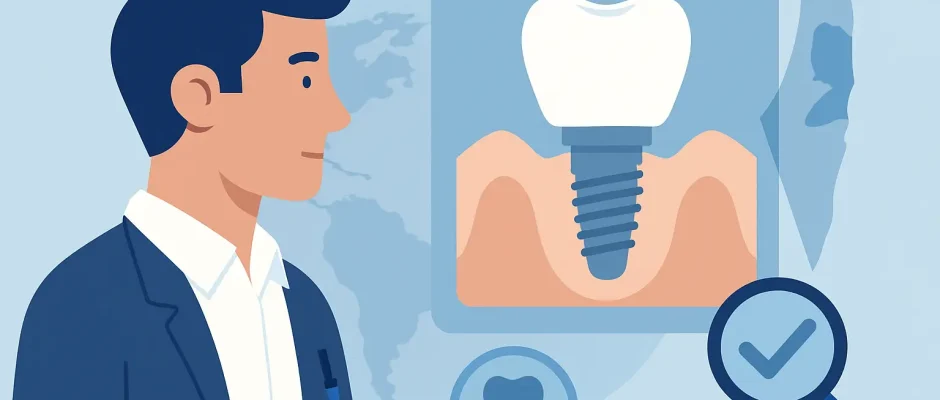
A dental implant is a titanium or titanium-alloy fixture placed into the jawbone. During healing, it integrates with the bone. After osseointegration, an abutment and crown are used to restore function and appearance.
Patients often underestimate one important point: an implant is not “just a screw.” It is a surgical procedure in a biologically active area, close to nerves, sinuses, and adjacent tooth roots. Positioning is measured in millimeters, and soft-tissue health is just as important as bone volume. In other words, the treatment plan is the real foundation of success; the implant itself is only one part of that plan.
Who is a good candidate for implants, and when is the answer less clear?
Most adults can be considered for implant treatment, but “possible” and “recommended” are not the same thing.
When overall health is good, chronic conditions are well controlled, oral hygiene is stable, and bone volume is sufficient, treatment usually follows a straightforward path.
The picture changes when there are factors that affect healing and risk: smoking, uncontrolled diabetes, certain osteoporosis medications, a history of aggressive periodontitis, bruxism (night grinding), or untreated gum disease. None of these automatically rules out implants, but each of them calls for a thoughtful plan. That may mean staged treatment, additional hygiene or periodontal therapy, or a prosthetic design that reduces overload.
Age itself is rarely the main limitation. Bone quality, general health, and the ability to attend follow-up visits are usually much more important.
The diagnostic step that protects you
Good implant preparation should clearly answer four questions.
First: is the tooth or root truly beyond saving? In some cases, an implant is suggested even though a microsurgical tooth-preserving option may still be possible.
Second: where exactly is the available bone, and what is its quality? This is where CBCT matters. A standard 2D X-ray cannot reliably show the thickness of the facial bone plate, sinus anatomy, or the precise course of the nerve.
Third: what should the final crown look like, and where must the implant be placed to support it properly? This is called prosthetically driven implant placement. An implant can integrate successfully and still create problems if it is positioned without a restoration plan, leading to compromised appearance, food trapping, or difficult hygiene.
Fourth: what is the patient’s overall risk profile, including past infections, periodontal health, bite forces, and esthetic expectations?
When these questions are answered clearly and documented, anxiety usually decreases. The unknown becomes a plan with defined steps.
Surgical planning in Israel: digital, guided, predictable
Digital protocols are not just marketing language. When used properly, they reduce variability and improve precision.
CBCT and intraoral scanning are often combined. Based on that information, the surgeon plans implant position in three dimensions and may use a surgical guide to transfer that plan accurately to the mouth.
Guided surgery is not necessary in every case. In experienced hands, freehand placement can also be excellent. But in anatomically demanding areas, narrow ridges, or immediate placement cases, a guide can add safety and accuracy and often shorten surgical time, which patients usually experience as greater comfort.
Immediate vs. delayed implantation: what is the difference?
Patients are often drawn to the phrase “implant in one day.” Clinically, immediate implant placement means inserting the implant during the same appointment as the tooth extraction. This can be an excellent protocol, but only when the indications are right.
Immediate implantation may help preserve tissue contours, reduce the total treatment time, and lower the number of surgical visits.
The downside is that extraction must be atraumatic and infection control must be strict. If the socket walls are thin or damaged, or if there is active purulent infection, the surgeon may recommend bone grafting and a staged approach instead. Attempting immediate placement in unsuitable anatomy can increase the risk of gum recession, esthetic compromise, or implant failure.
Delayed implantation, often 8 to 12 weeks or more after extraction, may be safer when infection has been significant or when soft tissue needs time to heal first. In some cases, a staged plan provides a more stable and esthetic long-term result.
What happens when there is not enough bone?
Bone deficiency is common, especially when a tooth has been missing for years. In the upper jaw, the sinus can expand downward over time. In the lower jaw, the ridge may narrow, while the nerve limits available depth.
This does not automatically mean implants are impossible. It means the strategy needs to be more precise.
A sinus lift, either internal or lateral, can be used to increase bone height in the back of the upper jaw. Guided bone regeneration (GBR) uses membranes and grafting materials to rebuild deficient areas. Ridge augmentation can widen a narrow jaw ridge. These are technique-sensitive procedures: flap design, tension-free closure, membrane stability, infection prevention, and patient compliance all matter.
Many surgeons in Israel also use biologic adjuncts such as PRF (platelet-rich fibrin). PRF is not a miracle treatment, but it may support soft-tissue healing and reduce postoperative discomfort when used as part of a well-planned protocol.
Full-arch restoration with an All-on-4 type approach: who is it for?
All-on-4 is a treatment concept in which a full arch is supported by four implants, often with an immediately fixed provisional restoration. For patients with severely damaged teeth, advanced periodontitis, or multiple missing teeth, it can be life-changing.
That said, it is not a shortcut or a budget substitute for comprehensive planning. The success of All-on-4 depends on precise implant placement, primary stability, bite control, and a well-made prosthesis. The temporary bridge must protect the implants during healing, and the final prosthesis must allow for hygiene access and long-term maintenance.
For some patients, more than four implants may be advisable, or bone grafting may still be appropriate at the first stage. The right plan is the one that matches your anatomy, expectations, and ability to maintain oral hygiene.
Timing: what to expect in real life
For a single implant with a crown in a typical case, the timeline from surgery to the final crown is often around 3 to 4 months, and sometimes longer.
If immediate implant placement and an immediate temporary crown are appropriate, you may leave with an esthetic temporary tooth quite quickly. Even then, the permanent crown is placed only after biologic integration and soft-tissue maturation.
When bone grafting or sinus lift surgery is needed, treatment may extend to 6 to 9 months or longer. That is not a drawback in itself; it is often the price of predictability.
If you are traveling to Israel for treatment, visit planning becomes especially important. Implant treatment can be compatible with travel, but only when the schedule is realistic and follow-up is properly organized. A good clinic should explain in advance which appointments require you to be there in person and which reviews can be arranged remotely.
Pain, swelling, and comfort
Most implant procedures are well tolerated under local anesthesia, and depending on the clinic and the case, sedation may also be available.
After surgery, discomfort is usually related more to the handling of soft tissue and bone than to the implant itself. Guided surgery and microsurgical techniques can reduce tissue trauma, but some patients will still experience swelling as part of the normal healing response.
A clear postoperative plan for pain control, cooling, diet, and oral hygiene is not an optional extra; it is part of complication prevention. The first 7 to 10 days are when following instructions matters most.
The cost of dental implantation in Israel: what determines the price?
Patients often ask for the cost of “one implant.” Clinically, however, you are not simply paying for a screw. You are paying for diagnosis, planning, surgery, materials, and professional responsibility for the result.
The final cost depends on the implant system, whether bone grafting or sinus lift surgery is needed, whether guided surgery is used, the complexity of extraction, and the type of crown selected, including both material and esthetic demands. A low initial quote may increase later if it does not include grafting, membranes, temporary restorations, or follow-up care.
It makes sense to discuss cost after diagnostics are complete: a CBCT scan, clinical examination, and a written treatment plan with clear options.
How to choose a surgeon or clinic
A safe choice is often reflected in how the treatment plan is presented.
Look for a clear diagnosis, a written sequence of stages, and an honest discussion of alternatives. Risks should be explained in plain language, without pressure and without vague reassurance. It is also reasonable to ask how complications are managed, what the follow-up schedule looks like, and who performs each part of the treatment.
Experience matters most in the parts patients rarely see: atraumatic extraction, soft-tissue management, stabilization of grafting materials, and coordination between surgical and prosthetic phases. These details determine whether an implant will not only integrate, but also remain functional, hygienic, and esthetic for years.
If you are looking for a surgeon in Tel Aviv with experience in dental surgery and complex implantology, including digital planning, surgical guides, PRF, and structured treatment planning, you can begin with Implantolog.co.il and arrange a consultation to review your scans and options.
In closing: how to make the process feel more manageable
When patients say they are afraid of dental implants, they are usually not talking only about the procedure itself. More often, they are afraid of making the wrong decision and having to live with the consequences.
A good implant plan does something very practical: it reduces surprises. When the diagnosis is accurate, the sequence of treatment makes sense, and the surgeon is comfortable managing both straightforward and complex cases, your role becomes much simpler: follow the recommendations, attend follow-up visits, and give your body the conditions it needs to heal predictably.


