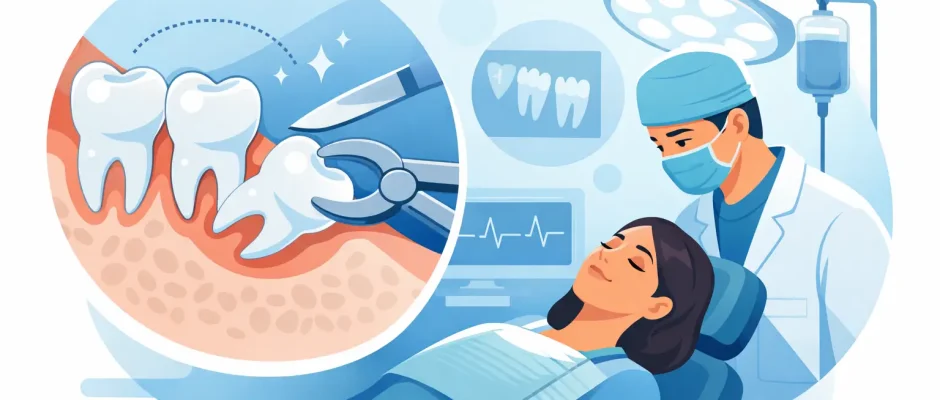
If your wisdom tooth is trapped under the gum, pressing on the tooth in front of it, or flaring up with repeated pain and swelling, waiting rarely makes the situation simpler. Impacted wisdom tooth surgery is not just about removing a troublesome tooth. It is about preventing damage to neighboring teeth, reducing the risk of infection, and doing it in a controlled, predictable way.
For many adults, the main concern is not whether the tooth should come out, but how difficult the surgery will be and what recovery will feel like. That is a fair question. Not all impacted wisdom teeth are the same, and the treatment plan should reflect the actual anatomy, not a generic protocol.
When impacted wisdom tooth surgery is necessary
A wisdom tooth is considered impacted when it cannot erupt into a normal position. Sometimes it remains fully buried in bone. In other cases, part of the crown breaks through the gum while the rest stays trapped. Both scenarios can cause problems, but the urgency varies.
Surgery is often recommended when the tooth causes recurrent inflammation around the gum, pain while chewing, bad taste or odor from trapped bacteria, decay on the wisdom tooth or the second molar, pressure against the adjacent tooth, or cystic changes around the crown. In some patients, the tooth is silent for years and then becomes problematic at the worst possible time – during travel, pregnancy, military service, or a period when medical treatment is inconvenient.
There are also cases where an impacted tooth is found incidentally on an X-ray and does not currently hurt. This is where nuance matters. A symptom-free tooth does not always require immediate removal, but it also should not be judged by symptoms alone. Position, depth, relation to the inferior alveolar nerve, hygiene access, age, and the condition of the neighboring tooth all influence the decision.
Not all impacted wisdom teeth are equally complex
The phrase impacted wisdom tooth surgery covers a wide range of clinical situations. A partially erupted lower third molar tilted forward is different from a fully bone-embedded tooth lying horizontally near the nerve canal. Upper wisdom teeth are different again, especially when roots are close to the maxillary sinus.
This is why proper imaging matters. A standard panoramic X-ray is often enough for routine planning. In more complex cases, a 3D scan gives more precise information about root anatomy, bone coverage, and the relationship to nearby structures. That level of detail helps the surgeon choose a safer approach and discuss realistic risks before treatment.
The difficulty of surgery usually depends on several factors at once: how deep the tooth sits, whether bone covers it completely, the shape and divergence of the roots, whether infection is present, and how close the roots are to the nerve. Age also matters. In younger patients, bone is generally less dense and roots may be less fully developed, which can make removal easier. In older adults, surgery can still be done very predictably, but the extraction may be more demanding and recovery somewhat slower.
How the surgery is actually performed
Patients are often relieved when they hear that the procedure is usually methodical rather than dramatic. After local anesthesia, the surgeon creates access to the tooth through a small incision. If the tooth is covered by bone, the overlying bone is carefully removed. In many impacted cases, the tooth is sectioned into smaller parts so it can be removed with less pressure on surrounding tissues.
That point is important. A modern surgical extraction is not about force. It is about controlled access, precise bone management, and atraumatic technique. The goal is to protect the adjacent molar, preserve healthy bone where possible, and minimize tissue trauma.
Once the tooth is removed, the area is cleaned, the socket is inspected, and the site is typically closed with sutures. Depending on the clinical scenario, adjuncts such as PRF may be used to support soft tissue healing and postoperative comfort. The exact protocol depends on the amount of surgical manipulation required and the condition of the tissues at the time of surgery.
Will it hurt during or after surgery?
During the procedure, the goal is that you should feel pressure but not pain. If anesthesia is effective, you may notice pushing, vibration, and movement, but not sharp sensation. Patients who have had a difficult extraction in the past sometimes expect the same experience again. In reality, comfort depends heavily on planning, surgical technique, and whether the case is being managed as a routine pull or as a true surgical procedure.
After surgery, some discomfort is normal. The first 48 to 72 hours are usually the most noticeable. Swelling, soreness when opening the mouth, and pain on swallowing can occur, especially with lower impacted teeth. This does not automatically mean something is wrong. It is part of the expected inflammatory response.
That said, recovery is not identical for everyone. A small, partially erupted upper wisdom tooth may heal with minimal disruption. A deeply impacted lower tooth close to the nerve will usually have a more involved recovery. It is better to discuss the likely range in advance than to promise a one-size-fits-all experience.
Risks and how they are managed
Any surgery has risks, and patients deserve a clear explanation without dramatization. The most common short-term issues are swelling, bruising, limited mouth opening, minor bleeding, and temporary discomfort. Dry socket can occur, particularly in lower jaw extractions, when the blood clot in the socket breaks down prematurely.
Infections are less common but possible, especially if there was active inflammation before surgery or food debris becomes trapped during healing. Temporary numbness of the lip, chin, or tongue can occur when lower wisdom teeth are close to the nerve. In most cases where numbness happens, it is temporary, but the degree of risk depends on the actual anatomy. This is one of the strongest reasons to avoid casual treatment planning in complex extractions.
There is also a trade-off to consider. Delaying surgery may reduce immediate inconvenience, but in some patients it increases the chance of repeated infection, damage to the second molar, deeper decay, or technically more difficult surgery later. The right timing is individualized.
Recovery after impacted wisdom tooth surgery
The first day is about clot protection and rest. The second and third days are often the peak of swelling. Most patients can return to desk work relatively quickly, but they may still prefer a lighter schedule for a few days. Strenuous exercise, smoking, and vigorous rinsing can interfere with healing and should be avoided during the early phase.
Food matters more than patients expect. Soft, lukewarm meals are usually best at first. Hydration is important, but using a straw is often discouraged because suction can disturb the clot. Oral hygiene should continue, but gently. Keeping the area reasonably clean without traumatizing it is the balance.
If sutures are placed, they may dissolve on their own or be removed at follow-up, depending on the material used. A postoperative visit is not just a formality. It allows the surgeon to confirm that healing is progressing normally, especially in more complex lower extractions.
Why surgeon experience changes the patient experience
Two patients can have the same X-ray and still have very different treatment journeys depending on planning and execution. Experience matters in flap design, bone removal, tooth sectioning, tissue handling, and judgment about when to stop pushing and change the technique. Those decisions affect not only safety, but also swelling, pain, and healing.
This is where a surgical practice built around complex extractions, microsurgical principles, and digital diagnostics offers real value. The patient may only see a 30- to 60-minute appointment. Behind that appointment is the difference between improvisation and protocol.
For patients seeking treatment in Israel, especially in a city such as Tel Aviv where high-level diagnostics and surgical care are accessible, it makes sense to choose a clinician who regularly manages impacted and high-difficulty cases rather than someone who removes these teeth only occasionally.
When to schedule a consultation
If you already know a wisdom tooth is impacted, a consultation is worth scheduling before it turns into an emergency. This is especially true if you have intermittent swelling, food trapping behind the second molar, jaw stiffness, repeated antibiotic use, or a dentist has mentioned damage to the neighboring tooth.
A proper consultation should do more than confirm that the tooth exists. It should explain whether removal is indicated now, how complex the surgery appears, what imaging is needed, what the main risks are in your case, and what recovery is likely to look like for your daily routine.
Good surgery begins before the first incision. It starts with a plan that respects anatomy, symptoms, timing, and the patient sitting in the chair. When that part is done well, even impacted wisdom tooth surgery becomes far more understandable and far less intimidating.
If you are dealing with a wisdom tooth that keeps causing trouble, the most useful next step is not to wait for the next flare-up. It is to get a clear diagnosis and a treatment plan that makes the path forward feel controlled.


