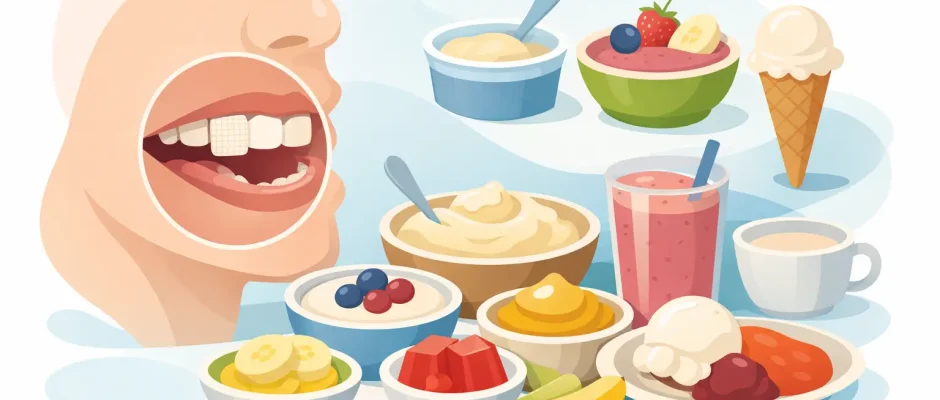
The first meal after surgery is where many patients get stuck. You may feel hungry, but chewing is uncomfortable, your mouth is numb, and the wrong food can irritate the surgical site. Choosing the best foods after oral surgery is not just about comfort – it directly affects clot stability, swelling, and how smoothly healing progresses.
After extractions, implant placement, bone grafting, sinus lift procedures, or periodontal surgery, the goal is simple: protect the area, avoid trauma, and keep your nutrition adequate. A soft diet helps, but not every soft food is a good option. Temperature, texture, acidity, and even small particles matter more than most patients expect.
What makes the best foods after oral surgery
Right after oral surgery, tissues are vulnerable. A blood clot or early healing tissue needs to stay undisturbed, especially after extraction or grafting. Foods that require chewing, leave behind seeds or crumbs, or create suction in the mouth can interfere with that process.
The best choices are soft, smooth, and easy to swallow without much jaw movement. They should also be mild in temperature. Very hot foods can increase bleeding in the early postoperative period, while spicy or acidic foods may sting and make hygiene more difficult.
Protein and hydration matter as much as softness. Healing tissue depends on adequate calories, fluid intake, and nutrients. If a patient eats only a few spoons of yogurt and tea for two days, recovery often feels harder than necessary. The ideal postoperative menu is soft, but still substantial.
Best foods after oral surgery in the first 24 hours
The first day is usually the most restrictive. Numbness may persist for several hours, and that alone increases the risk of biting your cheek or tongue. During this period, food should be very soft and require almost no chewing.
Yogurt is one of the easiest options if it is plain and not overly acidic. Smooth applesauce works well for many patients, as do pudding, mashed potatoes, and blended vegetable soups served lukewarm, not hot. Scrambled eggs can be appropriate once numbness starts to wear off, provided they are soft and not overcooked.
Protein shakes can help if drinking is done carefully from a cup, not through a straw. Straws create negative pressure, and after extraction this can disturb the clot. Cottage cheese, hummus, and soft oatmeal are also reasonable choices if they do not irritate the area.
Ice cream is often mentioned, and sometimes it helps, but it depends. A cold, smooth food can feel soothing, yet very sugary foods should not become your main recovery diet. If you choose ice cream, keep portions moderate and rinse gently later if your surgeon has advised rinsing.
What to eat on days 2 to 5
By the second or third day, many patients can expand their diet slightly, but this does not mean returning to normal eating. The tissues may still be swollen, and the area can remain tender for several days, especially after wisdom tooth surgery, multiple extractions, or bone augmentation.
At this stage, soft fish, well-cooked pasta, soft rice, mashed avocado, tender tofu, and finely mashed vegetables are often tolerated. Soft chicken may work if shredded very small and chewed away from the surgical site. Pancakes soaked enough to stay soft, cream of wheat, and soft noodles can also fit.
This is usually the point where patients start testing boundaries. That is where problems happen. Toast may seem soft enough until a sharp crust reaches the wound. Rice may be fine for one patient and irritating for another if grains lodge near the site. It depends on the type of procedure and the exact location in the mouth.
If you had an implant placed with a bone graft, your surgeon may want a more cautious diet for longer than after a simple extraction. The same is true after sinus lift surgery or extensive periodontal microsurgery, where protecting the tissues is part of protecting the final result.
Foods to avoid even if they seem harmless
Some foods are technically soft, but still not a good idea. Small seeds are a common example. A smoothie bowl with berries, chia, or granola is not suitable early on, even if the base is soft. Tiny particles can collect around the surgical area and complicate hygiene.
Crunchy foods are an obvious no, but sticky foods can also be problematic. Caramel, chewy bread, and dense pastries may pull on the wound or encourage too much chewing. Very salty foods may irritate tissues, and acidic foods like citrus, tomatoes, and some fruit blends can sting.
Temperature matters too. Hot coffee, very hot soup, and fresh pizza are poor choices right after surgery. Alcohol should also be avoided, particularly if you are taking pain medication or antibiotics, or if your surgeon has emphasized clot protection and reduced bleeding risk.
Best foods after oral surgery for implants and bone grafting
Patients often assume that if there is no extraction socket, food choices matter less after implant surgery. In reality, soft nutrition is still important. Implant stability in the early phase depends on controlled healing. Excess pressure, wide jaw opening, and repeated mechanical irritation are not helpful.
For implants and grafting procedures, prioritize foods that support nutrition without requiring forceful chewing. Eggs, Greek yogurt, blended soups, mashed sweet potatoes, soft cooked salmon, oatmeal, and protein-rich smoothies without seeds are practical options. If chewing is possible on the opposite side, soft foods with small bite sizes are usually safer than trying to chew something “almost normal.”
A common mistake after grafting is feeling well enough to eat normally before the tissues are ready. Pain is not the only guide. Some procedures are relatively comfortable because they were performed with precise technique and stable soft tissue closure, but that does not mean the site should be challenged early.
How to eat without disturbing the surgical site
Food choice is only part of the picture. The way you eat also matters. Take small bites, chew on the opposite side if your surgeon allows it, and eat slowly. Do not test the area with your tongue or fingers. Patients do this almost automatically, and it can become a source of irritation.
If swelling limits opening, choose foods that fit easily on a spoon. Avoid wide bites from sandwiches, burgers, or pizza slices even if the filling is soft. It is often not the ingredient itself, but the mechanics of eating it that cause strain.
Hydration should be steady, but again, skip straws in the early period. Sip from a cup. If prescribed mouth rinses or salt-water rinses are part of your protocol, use them exactly as instructed rather than aggressively swishing after every meal.
When a “soft diet” should last longer
There is no single timeline that fits every patient. A simple single-tooth extraction in a healthy patient is different from removal of an impacted wisdom tooth, immediate implant placement, or guided bone regeneration. Smoking, diabetes, bruxism, and previous inflammation can also affect healing recommendations.
As a general rule, the more complex the surgery and the more important clot or graft stability is, the more conservative the diet should be. If sutures feel tight, opening is limited, or chewing causes pressure in the surgical region, keep foods softer for longer. That is not being overly cautious. It is good postoperative discipline.
This is one reason detailed aftercare matters. In surgical practice, predictable outcomes are not created only in the operating chair. They also depend on how carefully the first days of healing are managed at home.
When food intolerance may signal a problem
Some discomfort while eating is expected. Sharp worsening pain, foul taste, persistent bleeding, increasing swelling after the third day, or inability to maintain fluid intake is different. Those signs deserve direct contact with your surgeon.
If even soft foods become difficult to tolerate, do not force it. Sometimes the issue is dehydration, poorly timed pain control, or a local postoperative complication that needs evaluation. A short adjustment in medication or hygiene protocol can make a meaningful difference.
For patients treated at Implantolog.co.il, postoperative instructions are designed to reduce exactly this kind of uncertainty – because healing tends to go more smoothly when the plan is specific and easy to follow.
The best recovery diet is not complicated. It is careful, soft, protein-aware, and a little boring for a few days. That temporary restraint protects something more valuable than a meal – a calm, stable healing process.


Comments (0)