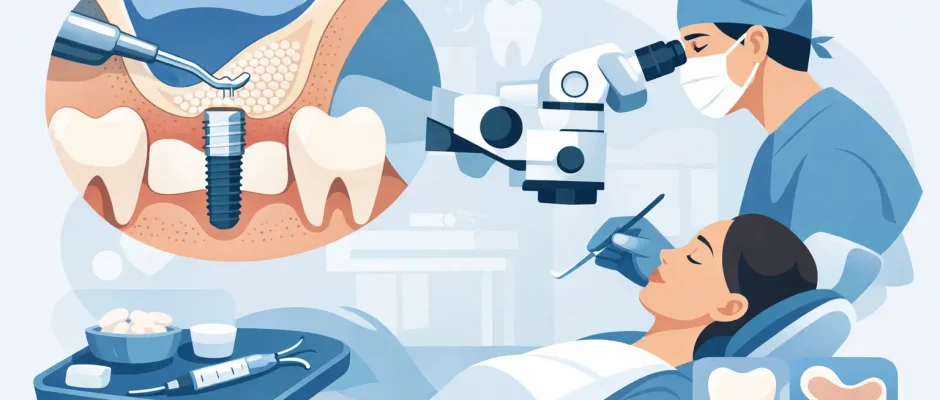
If you were told you need a sinus lift before a dental implant, the first reaction is usually not curiosity. It is concern. Patients often hear the term during implant planning and immediately imagine something extensive or risky. This guide to sinus lift surgery for patients – руководство по синуслифтингу для пациентов – is meant to replace that uncertainty with a clear, clinically accurate picture of what the procedure is, when it is truly needed, and what recovery usually looks like.
What a sinus lift actually is
A sinus lift is a bone augmentation procedure performed in the upper back jaw, usually in the area of premolars and molars. In this region, dental implants sometimes cannot be placed safely because the available bone height is too limited. The reason is simple anatomy: after tooth loss, the bone gradually resorbs, and the maxillary sinus above that area can expand downward over time.
The procedure creates additional bone volume between the sinus floor and the future implant site. In practical terms, the Schneiderian membrane that lines the sinus is gently elevated, and grafting material is placed underneath it. That new space supports bone regeneration and makes implant placement possible either at the same surgery or after healing, depending on the starting conditions.
This is not a cosmetic procedure and not an extra step added without reason. It is usually recommended when placing an implant without augmentation would compromise stability, position, or long-term prognosis.
Руководство по синуслифтингу для пациентов: when it is needed
Not every patient with a missing upper tooth needs sinus augmentation. The decision depends on imaging, bone height, bone width, sinus anatomy, and the restorative plan. A CBCT scan is typically the key diagnostic tool because a standard dental X-ray does not always show the three-dimensional situation well enough.
A sinus lift may be recommended if you lost an upper molar years ago and the bone has become thin, if the sinus floor sits very low naturally, or if the implant needs to be placed in a prosthetically correct position that current bone volume does not support. Sometimes the issue is not only quantity of bone but also quality. Softer posterior maxillary bone may require a more cautious surgical plan.
There is also an important nuance here: the amount of augmentation matters. A small vertical deficiency may allow a less invasive internal sinus lift with simultaneous implant placement. A more significant deficiency often calls for a lateral window approach and sometimes a staged protocol. This is one of the reasons experienced surgeons avoid one-size-fits-all promises.
The two main techniques
The internal, or crestal, sinus lift is usually chosen when a modest amount of additional height is needed. The surgeon accesses the site through the implant osteotomy and elevates the sinus floor from below. This technique is less invasive and often well tolerated, but it is suitable only in selected cases.
The lateral sinus lift is used when bone height is more severely reduced. In this method, the surgeon creates a small window in the side wall of the upper jaw, carefully lifts the sinus membrane, and places the grafting material directly under it. This approach provides more visibility and control in complex anatomy, but it is also the more extensive procedure.
Neither technique is automatically better. The right choice depends on the anatomy, the implant plan, and how much primary implant stability can realistically be achieved.
What happens during the procedure
A properly planned sinus lift starts before the day of surgery. Imaging, medical history, sinus condition, smoking status, and the future prosthetic design all influence the surgical protocol. If there are signs of active sinus disease, allergy-related congestion, or chronic ENT issues, these need attention before proceeding.
On the day of treatment, the procedure is usually done under local anesthesia. Many patients expect discomfort during surgery and are surprised by how little they feel. The goal is controlled, precise work in a fully numb area, not speed for its own sake.
Once access is gained, the sinus membrane is elevated carefully. This is the critical step. The membrane is thin and delicate, and preserving its integrity improves predictability. Graft material is then placed to maintain the lifted space. In selected cases, PRF may also be used as part of the surgical protocol to support healing.
If enough native bone is present to stabilize an implant immediately, the implant may be placed in the same session. If not, the site is grafted first and allowed to heal for several months before implant placement. Patients often prefer a faster path, but immediate placement is appropriate only when it does not compromise stability or safety.
Is sinus lift surgery painful?
During surgery, pain should not be the issue. Pressure, vibration, or awareness of manipulation are more common sensations than pain itself. After surgery, most patients describe the recovery as manageable rather than severe. Swelling, mild bleeding, nasal stuffiness, and tenderness in the cheek area are all possible for several days.
Pain varies from patient to patient, but in most routine cases it is controlled with prescribed or standard postoperative medication. What tends to bother patients more than pain is the unfamiliar set of aftercare restrictions, especially the instructions related to the sinus.
Recovery and the rules that matter
The first week matters because the grafted area must remain stable while the sinus membrane begins to heal. That is why patients are advised not to blow their nose, not to sneeze with the mouth closed, and not to create pressure changes if they can avoid them. Strenuous physical activity is usually limited for a short period as well.
Some congestion is expected. That does not mean the sinus lift has failed. It usually reflects local postoperative swelling. The distinction between normal recovery and a developing complication depends on timing and severity. A low-grade sense of pressure for a few days is common. Increasing facial pain, fever, foul discharge, or persistent heavy bleeding is not and requires review.
Soft food, good oral hygiene around the surgical area, and adherence to medication instructions all make a difference. Healing is not just about the body. It is also about avoiding small mechanical mistakes that can disrupt an otherwise well-executed surgery.
Risks and what can complicate the plan
The best patient guidance includes the trade-offs, not just the benefits. Sinus lift surgery is predictable in experienced hands, but it is still surgery. The most common intraoperative complication is perforation of the sinus membrane. Small perforations can often be managed successfully at the same procedure. Larger ones may require changing the plan, delaying graft placement, or staging treatment.
Infection is uncommon but possible. So are sinus symptoms, graft failure, delayed healing, and insufficient bone formation. Smoking increases risk. Poorly controlled diabetes, untreated periodontal disease, and chronic sinus pathology can also affect outcomes.
There is another practical trade-off: adding a sinus lift can improve the long-term prognosis of the implant, but it may also increase treatment time and cost. For the right patient, that is a worthwhile trade. For the wrong patient or the wrong indication, it becomes unnecessary treatment. Good planning is what separates those two scenarios.
How to know if your case is being planned well
A reliable plan does not start with “everyone gets a sinus lift” or “we will definitely place the implant the same day.” It starts with imaging, measurements, medical review, and a clear explanation of alternatives. You should understand how much bone is available now, how much is needed, whether simultaneous implant placement is realistic, and what the fallback plan is if surgical findings differ from the scan.
This is also where digital planning and surgical discipline matter. In complex implant cases, precision is not a luxury. It reduces guesswork. For patients seeking treatment in Israel, including in Tel Aviv, a consultation that combines CBCT-based evaluation with a step-by-step surgical plan is usually the fastest way to turn anxiety into an informed decision. On https://implantolog.co.il, this kind of structured planning is central to how surgical cases are assessed.
Руководство по синуслифтингу для пациентов: questions worth asking at consultation
Before moving forward, ask practical questions. Will the implant be placed now or later? What type of sinus lift is planned and why? What grafting material is being used? What should you expect in the first 72 hours? When can you fly, exercise, or return to normal activity? Clear answers are a good sign that the treatment plan is based on protocol rather than improvisation.
Patients also benefit from asking what could change intraoperatively. Surgery is not always fully predictable from imaging alone. A surgeon who explains backup options in advance is usually approaching the case responsibly.
If you need a sinus lift, the procedure itself is rarely the hardest part. The harder part is making sense of the recommendation and deciding whether the plan in front of you is careful, necessary, and realistic. Once that is clear, most patients find the path forward much less intimidating.


Comments (0)