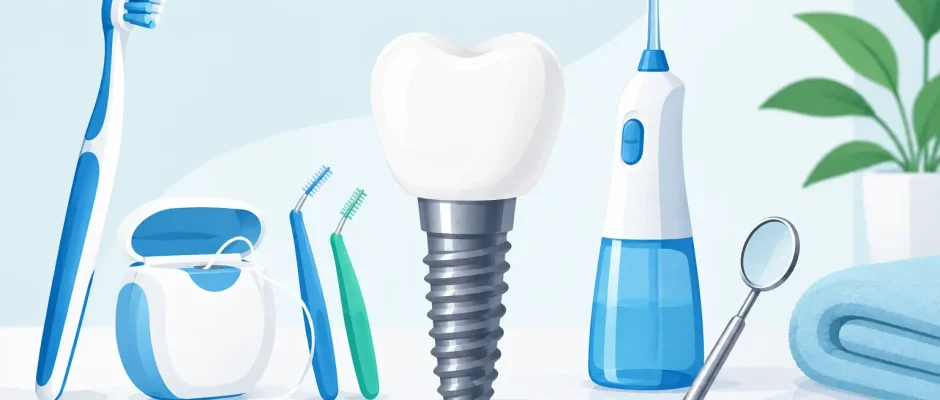
Best Oral Hygiene Tools for Dental Implants
A dental implant cannot develop a cavity, but the tissues supporting it can become inflamed and lose bone. That is why finding the best oral hygiene tools for implants is not about buying every device on the shelf. It is about creating a reliable, gentle routine that removes plaque from the crown, the gumline, and the narrow spaces around the implant without traumatizing the tissues.
For most patients, a well-chosen toothbrush, interdental cleaning method, and regular professional maintenance are enough. The details matter, however. The right tool depends on the shape of your restoration, the width of the spaces between teeth, the position of the implant, gum sensitivity, and whether you have one implant or a full-arch fixed bridge.
Why implant hygiene requires a specific approach
Natural teeth are supported by periodontal ligament fibers that form a highly organized attachment around the root. An implant has a different biologic connection with the surrounding soft tissue. This does not make implants fragile, but it does mean that plaque accumulation near the gumline should be taken seriously.
Early inflammation around an implant is called peri-implant mucositis. It may cause redness, swelling, tenderness, bleeding during cleaning, or an unpleasant taste. At this stage, the condition is often reversible with improved home care and professional cleaning. If inflammation progresses to peri-implantitis, bone around the implant can be lost. Treatment becomes more complex and may require surgical intervention.
The goal is not aggressive cleaning. Scrubbing hard, forcing oversized brushes between teeth, or using a sharp tool around the implant can damage the gums and make cleaning uncomfortable. Consistency and correct technique protect the long-term result.
Best oral hygiene tools for implants: the core routine
A soft manual or electric toothbrush
A soft-bristled toothbrush is the foundation of implant care. Brush twice daily for about two minutes, keeping the bristles angled gently toward the gumline. Clean the outer, inner, and chewing surfaces of the implant crown, just as you would a natural tooth.
An electric toothbrush with a pressure sensor can be particularly useful for patients who tend to brush too forcefully. Oscillating-rotating and sonic brushes can both be effective when used correctly. The best choice is usually the one you will use consistently without discomfort. A soft brush head is preferable, and the bristles should be replaced when they begin to spread.
Do not assume that a harder brush cleans better. Firm bristles and excessive pressure can irritate the gum margin and contribute to recession around natural teeth. Implant care should be precise, not abrasive.
Interdental brushes sized by a clinician
For many implant patients, interdental brushes are more effective than floss for cleaning open spaces between teeth, under bridge connectors, and around implant-supported crowns. These small brushes remove plaque mechanically from areas a standard toothbrush cannot reach.
Size is critical. A brush that passes through the space with light resistance is appropriate. If it bends, requires force, or causes persistent pain, it may be too large. If it moves through without touching the surfaces, it may be too small. Your hygienist or implant dentist can measure the spaces and recommend the correct diameters.
Use the brush with a few controlled in-and-out motions rather than repeated forceful scrubbing. For implants in the back of the mouth, a brush with an angled handle may make access easier. Metal cores are generally safe when properly used, but they should never be forced against the implant restoration or into a closed contact point.
Implant-safe floss and floss threaders
Floss remains useful, especially for single implant crowns that have normal contact points with neighboring teeth. Slide it gently through the contact, curve it around the crown, and clean below the gumline with a controlled up-and-down motion. Avoid snapping floss abruptly into the gums.
For fixed implant bridges, traditional floss alone often cannot reach under the prosthesis. A floss threader or a purpose-designed bridge floss can guide the material beneath the bridge so it can clean the tissue-facing surface. This is particularly relevant for full-arch restorations, including All-on-4 type bridges, where food debris and plaque can collect underneath if access is limited.
Thick, spongy floss may be helpful under a bridge, while a smooth section may pass more easily through tight contacts. The ideal option depends on the restoration design. If you cannot pass floss beneath a fixed bridge at all, do not improvise with needles, sharp picks, or household wire. Ask the treating team to assess whether the prosthesis provides adequate hygiene access.
A water flosser as an adjunct, not a replacement
A water flosser can be an excellent addition for implants, especially for patients with bridges, limited hand dexterity, orthodontic appliances, or deep contours that trap food. It uses a pulsating stream of water to flush loose debris and disrupt plaque near the gumline.
Use a low to moderate pressure setting at first. Direct the stream along the gumline and around the implant crown rather than pushing the tip forcefully into the sulcus. For fixed bridges, aim beneath the restoration where your clinician has shown you how to access it.
A water flosser improves comfort and may make daily cleaning more achievable, but it does not fully replace mechanical cleaning with interdental brushes or floss. Plaque is a sticky biofilm. It often needs direct contact from a brush or floss to be removed thoroughly.
A tongue cleaner and appropriate toothpaste
A tongue cleaner is not implant-specific, but it can reduce bacterial coating on the tongue and improve breath. It is a simple addition for patients who notice morning odor or a coated tongue.
Choose a low-abrasive fluoride toothpaste for daily use. Fluoride continues to protect your natural teeth from decay, even though the implant itself cannot decay. Avoid highly abrasive whitening pastes unless your dentist recommends them. They can gradually roughen some restorative surfaces or cause sensitivity in exposed natural roots.
Alcohol-free mouthwash may be useful if you have dry mouth or soft-tissue sensitivity. A medicated rinse, such as chlorhexidine, should be used only for a specific clinical reason and for the duration prescribed. Long-term self-directed use can cause staining, taste changes, and disruption of the normal oral environment.
Cleaning around single implants, bridges, and full arches
One routine does not fit every restoration. A single implant crown often can be cleaned much like a natural tooth, with special attention to the gumline and the spaces on both sides. If the crown contour is bulky or the implant is in a hard-to-reach posterior area, an interdental brush or water flosser may be particularly valuable.
With an implant-supported bridge, the area beneath the bridge becomes the priority. Food retention under the pontic portion is common and does not necessarily mean the treatment has failed. It means the hygiene technique needs to match the restoration. Threaded floss, an interdental brush, and a water flosser may all have a role.
For a fixed full-arch bridge, daily cleaning under the prosthesis is non-negotiable. The bridge may look clean from the front while plaque accumulates on the tissue-facing surface. Patients should receive a practical demonstration after restoration delivery, including which access points are safe to use and how often professional removal of the prosthesis may be needed for maintenance.
Habits and tools to avoid
Avoid using toothpicks, pins, metal instruments, or ultrasonic devices at home around implants. They can injure the soft tissues or scratch restorative materials. Wooden picks may be useful in selected open spaces, but they should be recommended and demonstrated by a clinician.
Smoking and uncontrolled diabetes also increase the risk of implant complications. No hygiene tool can fully compensate for these factors. If you smoke, reducing or stopping is one of the most meaningful steps you can take to protect healing and long-term bone stability.
Grinding and clenching are a separate issue. They do not cause plaque-related inflammation, but excess force can damage the crown, screw, or surrounding bone over time. If you wake with jaw tension, notice wear on natural teeth, or have fractured restorations, ask whether a night guard is appropriate.
When bleeding needs professional assessment
A small amount of bleeding can occur when you first begin cleaning an inflamed area more thoroughly. It should not be ignored, however. Bleeding that continues beyond one to two weeks, swelling, pus, bad taste, pain when biting, implant mobility, or a change in how the crown fits should prompt an examination.
Professional maintenance is part of implant treatment, not an optional extra. During follow-up visits, the clinician evaluates the gums, bite, hygiene access, restoration integrity, and bone levels when indicated. Instruments and cleaning techniques should be selected with implant materials and tissue health in mind.
For complex cases, particularly after bone grafting, sinus lift procedures, or full-arch rehabilitation, follow-up protocols may be more individualized. At Implantolog.co.il, the maintenance plan is considered part of protecting the surgical and restorative result, not simply a routine cleaning appointment.
The most effective implant hygiene routine is the one you can perform carefully every day. Bring your toothbrushes, interdental brushes, or water flosser tips to a maintenance visit if you are unsure about technique. A few minutes of personalized instruction can prevent months of inflammation and help preserve the bone that supports your implant.


