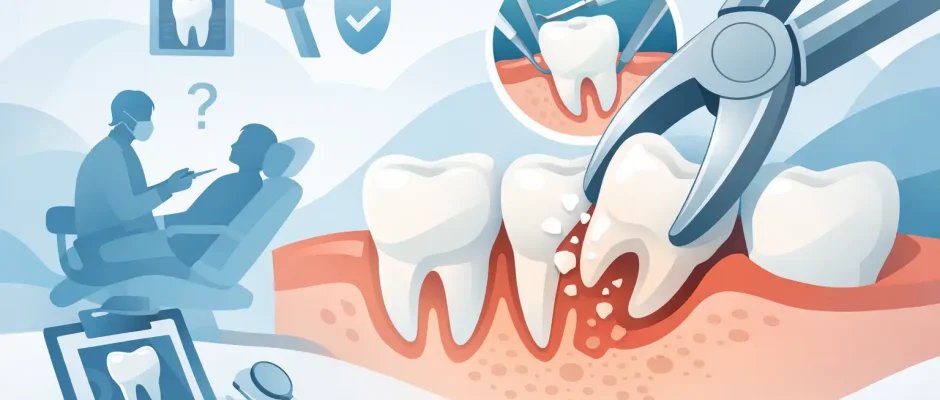
A tooth that looks simple on an X-ray can become a very different case in the chair. Roots may be curved, the crown may be broken below the gumline, infection may have changed the surrounding bone, or the tooth may be trapped under the gums and pressing against a neighbor. That is where complex tooth extraction becomes less about pulling a tooth and more about surgical planning, controlled technique, and protecting the tissues you will rely on for healing or future implant treatment.
For many patients, the hardest part is not the procedure itself. It is the uncertainty before it. Will it hurt? Will the jawbone be damaged? How long will recovery take? Can an implant be placed right away? These are reasonable questions, and the answers depend on the exact anatomy, the condition of the tooth, and the treatment goals after removal.
What makes a tooth extraction complex?
A routine extraction usually means the tooth is visible, accessible, and can be removed with standard instruments without surgical exposure. A complex tooth extraction is different. It typically involves one or more factors that make simple removal unsafe, unpredictable, or unnecessarily traumatic.
Common examples include impacted wisdom teeth, teeth broken at or below the gumline, roots with unusual shape or divergence, teeth fused to the bone, severe infection, or teeth located close to important structures such as the maxillary sinus or the inferior alveolar nerve. Teeth that have already been treated multiple times, or are surrounded by dense bone, can also require a surgical approach.
The goal in these cases is not speed. The goal is controlled removal with minimal trauma to bone and soft tissue. That matters for comfort, for healing, and often for the next step of treatment.
When complex tooth extraction needs a surgical approach
In surgical dentistry, the question is rarely just whether a tooth can be removed. The real question is how to remove it while preserving anatomy and reducing risk. That is why a proper workup matters.
A clinical exam is only part of the picture. Imaging helps assess the position of roots, the thickness of surrounding bone, the extent of infection, and proximity to nearby anatomical structures. In more demanding cases, three-dimensional imaging provides information that a standard two-dimensional radiograph cannot fully show. That can change the treatment plan from a force-based extraction to a more precise sectioning technique with flap access and bone contouring.
This is also the stage where the surgeon decides whether the extraction should be combined with socket preservation, PRF, bone grafting, or immediate implant placement. Not every case is a candidate for same-day implant treatment. If infection is extensive, if primary implant stability is doubtful, or if soft tissue conditions are unfavorable, a staged approach may provide a more predictable result.
How the procedure is typically performed
A complex extraction is usually done under local anesthesia, and in many cases that is fully sufficient for a comfortable procedure. The difference from a simple extraction is in the technique, not necessarily in what the patient feels.
After anesthesia, the surgeon may create a small flap to expose the tooth and surrounding bone. If the tooth cannot be removed safely in one piece, it is sectioned into smaller parts. This reduces pressure on the jaw and lowers the risk of uncontrolled fracture of the tooth or surrounding bone. In some cases, a limited amount of bone is carefully removed to gain access. Once the tooth is out, the site is cleaned, inspected, and prepared for healing.
If preservation of the ridge is important, additional steps may be taken during the same appointment. These can include grafting material, PRF membranes, or suturing techniques designed to support stable clot formation and soft tissue closure. The exact protocol depends on whether the priority is uncomplicated healing, preparation for a future implant, or immediate implant placement.
Will complex tooth extraction hurt?
During the procedure, pain should be controlled. Pressure, vibration, or a sense of pushing are common, but sharp pain is not something a patient should simply tolerate. Good anesthesia and communication during surgery make a real difference.
After the extraction, some discomfort, swelling, and limited mouth opening are expected, especially with impacted lower wisdom teeth or infected teeth. The extent varies. A short, controlled procedure with minimal trauma usually leads to easier recovery than a difficult extraction attempted without adequate planning.
This is one reason experience matters. In surgery, tissue handling affects recovery. Precise incisions, conservative bone removal, careful tooth sectioning, and stable wound closure are not cosmetic details. They are part of reducing postoperative pain and supporting predictable healing.
Recovery after a complex tooth extraction
Most patients are concerned about the first 48 to 72 hours, and that is reasonable because this is when swelling and discomfort tend to peak. Recovery is influenced by the complexity of the tooth, the amount of surgical manipulation, the presence of infection, smoking status, and how closely postoperative instructions are followed.
A blood clot needs to remain stable in the socket. That means avoiding vigorous rinsing, smoking, and anything that creates unnecessary suction in the early period. Cold packs, prescribed or recommended medications, soft food, and gentle oral hygiene usually form the basis of aftercare. If sutures are placed, they may be resorbable or removed at a follow-up visit.
Healing of the gum occurs sooner than internal bone healing. Patients often feel much better within a few days, but the bone continues remodeling for weeks and months. If implant treatment is planned, timing depends on the original condition of the site and whether ridge preservation was performed.
Risks and trade-offs patients should understand
Every extraction carries risks, but a complex tooth extraction has a wider range of considerations because the anatomy is often less forgiving. Potential complications can include dry socket, infection, prolonged bleeding, sinus communication in upper molars, temporary or rarely persistent numbness in lower jaw cases, and delayed healing.
That does not mean these outcomes are common in every case. It means they should be anticipated and actively managed through diagnosis, technique, and follow-up. There is also a trade-off between removing a tooth quickly and removing it conservatively. Excessive force may seem efficient, but it can compromise bone that would be valuable for future implant placement. A more meticulous surgical approach may take longer, yet preserve options.
This is especially relevant when the tooth is in the esthetic zone or when the patient already has some degree of bone loss. Preserving volume and soft tissue architecture can have a direct effect on what becomes possible later.
Can an implant be placed immediately?
Sometimes yes, sometimes no. Immediate implant placement after complex extraction can shorten treatment time and help preserve tissue contours, but only when the site allows stable implant positioning and the biological conditions are favorable.
If the socket walls are intact, infection is limited or controlled, and enough primary stability can be achieved, immediate placement may be an excellent option. If the tooth has caused major bone destruction, if soft tissue quality is poor, or if the implant would need to be positioned in a compromised way, delaying placement is often the more responsible decision.
A careful surgeon plans around the final result, not just the extraction appointment. That may mean combining extraction with ridge preservation now and placing the implant later under better conditions. Predictability often comes from knowing when not to rush.
Why surgeon experience changes the experience
Complex extractions are not defined only by the tooth. They are defined by the consequences of how that tooth is removed. The same impacted molar or fractured root can become a smooth recovery in one setting and a prolonged problem in another.
Training in surgical dentistry and maxillofacial principles helps when anatomy is tight, when infection has altered the field, or when the extraction is only one stage of a larger rehabilitation plan. Digital diagnostics, microsurgical handling of tissues, and protocols that support healing are not marketing language in these cases. They shape the level of control during treatment.
For patients considering extraction and implant treatment in one coordinated plan, that integrated approach matters. It reduces guesswork and improves the chance that the site heals in a way that supports the next step rather than limiting it.
If you have been told a tooth is difficult to remove, the most useful next step is not to fear the word difficult. It is to ask for a clear diagnosis, a realistic surgical plan, and an explanation of what is being done to protect your comfort, bone, and long-term result.


