Can Dental Implants Last a Lifetime for You?
A dental implant is designed to become a long-term replacement for a missing tooth, not a temporary fix. But can dental implants last a lifetime? In many patients, the titanium implant itself can function for decades and may last for life. That outcome is never automatic. It depends on careful diagnosis, precise surgery, the condition of the bone and gums, the restoration placed on top, and the care the implant receives afterward.
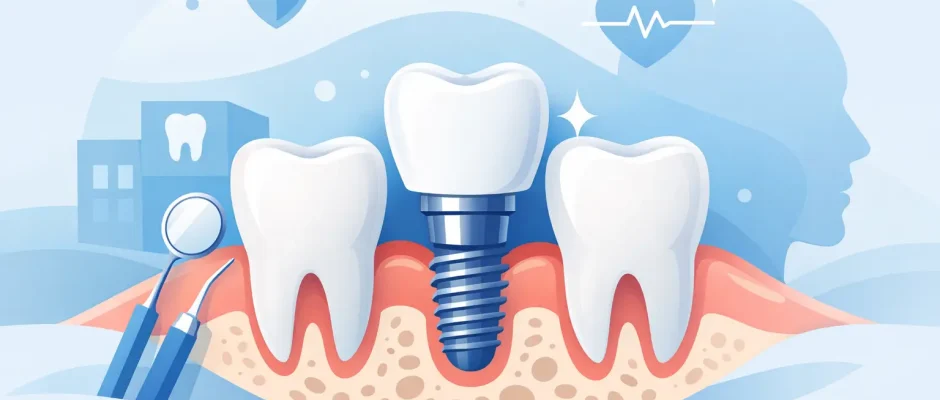
The most useful way to think about implant longevity is this: the implant, the crown, and the tissues around them are three separate parts of one system. They do not age or fail in the same way. A realistic treatment plan protects all three.
Can Dental Implants Last a Lifetime?
Yes, they can. Modern dental implants have a strong record of long-term survival when they are placed in suitable conditions and maintained correctly. The implant fixture is made of biocompatible titanium and, after healing, integrates with the jawbone through a process called osseointegration. Once that connection is stable, the implant can tolerate normal chewing forces for many years.
However, “can last a lifetime” is not the same as a lifetime guarantee. Biology changes. Gum inflammation can develop, bone can remodel, a person’s health and medications can change, and repeated heavy forces can affect the restoration or the implant itself. Good dentistry does not promise that nothing will ever need attention. It creates the best possible conditions for predictable long-term function and monitors those conditions over time.
In practice, the crown or bridge attached to an implant often needs maintenance or replacement before the implant fixture does. Ceramic can chip, screws can loosen, and the shape of the bite may change. These issues are usually manageable when identified early.
What Determines How Long an Implant Lasts?
Accurate planning before surgery
Long-term success begins before an implant is placed. A clinical examination and three-dimensional imaging allow the surgeon to assess bone volume, bone density, the position of the sinus or nerve canal, neighboring roots, and the future position of the final crown.
An implant should be positioned for the restoration that will be placed on it, not simply wherever bone appears available. If it is angled too far toward the cheek, tongue, or adjacent tooth, cleaning becomes more difficult and the forces of chewing may be poorly distributed. Digital planning and, when indicated, a surgical guide help transfer the planned position to the surgical procedure with greater accuracy.
For patients with significant bone loss, forcing an implant into a compromised site is rarely a good long-term strategy. Bone grafting, guided bone regeneration, or a sinus lift may add treatment time, but can provide the support needed for a more stable and hygienic result.
Healthy gums and stable bone
Dental implants do not develop cavities, but they are not immune to gum disease. The tissues around an implant can become inflamed when bacterial plaque accumulates. Early inflammation is called peri-implant mucositis. If it progresses and begins to destroy supporting bone, it is called peri-implantitis.
Peri-implantitis is one of the main threats to an implant that initially healed well. It may develop quietly, without significant pain, which is why regular examinations and X-rays when clinically indicated matter. Bleeding during brushing, persistent bad taste, swelling, or pus around an implant should never be ignored.
A history of periodontitis does not automatically rule out implants. It does mean that gum disease must be brought under control first and that maintenance must be more structured afterward. The goal is not simply to place an implant successfully, but to preserve the bone around it year after year.
The quality of the final crown or bridge
The surgical phase and restorative phase must work together. A well-integrated implant can still be exposed to excess stress if its crown is too high, too wide, poorly shaped, or not balanced properly in the bite.
The restoration should allow access for brushing and interdental cleaning. This is especially important with implant bridges and full-arch restorations such as All-on-4. A beautiful result that cannot be cleaned properly may create problems later. The best restoration is one that looks natural, functions comfortably, and can be maintained by the patient and hygienist.
Smoking, diabetes, and general health
Smoking increases the risk of impaired healing and inflammatory complications around implants. Quitting or reducing smoking before surgery is one of the most meaningful steps a patient can take for healing and long-term stability.
Diabetes is another factor that requires attention. Well-controlled diabetes does not necessarily prevent implant treatment, but uncontrolled blood sugar can interfere with healing and raise infection risk. Certain medications, immune conditions, previous radiation therapy to the jaws, and treatments that affect bone metabolism also require individualized planning.
This is why a detailed medical history is not paperwork. It is part of safe implant surgery. In complex cases, the timing and protocol may need to be adjusted to the patient’s health status.
Grinding and heavy bite forces
Nighttime grinding and clenching can place very high loads on implants and restorations. Unlike a natural tooth, an implant does not have a periodontal ligament that provides the same degree of shock absorption and sensory feedback.
Bruxism does not mean implants are impossible. It means the bite needs to be designed carefully, the number and position of implants may need adjustment, and a night guard may be recommended. A protective appliance is not an optional extra for many grinders. It is part of protecting the investment in treatment.
How to Help Your Dental Implants Last
Daily care around implants should be as routine as caring for natural teeth. Brush twice a day with a soft toothbrush, clean between teeth or beneath a bridge using the method recommended for your restoration, and attend professional hygiene visits at the interval set for your risk level.
Do not assume that an implant needs less attention because it cannot decay. In reality, implants require deliberate cleaning at the gumline, where inflammation begins. Your clinician may recommend interdental brushes, floss threaders, water flossing, or specialized brushes depending on the design of your crown or bridge.
Regular follow-up visits are equally important. These appointments assess gum health, plaque control, bite stability, screw-retained components, and bone levels. Small changes are much easier to manage than advanced inflammation or substantial bone loss.
Avoid using implant crowns to open packages, crack nuts, or bite hard objects. A ceramic crown can fracture under an unexpected load just as a natural tooth can. If you notice a clicking sensation, a crown that feels loose, a change in your bite, or bleeding around the implant, arrange an examination promptly rather than waiting for discomfort.
Immediate Implants and Lifetime Results
In selected cases, an implant can be placed immediately after tooth extraction. This approach can reduce the number of surgical stages and may help preserve the contours of bone and gum tissue. It is not automatically the best choice for every extraction site.
Immediate implantation requires adequate bone for initial stability, careful removal of the tooth, control of infection, and a restoration plan that protects the implant during healing. When these conditions are not present, delayed placement after healing or bone reconstruction may be the safer choice. The right protocol is the one that offers the most predictable result for that specific anatomy, not the fastest timeline.
A Long-Term View of Implant Treatment
An implant should be planned as a durable biological restoration, not as a one-day product. The surgeon’s task is to assess risk, create stable bone and soft-tissue conditions, and place the implant in a prosthetically correct position. The patient’s role is to maintain daily hygiene, protect the bite when needed, and continue regular care.
For patients facing complex extraction, bone loss, or a full-arch rehabilitation, advanced planning can make the difference between a compromise and a stable long-term solution. The most reassuring question is not whether an implant can last forever, but whether your treatment plan gives it the best possible chance to serve you comfortably for decades.


