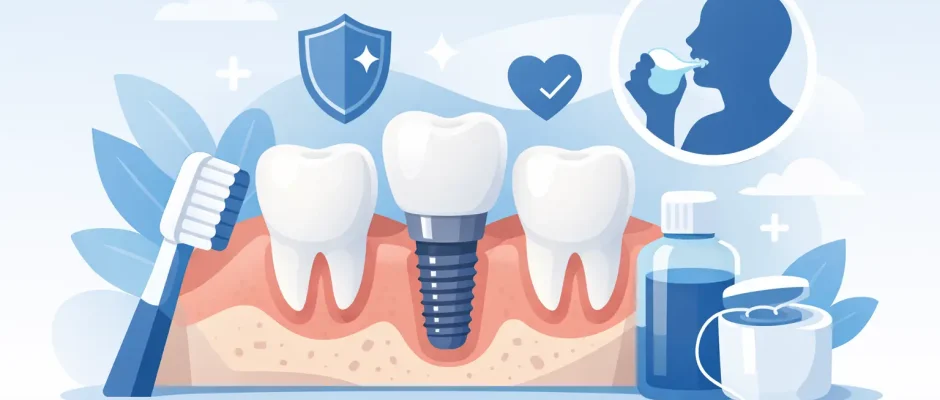
The first 72 hours after implant surgery matter more than most patients expect. Good surgery creates the conditions for success, but careful healing is what protects those conditions. This dental implant aftercare guide explains what is normal, what deserves attention, and how to support stable, predictable healing without guesswork.
What the first days should feel like
Most patients do not describe implant recovery as severe pain. More often, they notice pressure, mild to moderate soreness, tenderness when chewing, and some swelling that peaks around day two or three. If a flap was raised, a bone graft was placed, or several implants were inserted, recovery can feel more pronounced. That does not automatically mean something is wrong.
A small amount of bleeding or pink saliva during the first day is also common. The same applies to limited bruising, especially in the lower face. If your treatment included sinus lift surgery or grafting, the aftercare instructions may be stricter because the tissues need more protection during the early phase.
The key principle is simple: an implant needs stability while the bone begins to heal around it. During that phase, unnecessary pressure, heat, smoking, poor hygiene, or trauma can complicate recovery and in some cases affect osseointegration.
Dental implant aftercare guide for the first 24 hours
On the day of surgery, keep activity light. Rest with your head elevated and avoid bending, heavy exercise, or anything that increases blood pressure and bleeding. If gauze was placed, change it only as instructed. Firm pressure is useful. Frequent checking of the area is not.
Use cold packs on the outside of the face in short intervals during the first several hours. This helps control swelling, but it is not necessary to keep ice on continuously. After the first day, cold is usually less useful.
Do not rinse aggressively, spit forcefully, or drink through a straw. These actions can disturb the blood clot and irritate the wound. If your surgeon prescribed medication, take it exactly as directed. Patients sometimes wait until discomfort becomes strong before starting pain control. That usually makes the first evening harder than it needs to be.
Food should be cool or lukewarm and soft. Yogurt, eggs, soups at a safe temperature, soft fish, mashed vegetables, and smoothies eaten with a spoon are reasonable options. Very hot foods, crunchy foods, seeds, nuts, and spicy meals are poor choices on day one.
Eating after implant surgery
Patients often ask when they can return to normal chewing. The honest answer is: it depends on the type of surgery. A single straightforward implant without grafting is different from multiple implants, immediate placement after extraction, or full-arch treatment.
In general, stay with softer foods for several days and chew away from the surgical side when possible. Even if you feel surprisingly well, do not test the area with crusty bread, steak, chips, or hard fruit. Mechanical overload during early healing is avoidable and unnecessary.
Hydration matters, but alcohol does not help recovery. Avoid it in the immediate postoperative period, especially if you are taking antibiotics, anti-inflammatory medication, or stronger pain medication. Smoking and vaping are more concerning. Nicotine reduces blood supply to healing tissues and raises the risk of complications. For implant healing, this is not a minor detail.
Oral hygiene without damaging the site
Patients are often torn between two mistakes: cleaning too aggressively or avoiding cleaning altogether. Neither is helpful. The surgical area should be treated gently, but the mouth still needs to stay clean.
For the first day, many surgeons prefer no brushing directly over the wound. After that, a soft toothbrush can usually be used carefully on neighboring teeth, with special attention to keeping plaque away from the area. If a medicated rinse such as chlorhexidine is prescribed, use it on schedule, but do not assume that mouthwash replaces brushing. It does not.
If you have a healing abutment already visible through the gum, plaque control becomes especially important. That does not mean scrubbing the area. It means methodical, gentle cleaning. If a temporary prosthesis was delivered, you must follow the exact instructions for wearing and cleaning it because pressure from an ill-fitting temporary can disrupt healing.
Swelling, stitches, and sleep
Swelling is a normal inflammatory response. It usually reaches its peak within two to three days and then begins to decline. A worsening pattern after that point deserves a call to the clinic. Stitches may feel tight, catch the tongue, or create a pulling sensation when speaking. This is common, especially in the first days.
Sleep with your head slightly elevated for the first nights. That simple step often reduces morning swelling and pressure. If you grind or clench your teeth, tell your surgeon before or after surgery if you have not already. Excessive bite force can matter, especially when immediate temporaries are involved.
What to avoid during healing
The most common postoperative problems are not dramatic surgical failures. They are everyday preventable issues: smoking, poor plaque control, returning to the gym too early, chewing on the implant side, or ignoring unusual symptoms because the patient assumes everything is normal.
Avoid touching the area with fingers or your tongue. Avoid hard exercise for the period recommended by your surgeon. If sinus augmentation was part of treatment, avoid forceful nose blowing and sneeze with your mouth open. If a removable denture is being worn over the site, it may need adjustment. Pain from rubbing is not something to simply tolerate.
This is also where treatment planning matters. In a digitally guided, protocol-driven approach, aftercare is easier for patients because the surgical path is more controlled and postoperative instructions are tied to the exact procedure performed. That does not eliminate risk, but it does reduce avoidable variability.
When symptoms are not routine
A dental implant aftercare guide should be honest about warning signs. Call your surgeon promptly if bleeding is heavy and does not slow with pressure, if swelling keeps increasing after day three, if pain suddenly worsens instead of gradually improving, or if you develop fever, foul taste, pus, or difficulty opening the mouth that is getting worse.
Another reason to call is a feeling that the implant or healing cap is moving. Patients sometimes are not sure whether they feel mobility or just soft tissue sensitivity. Either way, it is worth checking. Early assessment is always better than waiting.
Numbness also deserves attention. Temporary altered sensation can happen after local anesthesia and, in rare cases, after surgery near major nerves. If numbness lasts longer than expected or changes in a concerning way, report it. The right response depends on timing, location, and severity.
If you had bone grafting or sinus lift with the implant
Not every implant case is the same. When bone grafting, membrane placement, PRF, or sinus lift procedures are performed, healing priorities shift slightly. The goal is not only implant stability but also protection of the grafted volume and soft tissue closure.
That means your surgeon may ask you to follow a softer diet for longer, avoid removable appliances, delay vigorous rinsing, and attend follow-up visits more closely. Patients sometimes feel better quickly and assume the grafted site is already stable. Biologically, that is rarely true. Tissue comfort and biological maturity are not the same thing.
This is one reason experienced surgical planning matters in complex cases. The more demanding the anatomy, the less room there is for casual aftercare.
Follow-up visits are part of treatment
Some patients think the surgery is the treatment and the follow-up is optional. In implant dentistry, follow-up is part of the treatment. The surgeon checks soft tissue healing, removes sutures if needed, confirms that hygiene is adequate, and looks for small issues before they become larger ones.
This is particularly relevant in immediate implant placement, full-arch provisionalization, and cases with regenerative procedures. A patient may feel fine and still have a pressure point, food impaction problem, or hygiene issue that needs correction.
If you are traveling for treatment, ask in advance how postoperative communication is handled and what symptoms should trigger urgent contact. For patients who come to Israel for surgery, that clarity reduces stress and makes recovery more predictable.
Long-term care after the site heals
Implants do not get cavities, but they can fail from inflammation and bone loss if maintenance is neglected. Once the implant is restored, daily cleaning and regular professional reviews matter just as much as the surgical phase.
How often you should be seen depends on your risk profile. A patient with a history of periodontitis, smoking, diabetes, or difficult home care may need more frequent maintenance than someone with low risk and excellent hygiene. This is where individualized planning matters more than generic advice.
A successful implant should feel uneventful in daily life. No swelling, no bleeding when cleaning, no persistent bad taste, and no progressive soreness when chewing. If those changes appear months or years later, they should not be ignored.
Healing is not helped by doing more. It is helped by doing the right things consistently, especially in the first weeks when biology is working quietly in the background. If you ever feel unsure after implant surgery, asking early is not overreacting. It is part of protecting a result that should be built to last.


