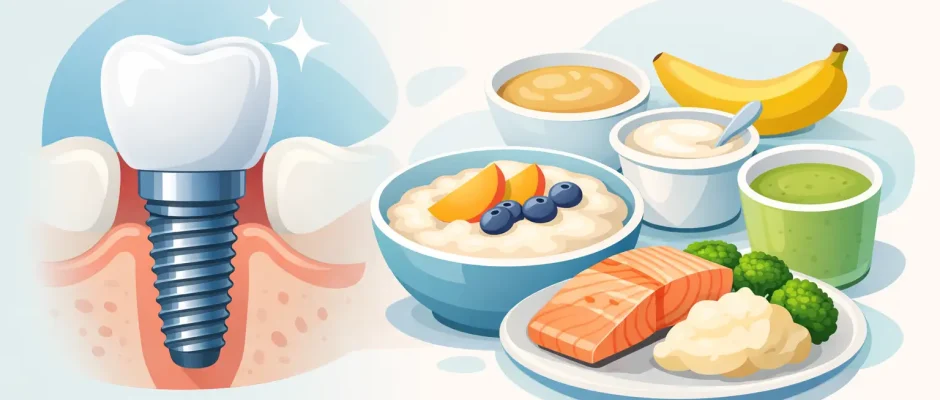
The first meal after implant surgery is where many patients get uncertain. You may feel hungry, but you also do not want to disturb the surgical site, increase bleeding, or make soreness worse. Knowing what to eat after dental implant surgery helps reduce irritation, supports healing, and makes the first few days much easier.
Food matters more than people expect after implant placement. In the early phase, the goal is not just to “eat soft foods.” The real aim is to protect the clot, avoid pressure on the implant area, and keep nutrition stable while the tissues recover. That means temperature, texture, and timing all matter.
What to eat after dental implant surgery in the first 24 hours
For the first day, choose foods that are soft, smooth, and easy to swallow without much chewing. Cool or room-temperature foods are usually better tolerated than hot meals, especially while the area is still numb or freshly operated on. Good options include yogurt, kefir, applesauce, mashed potatoes, blended soups that are not hot, smoothies eaten with a spoon, cottage cheese, pudding, oatmeal that has cooled down, and scrambled eggs if they are very soft.
The best meals in this window are simple and low-risk. Think of foods that do not crumble, do not have seeds, and do not require biting with the front teeth or grinding with the back teeth near the surgical side. If you had multiple implants, bone grafting, or sinus lift surgery, it is especially important to stay conservative with food texture.
Hydration also matters. Sip water regularly. If you are taking antibiotics or pain medication, eating something soft before medication may help your stomach tolerate it better. Avoid using a straw, because suction can disturb the early clot and provoke bleeding.
The best foods for days 2 to 7
After the first 24 hours, most patients can expand their diet slightly, but only if chewing does not stress the surgical area. This is the stage where comfort improves, yet the tissues are still vulnerable. A common mistake is assuming less pain means the site is fully stable. It is not.
Soft proteins are especially useful because healing tissue needs adequate nutrition. Eggs, soft fish, tofu, shredded chicken mixed into something moist, Greek yogurt, hummus, and well-cooked lentils are usually reasonable choices. Carbohydrates that are easy to manage include soft rice, pasta, oatmeal, mashed sweet potatoes, and well-cooked vegetables.
Fruit is fine when the texture is safe. Bananas work well. Soft avocado is an excellent choice because it is calorie-dense and easy to eat. Smooth fruit purees are often better than raw fruits with skin, fibers, or small seeds.
If you want a practical rule, choose foods you can mash easily with a fork. If the food is springy, crunchy, flaky, spicy, or sharp-edged, it is probably too early.
Good examples of post-implant meals
Breakfast can be Greek yogurt with mashed banana or soft scrambled eggs with oatmeal. Lunch might be lukewarm pureed vegetable soup with mashed potatoes or soft rice. Dinner could be baked fish, avocado, and overcooked pasta. Snacks can include cottage cheese, applesauce, pudding, or a smoothie taken from a cup with no straw.
These are not the only choices, but they show the pattern: soft texture, mild temperature, minimal chewing, and no particles likely to get trapped in the area.
Foods to avoid after dental implant surgery
Some foods are a problem because they are hard. Others are a problem because they break into small pieces, create pressure, or irritate the wound chemically. Patients often focus only on “hard foods” and forget the rest.
Avoid nuts, chips, crusty bread, toast, popcorn, granola, raw vegetables, tough meat, and chewy candy. Also avoid rice or grains that scatter easily into the wound if your surgeon specifically advised against them for the first days, especially after grafting. Small seeds can be surprisingly irritating, so it is better to postpone foods like seeded berries, sesame-coated bread, or seeded crackers.
Spicy foods can sting the wound. Very acidic foods may also be uncomfortable. Very hot drinks or soups can increase throbbing and may trigger bleeding in the early period. Alcohol is best avoided while tissues are healing, particularly if you are taking antibiotics, anti-inflammatory medication, or painkillers.
Smoking deserves separate mention. It is not a food issue, but from a healing perspective it is one of the most harmful post-operative factors. It increases the risk of impaired healing and can compromise implant integration.
When can you eat normally again?
It depends on the procedure, the number of implants, the presence of bone grafting, and how stable the implant was at placement. A single straightforward implant often allows a gradual return to more normal eating sooner than a full-arch case or implant surgery combined with bone augmentation.
Many patients can start adding softer solid foods after several days if discomfort is low and chewing can be kept away from the surgical side. Hard, crunchy, or very chewy foods usually need to wait longer. If you had sutures, a graft, or membrane placement, the restrictions may be more important than the discomfort itself. Feeling better is not the same as being ready for steak, nuts, or crusty bread.
This is one reason post-operative instructions should be individualized. In a carefully planned implant protocol, especially when digital planning and minimally traumatic technique are used, recovery can be smoother. But even in an uncomplicated case, the biology of healing still sets the pace.
What to eat after dental implant surgery if chewing is difficult
Some patients struggle not because the pain is severe, but because they are afraid to chew at all. That is understandable. The easiest approach is to rely on soft, high-protein, high-calorie foods for a few days so you do not fall behind nutritionally.
If chewing is difficult, prioritize foods like yogurt, protein-rich smoothies without seeds, mashed beans, soft eggs, cottage cheese, blended soups, mashed vegetables, and soft fish. You can make meals more substantial by adding olive oil, avocado, nut butter if smooth and medically appropriate, or protein powder to soft foods. The goal is to maintain energy without forcing texture too early.
If you are not eating much because of pain, that is worth attention. Pain should usually be manageable with the medications and instructions you were given. Severe or worsening pain, especially after an initial improvement, is not something to explain away with diet alone.
Common mistakes patients make with food
One common mistake is eating while numb. When anesthesia is still active, it is easy to bite your cheek, tongue, or lip without realizing it. Waiting until sensation returns is safer, even if you sip water earlier.
Another mistake is choosing “healthy” foods that are actually poor post-op choices. A seeded smoothie bowl, crunchy salad, or toasted multigrain bread may sound nutritious, but they can irritate the surgical site more than a plain bowl of mashed potatoes and eggs.
Patients also underestimate portion and frequency. If full meals feel difficult, smaller meals more often usually work better. Healing is metabolically demanding. You do not need a perfect menu, but you do need enough fluids, protein, and calories.
Signs that food is irritating the surgical site
Mild tenderness during eating is common. Persistent bleeding, a sharp increase in pain with chewing, repeated food impaction in the wound, or a feeling that the area is being mechanically stressed are signs to step back to softer foods. Swelling that peaks in the first couple of days can be normal, but worsening swelling, bad taste, fever, or discharge should prompt a call to your surgeon.
Patients with immediate implants, provisional restorations, or full-arch temporary teeth need to be especially careful. In these cases, food texture is not just about comfort. It can directly affect load on the implants during a critical healing phase.
A practical way to think about your diet after implant surgery
Instead of asking, “Can I eat this?” ask three better questions: Is it soft enough, is it cool or lukewarm, and can I eat it without chewing on the surgical side? If the answer to any of those is no, wait.
For most people, a short period of disciplined eating makes recovery smoother and less stressful. You do not need a complicated recovery diet. You need food that is gentle, clean, and realistic for several days while the tissues stabilize.
If your case involved grafting, multiple implants, or a more advanced surgical plan, follow your surgeon’s instructions over any general advice. The safest diet is the one matched to your exact procedure. A calm, conservative approach in the first week usually protects the result you just invested in.


