Sinus Lift Complications: What Matters Most
A sinus lift is often the step that makes implants possible in the upper back jaw when bone height is limited. Patients usually ask the same practical question: not whether the procedure can be done, but what sinus lift complications are actually possible, how often they happen, and what can be done to reduce the risk before surgery even starts.
That is the right question. In implant surgery, safety is rarely about one dramatic moment. It is usually about planning, anatomy, surgical technique, and how carefully the case is selected. A sinus lift can be a predictable procedure, but it is not a trivial one, and the details matter.
Which sinus lift complications are most common?
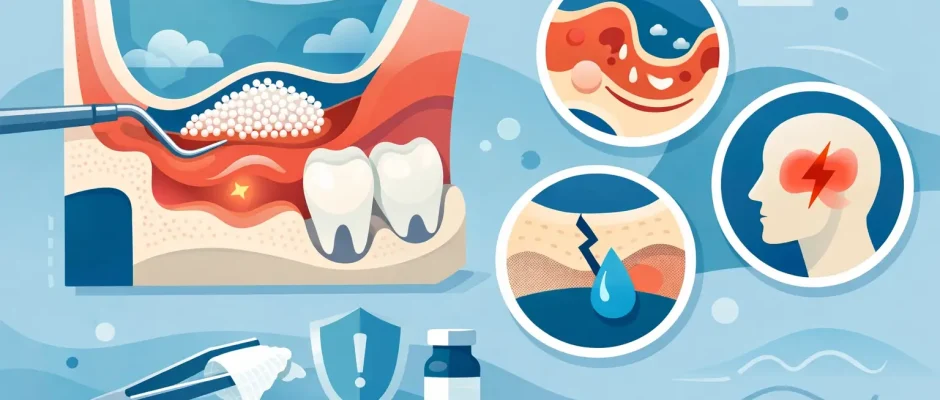
The most common intraoperative issue is perforation of the Schneiderian membrane, the thin lining inside the maxillary sinus. This is not the same thing as a failed surgery. Small perforations can often be managed during the procedure, depending on their size, location, and the stability of the graft. But the risk is real, and it increases when the membrane is very thin, the anatomy is complex, or there are septa inside the sinus.
Swelling, bruising, pressure, and mild bleeding are expected after surgery and are not considered complications by themselves. What deserves closer attention is persistent bleeding, increasing pain after the first few days, foul taste or odor, fever, or signs of sinus infection. Those findings deserve examination rather than reassurance by phone alone.
Another possible problem is postoperative sinusitis. This can happen if the sinus was not healthy before surgery, if graft particles migrate, if drainage is impaired, or if bacteria gain access to the area. In some patients the issue is temporary and responds to treatment. In others, especially if preexisting sinus disease was overlooked, management becomes more involved.
Graft infection or partial graft loss is less common, but clinically more significant. If the graft does not remain stable and well protected during healing, the future implant plan may need to be changed. In some cases treatment can continue after the area heals. In others, the timeline becomes longer.
Why complications happen in the first place
Most patients assume the procedure itself is the main source of risk. In reality, complications often begin with anatomy or diagnosis. The posterior upper jaw is one of the most variable regions in implant dentistry. Bone height may be minimal, the sinus floor may be irregular, and the membrane may be thickened or fragile. Septa can divide the sinus cavity and make membrane elevation more difficult than expected.
Preexisting sinus disease also changes the picture. A patient may have chronic congestion, prior sinus infections, polyps, allergies, or impaired drainage through the ostium. A sinus lift in a poorly ventilated sinus is not the same procedure as a sinus lift in a healthy one, even if the CBCT looks acceptable at first glance.
Smoking, poorly controlled diabetes, untreated periodontal disease, and inadequate oral hygiene can also affect healing. They do not automatically rule out treatment, but they can shift the balance between a straightforward recovery and a preventable complication.
Technique matters too. Excessive force during membrane elevation, poor visibility, incorrect instrument choice, contamination of the field, or placing graft material in a situation where soft tissue closure is not stable can all create problems that were avoidable.
Membrane perforation does not always mean failure
This point is worth clarifying because it causes unnecessary fear. Membrane perforation is the best-known sinus lift complication, but not every perforation leads to infection, graft loss, or treatment failure. What matters is the size of the tear, whether it can be repaired, whether the sinus remains protected, and whether the surgical plan is adjusted appropriately.
Sometimes the safest decision is to repair the membrane and continue. Sometimes it is better to stop, allow healing, and return later. That is not a setback caused by indecision. It is good surgical judgment.
Experienced surgeons do not measure success by whether every case looks identical. They measure it by whether the treatment plan stays biologically sound when anatomy does not cooperate.
How complications are prevented before surgery
The most effective prevention starts before the first incision. A proper CBCT is essential because two-dimensional imaging does not give enough information about sinus anatomy, residual bone height, septa, membrane condition, or the relationship between the future implant site and the sinus floor.
Medical and dental history matter just as much. Recurrent sinus problems, previous ENT treatment, allergy patterns, smoking status, and active dental infection should be reviewed carefully. If a nearby tooth has apical pathology or there is untreated periodontal inflammation, those issues may need to be addressed before grafting.
Case selection is part of prevention. Not every patient needs the same type of sinus augmentation. A transcrestal approach may be appropriate for limited elevation in one case, while a lateral window technique is safer and more controlled in another. The choice depends on anatomy, implant position, residual bone, and the restorative goal.
This is where digital planning and disciplined surgical protocols make a real difference. When the implant position is planned from the final prosthetic outcome backward, and when the augmentation is matched to the actual defect rather than performed in a routine way, the margin for error becomes smaller.
What the patient can feel after surgery – and what is not normal
A normal recovery usually includes pressure in the cheek area, mild to moderate swelling, and some discomfort with chewing or facial expression. A small amount of blood from the nose or mouth can occur early on. Most patients improve gradually over several days.
Warning signs are different. Pain that increases instead of decreases, unilateral nasal blockage that worsens, thick discharge, bad smell, fever, or fluid sensation in the sinus can suggest infection or impaired sinus drainage. A sensation of graft movement, wound opening in the mouth, or exposed graft particles also needs prompt evaluation.
Patients should also understand that forceful nose blowing, sneezing with the mouth closed, smoking, or ignoring postoperative instructions can turn a stable early result into a preventable complication. Healing after a sinus lift depends not only on what happens in the operatory, but also on protecting the site during the first phase of recovery.
Are some patients at higher risk?
Yes, and this is where honest discussion matters more than reassuring language. Patients with active sinus disease, heavy smoking habits, unstable systemic conditions, previous graft failure, or very limited residual bone are at higher risk. That does not always mean treatment should be refused. It means the plan may need to be modified, staged, or coordinated with other specialists.
Patients seeking immediate solutions sometimes dislike hearing that more preparation is needed. But speed is not the same thing as efficiency. In complex implant cases, a slower and more controlled sequence often produces the more predictable result.
For this reason, experienced surgical planning includes not just the ideal pathway, but also a contingency plan. If the membrane tears, if the bone is softer than expected, or if primary implant stability is lower than planned, the surgeon should already know what the next best decision is.
When sinus lift complications affect implant timing
Not every sinus lift is followed by immediate implant placement. If residual bone is sufficient for good primary stability, the implant may be placed at the same surgery. If not, grafting may need to heal first. Complications can change that timing.
For example, a repaired membrane with stable graft material may still allow treatment to proceed. A larger perforation, unstable graft, or signs of contamination may require postponement. This is one of the main reasons patients should view the timeline as biologic rather than fixed on a calendar.
The right schedule is the one the tissues can support safely.
What good follow-up looks like
Postoperative follow-up is not a formality. It is part of treatment. The early healing phase is when swelling patterns, wound closure, sinus symptoms, and signs of infection can be assessed in time to intervene before a small problem becomes a larger one.
A careful surgeon does not disappear after the graft is placed. Clear instructions, planned reviews, and readiness to reassess symptoms are part of risk control. This matters especially in sinus surgery because some complications begin subtly, with pressure or congestion rather than severe pain.
For patients considering treatment in Tel Aviv or elsewhere, this is a practical point worth asking about at consultation: not only how the sinus lift is performed, but how the recovery is monitored.
A well-planned sinus lift is usually predictable. The difference is not that complications are impossible. It is that they are anticipated, minimized, recognized early, and managed with discipline. That is what gives patients the best chance of reaching implant treatment safely and without unpleasant surprises.


