Sinus Lift Procedure Explained Clearly
If you were told you do not have enough bone for an upper dental implant, the missing piece is often not the implant itself – it is the sinus. This is where a sinus lift procedure explained clearly can reduce a lot of unnecessary anxiety. In many cases, the problem is simple: after upper back teeth are lost, the bone becomes thinner and the maxillary sinus sits too close to where the implant should go.
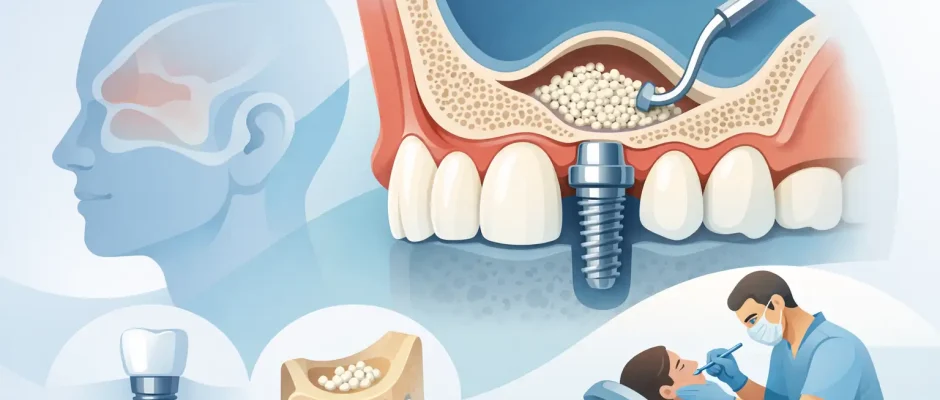
A sinus lift, also called sinus augmentation, is a bone grafting procedure performed in the upper jaw. Its goal is to create enough vertical bone height for stable implant placement in the premolar or molar area. For patients, that usually means turning a borderline or impossible implant case into a predictable one.
Sinus lift procedure explained: what actually happens
The maxillary sinus is an air-filled space located above the upper back teeth. Between the mouth and the sinus there is normally a layer of bone. When teeth have been missing for a while, that bone can resorb. At the same time, the sinus may expand downward, leaving very limited bone for an implant.
A sinus lift addresses this by gently elevating the sinus membrane and placing graft material under it. That creates space where the body can form new bone. After healing, there is usually enough support for a dental implant of proper length and position.
This is not a cosmetic add-on. It is a functional reconstruction step used when anatomy does not allow safe implant placement in the standard way.
Who usually needs a sinus lift
Not every upper implant requires sinus augmentation. The need depends on bone volume, sinus anatomy, and the position of the future implant.
A sinus lift is commonly considered when upper molars or premolars were removed months or years ago, when bone loss has progressed because of periodontal disease or infection, or when a patient naturally has a large sinus and limited native bone. Sometimes the need becomes clear only after 3D imaging, because a regular dental X-ray does not always show the full anatomical picture.
This is why CBCT planning matters. It allows the surgeon to assess residual bone height, sinus shape, membrane condition, septa inside the sinus, and the proximity of adjacent structures. In experienced hands, this planning phase is what makes treatment more predictable and safer.
There is more than one type of sinus lift
Patients often hear the term as if it refers to one standard operation. In reality, technique selection depends on how much bone is already present.
Closed sinus lift
A closed sinus lift, sometimes called a crestal approach, is usually considered when there is still a moderate amount of native bone. The sinus floor is accessed through the implant site itself. The membrane is elevated carefully, and a smaller volume of graft may be placed. In selected cases, the implant can be placed at the same appointment.
This approach is less invasive, but it is not suitable for severe bone deficiency. It works best when only a limited gain in height is required.
Open sinus lift
An open sinus lift, often called a lateral window approach, is used when the bone is significantly reduced. A small access window is created in the side wall of the upper jaw, the sinus membrane is elevated under direct visualization, and graft material is placed beneath it.
This technique allows better control in more complex anatomy and larger augmentation volumes. It is more extensive than the closed technique, but it is often the right choice when long-term implant stability is the priority.
What happens during the procedure
The surgery is usually performed under local anesthesia. For anxious patients, additional sedation options may be discussed depending on the clinical setting. The goal is not only pain control but also a calm, controlled experience.
After anesthesia, the gum is gently opened to expose the bone. The chosen sinus lift technique is performed, the sinus membrane is elevated, and graft material is inserted into the created space. Depending on the available native bone and primary stability, the implant may be placed immediately or after healing.
The site is then closed with sutures. In modern surgical practice, careful tissue handling, microsurgical principles, and precise preoperative planning make a real difference in postoperative comfort. This is also where digital imaging and surgical protocols matter more than patients often realize.
What materials are used for the graft
The exact grafting material depends on the case, the treatment plan, and the surgeon’s protocol. The purpose is always the same: to support bone formation in the elevated area.
Some cases use a biomaterial that acts as a scaffold for new bone growth. In selected situations, biologic adjuncts such as PRF may be used to support healing. The choice is not one-size-fits-all. The amount of missing bone, sinus anatomy, timing of implantation, and the patient’s general health all influence the decision.
For the patient, the practical takeaway is simple: the material is selected to maximize safety and predictability, not to follow a generic template.
Does a sinus lift hurt?
During the procedure, patients should not feel pain because the area is anesthetized. The more common concern is pressure, vibration, or the idea of surgery near the sinus. Those concerns are understandable, but they are usually worse than the actual experience.
After surgery, discomfort is generally manageable and often described as milder than expected. Swelling, mild soreness, nasal pressure, and fatigue for a few days are common. Some patients notice a small amount of bloody nasal discharge during the first day or two. That can be normal.
The recovery experience varies. A small closed lift with immediate implant placement is different from a larger lateral window augmentation. Good technique, clear instructions, and close follow-up all influence how smooth recovery feels.
Healing time and when implants are placed
This is one of the most important it-depends questions. If enough native bone exists to stabilize the implant at the time of surgery, the implant can sometimes be placed simultaneously with the sinus lift. If bone is too limited, the graft is allowed to heal first, and implant placement is delayed.
Typical healing after a larger sinus augmentation may take several months before implant placement or final restoration. That timeline is not a setback. It is often the safer path to a durable result.
Patients naturally want treatment to move quickly, but in implant surgery, speed only matters when it does not compromise stability. A shorter path is not always the better path.
Risks and complications to understand honestly
A sinus lift is a well-established procedure, but it is still surgery. The most common intraoperative complication is perforation of the sinus membrane. Small perforations can often be managed during surgery, while larger ones may change the plan.
Other possible issues include infection, bleeding, graft loss, sinusitis, swelling, delayed healing, or failure to obtain enough usable bone. Smoking, uncontrolled diabetes, poor oral hygiene, active sinus disease, and certain anatomical factors can increase risk.
This is exactly why diagnosis should be individualized. A patient with seasonal allergies, prior sinus surgery, or chronic sinus problems may need a different protocol or coordination with an ENT specialist. Good surgery starts with case selection, not with the handpiece.
How to prepare and what to do after surgery
Preparation usually includes CBCT imaging, medical history review, and a discussion of medications and sinus health. If there is active infection or uncontrolled inflammation, it should be addressed before augmentation.
After surgery, patients are typically advised not to blow their nose forcefully, sneeze with the mouth closed, use straws aggressively, or create pressure in the sinus area. These instructions matter because the surgical site is healing directly beneath the sinus membrane.
Soft foods, careful oral hygiene, prescribed medications, and follow-up visits are part of routine care. Most patients can return to non-strenuous daily activity relatively quickly, but healing protocols should be taken seriously even if pain is minimal.
Why experience and planning matter so much
Sinus augmentation is one of those procedures where the difference between average and meticulous work is not always visible to the patient on the day of surgery. It shows up later in healing quality, implant positioning, complication control, and long-term stability.
A surgeon who routinely manages bone deficiency cases will usually focus not just on placing graft material, but on the entire chain: imaging, membrane handling, tissue management, implant timing, prosthetic planning, and risk control. In a practice dedicated to surgical dentistry and implantology, such as Implantolog in Tel Aviv, that systematic approach is often what helps complex cases become more understandable for patients.
If you have been told that implants in the upper jaw are not possible, that answer may be incomplete. Sometimes the real question is not whether implants can be done, but whether the bone and sinus can be managed properly first.


