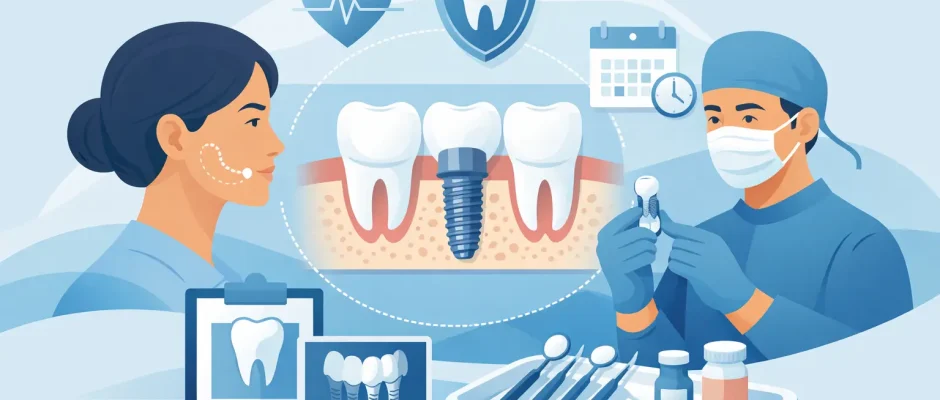
Most implant complications do not start in the operating room. They start earlier – when a patient arrives sleep-deprived, skips instructions, hides a medication, or assumes recovery will be simple because the procedure is routine. If you are wondering how to prepare for dental implant surgery, the goal is not just to “show up ready.” It is to reduce risk, improve healing, and make the surgical day predictable.
Dental implant surgery is highly planned treatment. That is one reason outcomes can be so reliable when diagnosis, surgical technique, and patient preparation are aligned. Good preparation helps your surgeon work under the best possible conditions and helps your body respond well afterward.
How to prepare for dental implant surgery starts with the plan
Preparation begins well before the day of surgery. The first step is a proper consultation with imaging, a review of your medical history, and a discussion of the final restorative plan. An implant is not placed in isolation. Its position, diameter, angle, and timing all depend on the bone, soft tissue, bite, neighboring teeth, and the type of crown or bridge that will be attached later.
This is why the same missing tooth can lead to different treatment plans in different patients. One person may be a candidate for immediate implant placement after extraction. Another may need bone grafting first. A third may benefit from guided surgery with a surgical template to improve precision in a narrow anatomical zone. If your surgeon recommends additional steps such as sinus lift, bone regeneration, or PRF, that does not automatically mean your case is problematic. It usually means the plan is being adapted to your anatomy rather than forced into a standard protocol.
At this stage, be very direct about your health history. Mention diabetes, osteoporosis, heart conditions, autoimmune disease, smoking, teeth grinding, prior radiation therapy, and any history of delayed healing. Also bring a full medication list, including blood thinners, bisphosphonates, steroids, injections for diabetes or weight loss, and supplements. These details are not administrative. They affect bleeding, infection risk, anesthesia decisions, and osseointegration.
Medical preparation matters more than most patients expect
Many patients think preparation is mainly about food and transportation. In reality, medical optimization is often the most important part.
If you smoke or vape nicotine, discuss this honestly. Nicotine reduces blood supply and increases the risk of impaired healing and implant failure. Stopping even temporarily around the time of surgery may help, but longer cessation is better. The exact recommendation depends on how much you use, your tissue condition, and whether grafting is planned.
If you have diabetes, aim for stable blood sugar control before surgery. Poorly controlled glucose can slow healing and increase complications. If you take anticoagulants or antiplatelet medications, do not stop them on your own. The decision must be coordinated between your surgeon and, when needed, your prescribing physician. Unplanned interruption can be more dangerous than the dental procedure itself.
Respiratory infections, active gum inflammation, or untreated dental infection nearby may also change timing. Sometimes the safest preparation is postponement until local or systemic conditions are better controlled. That can feel frustrating, but it protects the result.
What to do in the week before implant surgery
The week before surgery is the right time to organize the practical details that patients often leave too late. Confirm your appointment time, review the instructions you were given, and ask what kind of anesthesia or sedation is planned. Preparation is different for local anesthesia than for oral sedation or IV sedation.
If you were prescribed medications in advance, fill them early. Do not wait until after surgery, when you may be tired or numb. Make sure you know when to start them. Some antibiotics are taken before surgery, some after, and some cases do not require them at all. Pain management may also vary depending on whether your procedure includes extraction, immediate implantation, bone grafting, or multiple implants.
This is also the time to prepare your recovery space at home. Have soft foods ready, keep ice packs in the freezer, and plan for a quieter schedule for at least the first day or two. If your work is physically demanding, ask in advance when you can safely return. Recovery after a single straightforward implant may be quick, while surgery that includes grafting or sinus elevation can require more caution.
Try to avoid alcohol in the day or two before surgery, and do not start intense exercise programs right before your appointment. Your body heals better when routine is stable.
The day before and the morning of surgery
The instructions for the day before surgery depend on sedation. If you are having only local anesthesia, you can usually eat normally unless your surgeon tells you otherwise. If sedation is planned, fasting rules may apply. Follow them exactly. These are safety instructions, not preferences.
Get a full night’s sleep if possible. Anxiety often makes patients underestimate how much rest matters. Sleep affects blood pressure, stress response, and how well you tolerate the procedure.
On the morning of surgery, wear comfortable clothing and avoid heavy makeup, strong perfume, or complicated accessories. If sedation is planned, arrange for a responsible adult to bring you home and stay reachable. Do not assume a taxi or rideshare is enough unless the clinic specifically says so.
Brush your teeth unless instructed otherwise, but be gentle around the treatment area. Take only the medications you were told to take. Again, do not improvise. A common mistake is skipping regular blood pressure medication because the patient is nervous about taking anything before surgery. That can create more problems, not fewer.
Food, hydration, and what patients often get wrong
One of the most common questions in how to prepare for dental implant surgery is whether to eat beforehand. The answer depends on the anesthesia plan. With local anesthesia alone, a light meal is often helpful because it makes the appointment more comfortable. With sedation, eating may be restricted for several hours.
Hydration matters too. Unless you were told to fast completely, being well hydrated generally helps. Dehydration can make patients feel weaker and more anxious.
After surgery, your first meals should be soft, not hot, and easy to chew away from the surgical site. That means preparation starts before the procedure. Yogurt, eggs, soups at a lukewarm temperature, mashed vegetables, oatmeal, smoothies eaten with a spoon rather than a straw if advised, and soft fish are practical choices. What you want to avoid is crunchy, spicy, very hot, or seedy food that can irritate the wound.
Questions worth asking before the procedure
A well-informed patient is usually a calmer patient. Before surgery, make sure you understand whether the implant will be placed immediately or in stages, whether bone grafting is needed, how long the appointment will take, what level of swelling is normal, and when you will be able to eat, brush, work, and exercise.
Also ask about the specific risks in your case. The answer should not be generic. Upper jaw posterior implants may involve sinus considerations. Lower jaw posterior implants may require attention to the inferior alveolar nerve. Front-zone implants may place greater emphasis on soft tissue architecture and esthetics. Precision planning, digital imaging, and when appropriate surgical guides are designed to reduce these risks, but patients should still understand the anatomy involved.
If you are traveling for care, including to Tel Aviv for treatment, ask how follow-up is organized and what symptoms would require urgent contact after you leave the clinic. Good surgery includes a clear postoperative pathway, not just the procedure itself.
Mental preparation is part of surgical preparation
Patients often prepare their schedule but not their expectations. Implant surgery is usually very manageable, especially with good anesthesia, but it is still surgery. You may have swelling, tenderness, and temporary eating limitations. If a graft is placed, the area may feel full or tight for a while. If an extraction and implant are done on the same day, the first week may be less comfortable than with a delayed implant in a healed site.
That does not mean something is wrong. It means your body is healing. The point of preparation is not to eliminate every symptom. It is to know what is normal and to avoid preventable setbacks.
Patients who do best are usually the ones who approach treatment as a coordinated process. They share accurate health information, follow instructions closely, ask precise questions, and give recovery the same attention they give the surgery date itself. That mindset often matters as much as the procedure.
A calm, well-prepared patient gives the surgical plan its best chance to work exactly as intended – safely, comfortably, and with a result that stays stable for years.


