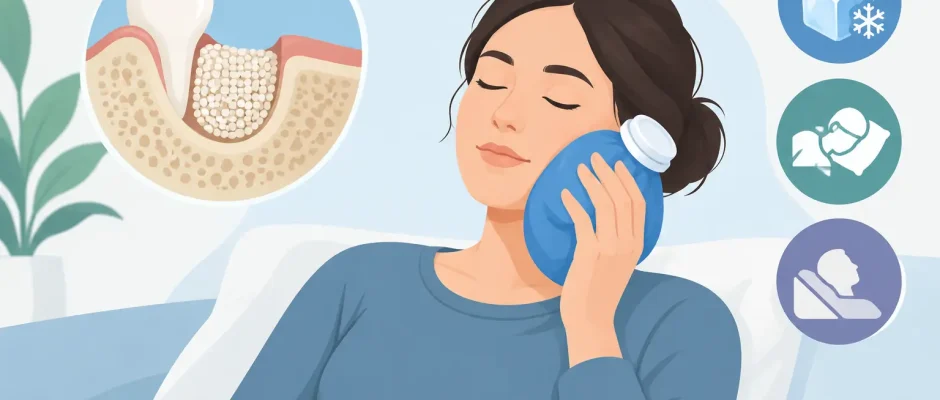
Swelling after a bone graft can look more dramatic than it feels. A fuller cheek, tightness around the surgical area, or mild bruising often reflects the body’s normal inflammatory response as healing begins. Knowing how to manage swelling after bone graft surgery helps protect the graft, control discomfort, and prevent unnecessary anxiety during the first days at home.
A bone graft is not the same as a simple filling or cleaning. The surgical site may include a membrane, fixation material, sutures, PRF, or a simultaneous implant. For that reason, recovery instructions should always be individualized. The plan given by your surgeon takes priority over general recommendations.
What swelling is normal after a bone graft?
In most cases, swelling becomes noticeable several hours after surgery and increases over the next 48 to 72 hours. It commonly reaches its peak on the second or third day, then gradually improves. After a larger graft, sinus lift, multiple extractions, or implant placement performed at the same visit, visible swelling may remain for a week or longer.
The location of the procedure matters. Grafting in the upper jaw can cause swelling of the cheek and sometimes around the eye. Lower-jaw procedures may produce jaw stiffness and temporary difficulty opening the mouth widely. Bruising can appear later than swelling, occasionally moving downward toward the jawline or neck as it resolves.
Mild tenderness, pressure, and limited opening are expected. The trend matters more than a single moment in the mirror: normal postoperative swelling should eventually stabilize and then begin to decrease.
How to manage swelling after bone graft surgery
Use cold packs during the first 24 to 48 hours
Apply a cold pack to the outside of the face, not directly on the surgical area inside the mouth. A practical schedule is 15 to 20 minutes on, followed by at least 15 to 20 minutes off. Wrap the pack in a thin cloth to protect the skin from cold injury.
Cold helps limit early fluid accumulation and can reduce discomfort. It is most useful on the day of surgery and the following day. Keeping an ice pack on continuously does not improve the result and may irritate the skin or tissues.
After the first 48 hours, cold is often less helpful. If your surgeon recommends it, gentle moist warmth may be used later to ease muscle tightness and help bruising resolve. Do not use heat in the first day or two unless you have been specifically instructed to do so.
Keep your head elevated
For the first two or three nights, rest with your head higher than your heart. Use an extra pillow, a wedge pillow, or sleep in a reclined position. This simple adjustment can reduce morning puffiness and the throbbing sensation that may occur when lying flat.
Avoid sleeping on the operated side if it increases pressure or discomfort. Good rest supports healing, but the goal is not to remain in bed all day. Short, easy walks around the home are usually appropriate once the anesthetic has worn off and you feel steady.
Take medication exactly as prescribed
Your surgeon may recommend an anti-inflammatory medication, an analgesic, an antibiotic, or a short course of medication to reduce postoperative inflammation. Take only the medications you were prescribed or specifically advised to use, at the stated dose and timing.
Do not add aspirin or other over-the-counter medications without checking first, especially if you take blood thinners, have stomach ulcers, kidney disease, high blood pressure, allergies, or other medical conditions. Some medications can increase bleeding risk or interact with your postoperative plan.
If antibiotics are prescribed, complete the course unless your surgeon tells you to stop or you develop a possible allergic reaction. Rash, facial swelling unrelated to the procedure, breathing difficulty, or severe diarrhea requires prompt medical advice.
Protect the graft from pressure and disruption
The goal is not only to reduce facial swelling but also to give the grafted area stable conditions for healing. For the first days, choose soft foods that do not require heavy chewing. Lukewarm or cool foods are generally more comfortable than hot food and drinks.
Avoid chewing directly over the graft site. Do not pull your lip or cheek aside repeatedly to inspect the wound, and do not touch the area with fingers or your tongue. Small graft particles may occasionally be noticed, depending on the procedure, but repeated disturbance can compromise the protective clot and soft tissues.
Do not smoke or vape. Nicotine constricts blood vessels and substantially impairs healing, while inhalation and suction can disturb the surgical site. Alcohol should also be avoided while swelling is active and while taking prescription pain medication or antibiotics.
Follow oral hygiene instructions carefully
Cleanliness matters, but aggressive rinsing is not helpful immediately after surgery. During the first 24 hours, most patients should avoid vigorous spitting, rinsing, or brushing directly over the surgical site. After that, follow the exact rinsing protocol provided by your surgeon. This may include a gentle saltwater rinse or a prescribed antimicrobial mouth rinse.
Brush the rest of your teeth normally but carefully. Keeping the mouth clean reduces bacterial load without traumatizing the incision. If a surgical splint, temporary restoration, or removable prosthesis is part of your treatment, wear and clean it only as instructed.
Activities that can make swelling worse
For several days, avoid strenuous exercise, heavy lifting, bending repeatedly, and anything that raises blood pressure sharply. A workout that feels routine before surgery can increase bleeding, throbbing, and swelling afterward. Returning to activity is usually gradual, based on the size of the procedure and your recovery.
Avoid hot showers, saunas, and very hot drinks during the early recovery period. Also avoid using straws or creating suction in the mouth. If the graft involved the upper jaw or a sinus lift, your surgeon may also instruct you not to blow your nose, hold back sneezes, play wind instruments, or travel by air for a specified period. These restrictions protect the sinus membrane and graft from pressure changes.
When swelling needs a call to the surgeon
Postoperative swelling is expected, but it should not be ignored if its pattern changes. Contact your surgical team if swelling continues to worsen after the third or fourth day, rapidly expands, or returns after it had clearly begun to improve.
You should also call if you develop fever, chills, pus-like drainage, a bad taste or odor that persists, increasing redness, severe pain not controlled by prescribed medication, or bleeding that does not stop with directed pressure. Numbness that is new, worsening, or persists beyond the expected anesthetic period also deserves assessment.
Difficulty breathing, swallowing, opening the mouth because of rapidly increasing swelling, or swelling around the eye accompanied by vision changes requires urgent medical evaluation. These symptoms are not typical recovery findings.
Why a personalized follow-up matters
The amount of swelling after grafting depends on more than the size of the incision. It may reflect the graft volume, whether guided bone regeneration or a sinus lift was performed, the condition of the surrounding tissues, and individual healing factors such as smoking, diabetes control, medications, and immune health.
Modern planning, atraumatic surgical technique, careful soft-tissue management, and biologic adjuncts such as PRF can support a more comfortable recovery. Still, no protocol promises zero swelling. The realistic objective is controlled healing, protection of the graft, and early recognition of anything outside the expected course.
At your postoperative visit, the surgeon checks the incision, graft stability, soft tissues, and signs of infection or excessive inflammation. This visit is also the right time to clarify when you can return to normal food, exercise, brushing, and future implant treatment stages.
A calm, measured recovery is usually built from small decisions: use cold correctly, rest with your head elevated, take medication as directed, and leave the surgical area undisturbed. If something feels different from the recovery plan you were given, contact your surgeon early rather than trying to manage a possible complication on your own.


