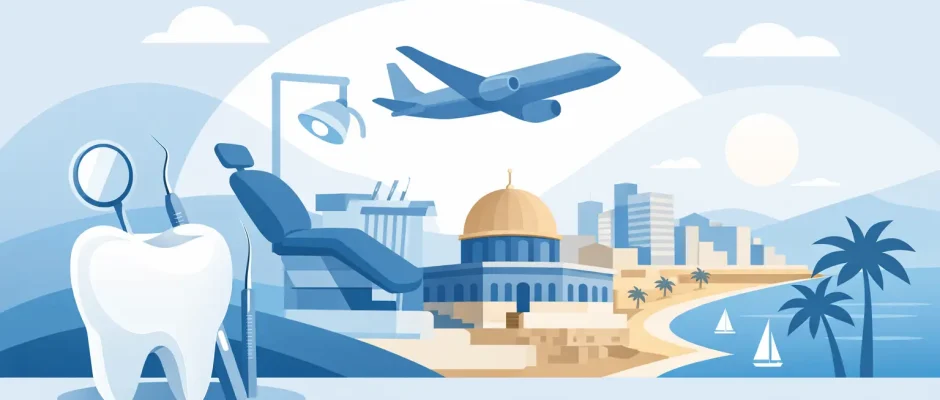
The decision usually starts with a problem that no longer feels small – a failing tooth, missing teeth, loose dentures, a wisdom tooth in a difficult position, or bone loss that turns a routine implant case into a surgical one. That is exactly where the question of why dental tourism in Israel becomes practical rather than theoretical. Patients are not only comparing prices. They are comparing diagnostic quality, surgical skill, treatment planning, recovery, and the likelihood of getting a result that will hold up.
For straightforward dentistry, many destinations can look similar on paper. For implant placement, bone grafting, sinus lift procedures, immediate implantation, or full-arch restoration, the differences become much more meaningful. When treatment involves surgery, the cheapest option is rarely the clearest measure of value.
Why dental tourism in Israel stands out
Israel has a strong reputation in medicine because it tends to combine specialist-level training, modern equipment, and a practical, protocol-driven approach to treatment. In dentistry, this matters most when the case is not simple. A patient with limited bone volume, failed prior treatment, gum recession, impacted teeth, or a need for atraumatic extraction and immediate implant placement benefits from a clinic that plans carefully before touching anything.
That planning is one of the real reasons patients look at Israel. Good implant treatment is not just about placing titanium in bone. It starts with CBCT imaging, assessment of bone volume and density, prosthetic planning, surgical access, and risk control. If those stages are handled well, the surgery is usually more precise and recovery is often more predictable.
Another reason is the clinical culture. In the best settings, treatment is structured around protocols rather than improvisation. That includes guided implant surgery when indicated, PRF protocols to support healing, microsurgical technique for soft tissue handling, and staged treatment when biology requires patience. Patients who have already heard, “We can try,” often feel more confident when they hear, “Here is the exact plan, here are the limits, and here is what we can predict.”
It is not only about lower cost
Some patients assume dental tourism means going abroad mainly to save money. Sometimes that is true, but Israel is usually chosen for a different balance: high medical standards with transparent planning and access to advanced surgical care. Depending on the procedure, the price may be favorable compared with private care in some countries, but the stronger argument is often clinical value.
If you need a single uncomplicated filling, flying for treatment may not make sense at all. If you need multiple implants, bone augmentation, extraction of impacted wisdom teeth, or a full-arch surgical solution such as All-on-4, the equation changes. In those cases, the quality of planning and execution can affect not only immediate comfort but also whether the result remains stable years later.
This is where patients should be careful. A low quote can hide compromises in diagnostics, implant system selection, sterility standards, grafting strategy, or follow-up. A higher quote does not automatically mean better care either. What matters is whether the clinic can explain what is included, why each stage is needed, and how the plan was chosen for your anatomy rather than for convenience.
Why dental tourism in Israel appeals to implant patients
Implant patients tend to ask more precise questions than general dental patients, and rightly so. They want to know whether there is enough bone, whether extraction and implantation can be done in one visit, whether a sinus lift is necessary, what kind of grafting material is used, and how healing will be monitored. These are not sales questions. They are treatment questions.
Israel is appealing in this space because many clinicians work at a high technical level and are comfortable managing cases that go beyond routine placement. That includes narrow ridges, posterior maxilla with sinus pneumatization, failed implants, retained roots, and sites with active or previous inflammation. For these patients, the difference between average care and experienced surgical care is substantial.
Digital workflows also matter. A clinic that uses 3D diagnostics and surgical guides when appropriate can often reduce uncertainty during implant placement. That does not mean technology replaces surgical judgment. It means the surgeon has better information and better control. In difficult anatomy, that can be the difference between a clean, well-positioned implant and a compromised prosthetic result later.
Soft tissue management is another overlooked factor. Patients often focus on whether the implant integrates, but the esthetic and hygienic result depends heavily on gum contours, tissue thickness, incision design, and atraumatic technique. Microsurgical principles are especially relevant in visible areas and in patients who already have recession or thin tissue biotype.
What patients usually value most
For international patients, confidence comes from clarity. The most reassuring clinics do not oversimplify treatment. They explain the diagnosis in plain language, outline alternatives, describe the risks honestly, and state what may require adjustment after examination.
Patients usually value four things above all: a surgeon with real experience in oral surgery and implantology, a treatment plan based on imaging rather than assumption, a calm and organized process, and a clear understanding of cost and stages. This is especially true for people who are anxious about surgery or who had a difficult dental experience before.
That patient experience matters more than some clinics admit. Surgical dentistry is technical, but it is also emotional. A person planning extraction, grafting, or implantation is often carrying fear of pain, swelling, failure, or another disappointing outcome. When the process is organized and the communication is direct, fear tends to drop because the unknown becomes more manageable.
Travel is easiest when the treatment is planned around biology
One of the concerns about dental tourism is follow-up. That concern is valid. Not every procedure is ideal for a patient who will be flying home quickly. The right clinic will say that openly.
Some treatments fit dental travel better than others. Consultation, diagnostics, surgical extraction, implant placement, sinus lift, bone grafting, and immediate provisional stages can often be organized efficiently. But final prosthetics, tissue maturation, and long-term maintenance still require timing. In some cases, treatment is best divided into phases with healing between them.
This is why a realistic schedule matters. Biology does not speed up because a patient has limited vacation time. Bone healing, osseointegration, and soft tissue stabilization follow their own pace. A serious treatment team respects that. If a clinic promises to do everything instantly regardless of the case, patients should ask harder questions.
Who is a good candidate for dental treatment in Israel
Not every patient needs to travel, and not every case belongs in a high-surgery setting. But several groups often benefit. One is the patient with a complex implant case who wants a more advanced surgical opinion. Another is the patient who was told implants are not possible because of bone loss and wants assessment by a clinician comfortable with bone augmentation and sinus procedures. A third is the patient seeking a full-arch solution after years of unstable dentures or multiple failing teeth.
It can also make sense for patients who value communication in English or Russian and want a doctor who can explain each step clearly without reducing everything to marketing language. For many people, trust grows when they feel the consultation is specific, medically grounded, and free of pressure.
A good example is a patient with a fractured molar, chronic inflammation, and reduced bone in the posterior upper jaw. One clinic may suggest extraction and “we’ll see later.” Another may evaluate whether atraumatic extraction, socket preservation, sinus management, and staged or immediate implantation are possible. The second approach is not always faster, but it is usually more thoughtful.
What to check before choosing a clinic
The right question is not, “Which country is best?” It is, “Which doctor and clinic can manage my specific problem safely and predictably?” Country matters less than expertise, protocols, and transparency.
Ask how the diagnosis is made, whether CBCT is part of planning, who performs the surgery, what happens if grafting is required, and what is included in the quoted fee. Ask how postoperative care is organized and what support is available if you return home before the next stage. If the answers are vague, that tells you something.
It is also reasonable to ask about the surgeon’s training and case profile. A clinician focused on oral surgery and implantology will often see patterns and risks that a generalist may miss. For patients with difficult extractions, limited bone, or previous failed treatment, that difference is not academic. It affects outcomes.
For those considering treatment in Tel Aviv, a practice such as Implantolog.co.il may appeal because the conversation is built around diagnosis, surgical planning, and realistic expectations rather than generic promises. That is the right direction to look in when the case is complex.
The best reason to choose dental care abroad is not novelty and not price alone. It is the chance to receive treatment that is better organized, better explained, and better matched to your clinical reality. If your case requires surgery, precision is not a luxury. It is part of the treatment itself.


