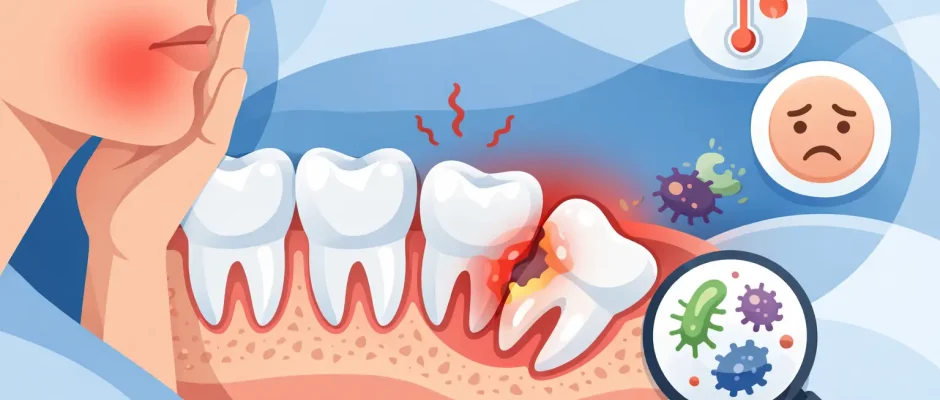
Wisdom Tooth Infection Symptoms to Take Seriously
A wisdom tooth can be uncomfortable while it is erupting, but pain is not always a normal part of the process. Wisdom tooth infection symptoms often begin in a small pocket of gum around a partially erupted tooth, then progress quickly when food debris and bacteria become trapped beneath the gum flap. The earlier the source is assessed, the more controlled and comfortable treatment is likely to be.
For many patients, the concern is not only pain. Swelling, difficulty opening the mouth, a bad taste, or uncertainty about whether removal is necessary can create understandable anxiety. A clinical examination and appropriate imaging allow the surgeon to distinguish temporary gum irritation from an infection that needs prompt treatment.
What causes an infected wisdom tooth?
Wisdom teeth, also called third molars, are the last teeth to erupt. They often have too little room to come in fully or develop at an angle. When only part of the crown is visible, gum tissue may cover the remaining portion. This creates a narrow space that is difficult to clean with a toothbrush or floss.
Bacteria can accumulate in this space and cause inflammation of the gum around the tooth, known as pericoronitis. In some cases, the problem stays localized. In others, infection can spread into the cheek, jaw, or deeper facial spaces. A decayed wisdom tooth, an infection at the root, or pressure from an impacted tooth against the neighboring second molar can also be responsible.
Not every sore wisdom tooth is infected, and not every infection requires immediate extraction that same day. The right approach depends on the severity of symptoms, the position of the tooth, the condition of nearby teeth, and the patient’s overall health. But waiting for severe swelling is rarely a good strategy.
Wisdom tooth infection symptoms that need attention
Symptoms can vary from mild gum tenderness to a painful acute infection. A common early sign is soreness at the back of the jaw, especially when biting or chewing. The gum may appear red, puffy, or tender, and patients may notice that food repeatedly gets trapped in the same area.
A persistent unpleasant taste or bad breath can occur when fluid or pus drains from around the tooth. This is a meaningful sign, particularly when it appears together with throbbing pain or swelling. Some people also feel pain that radiates toward the ear, temple, throat, or lower jaw, which can make the origin of the discomfort less obvious.
As inflammation increases, opening the mouth may become difficult or painful. This is called trismus and may reflect irritation of the chewing muscles. Swelling of the cheek or jaw, tender lymph nodes under the jaw, and discomfort when swallowing are also reasons not to postpone assessment.
Fever, chills, facial swelling that is spreading, trouble swallowing, trouble breathing, or an inability to open the mouth normally require urgent medical and dental evaluation. These are not symptoms to manage at home. An infection in the lower jaw can occasionally spread beyond the immediate tooth area, and prompt treatment is necessary to protect the airway and prevent more serious complications.
Infection or normal wisdom tooth eruption?
Mild pressure, short-lived tenderness, or sensitivity in the gum can happen as a wisdom tooth moves through the gum tissue. These symptoms should gradually settle and should not cause facial swelling, pus, fever, or worsening limitation in mouth opening.
Infection is more likely when the pain intensifies over days, returns repeatedly, or is accompanied by a swollen gum flap and a bad taste. It is also more concerning when a partially erupted tooth is difficult to clean or when the tooth is tilted into the neighboring molar. In that situation, the wisdom tooth can damage the tooth in front of it, even if the wisdom tooth itself is not causing dramatic pain.
A panoramic X-ray, and when indicated a 3D CBCT scan, shows the tooth’s position, the shape of its roots, bone levels, and its relationship to important structures such as the inferior alveolar nerve in the lower jaw or the maxillary sinus in the upper jaw. Imaging is not an extra detail. It is part of planning safe treatment rather than making decisions based on symptoms alone.
What to do before your appointment
If symptoms are mild and there are no urgent warning signs, arrange a dental surgical assessment as soon as possible. Keep the area as clean as comfort allows by brushing gently with a soft toothbrush. Warm saltwater rinses may temporarily soothe irritated tissue and help remove debris, but they do not eliminate an established infection.
Over-the-counter pain medication may help some patients when used according to the product label and their physician’s advice. Avoid placing aspirin directly on the gum, using sharp objects to clean beneath the gum flap, or applying heat to a swollen face. These measures can injure the tissue or worsen swelling.
Antibiotics are sometimes necessary, particularly when there is spreading infection, fever, or significant swelling. However, antibiotics alone usually do not remove the underlying cause. If a partially erupted or impacted tooth repeatedly traps bacteria, symptoms may return after the medication is finished. Definitive treatment may involve cleaning and drainage, treatment of the gum tissue, or removal of the wisdom tooth once it is clinically appropriate.
How a surgeon plans treatment
The first priority is to assess urgency. Examination includes the extent of swelling, mouth opening, drainage, the condition of the neighboring molar, bite, and relevant medical history. Imaging then guides the treatment plan.
For a lower impacted wisdom tooth close to the nerve, surgical planning must balance complete removal with protection of sensation in the lower lip and chin. In select high-risk cases, the surgeon may discuss alternatives such as coronectomy, where the crown is removed while roots are left in place when this is safer. This is not appropriate for every tooth, especially if the roots themselves are infected, but it illustrates why an individualized plan matters.
When extraction is recommended, local anesthesia is used to ensure the procedure is comfortable. Depending on the position of the tooth, a small incision, gentle bone removal, and sectioning of the tooth may be required. These are standard surgical steps designed to reduce unnecessary force and protect surrounding tissue. Sutures, postoperative instructions, and follow-up are planned according to the complexity of the case.
For patients with active inflammation, timing can differ. Some infections are best treated with immediate drainage or removal; others first require control of acute swelling before a planned extraction. The decision depends on the clinical examination, not on a one-size-fits-all rule.
Why repeated infections should not be ignored
A single episode of pericoronitis may settle, especially if a tooth has enough room to erupt fully and can be kept clean. Recurrent episodes are different. They suggest that the anatomy around the tooth continues to create a bacterial trap.
Repeated infection can lead to missed work, disrupted sleep, emergency treatment, and progressive damage to the adjacent second molar. The second molar is usually a functional chewing tooth worth protecting. Removing a problematic wisdom tooth before it compromises its neighbor can be the more conservative long-term decision.
Age also influences surgical planning. Wisdom teeth can be removed successfully in adulthood, but roots, bone density, healing patterns, and medical factors may make the procedure more complex over time. This does not mean that every asymptomatic wisdom tooth must be extracted. It means the decision should be based on examination, imaging, risk, and the realistic ability to monitor the tooth.
A calm, prompt evaluation makes a difference
Pain at the back of the jaw is easy to dismiss until eating, sleeping, or opening the mouth becomes difficult. If you notice swelling, drainage, recurring pain, or reduced mouth opening, arrange an evaluation before the problem becomes urgent. In Tel Aviv, a surgical consultation can provide a clear diagnosis, imaging-based plan, and an explanation of whether monitoring, infection control, or removal is the safest next step.
The goal is not simply to stop today’s pain. It is to treat the source carefully, protect the surrounding teeth and anatomy, and give you a predictable path back to comfort.


