Can Wisdom Teeth Cause Jaw Pain? What It Means
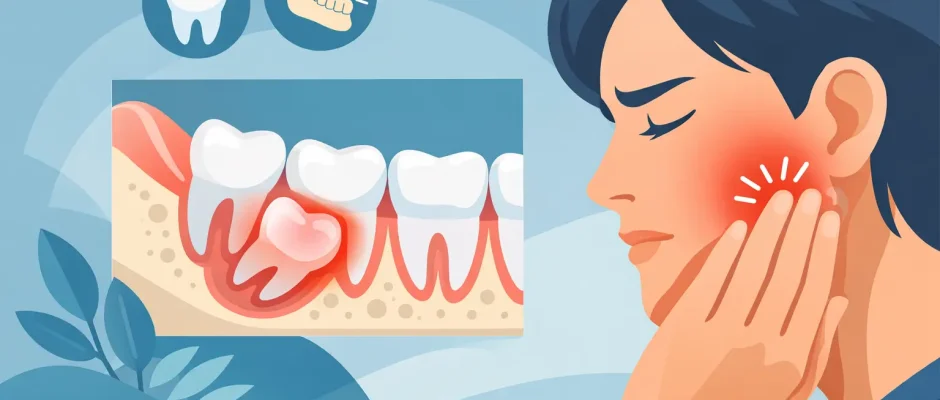
A dull ache at the back of the jaw can make chewing, speaking, and even opening your mouth feel difficult. So, can wisdom teeth cause jaw pain? Yes. A third molar that is erupting, trapped beneath the gum, inflamed, decayed, or pressing against the tooth in front of it can produce pain that feels as though it comes from the jaw itself.
But not every pain near the jaw is caused by wisdom teeth. The temporomandibular joint, chewing muscles, sinus disease, cracked teeth, and infections in other teeth can create similar symptoms. A precise examination is the difference between simply treating pain for a few days and addressing its actual source.
Can Wisdom Teeth Cause Jaw Pain? The Main Reasons
Wisdom teeth are the last molars to develop, usually appearing between the late teens and mid-twenties. By that time, the jaw may not have enough room for them to emerge in a functional position. When space is limited, the tooth may remain partly covered by gum tissue, lean toward the second molar, or stay completely inside the bone. These situations are common and do not always require treatment, but they can create conditions for inflammation and pain.
Pressure from an impacted or poorly positioned tooth
An impacted wisdom tooth is unable to erupt normally. It may be angled forward, backward, sideways, or positioned deep in the jawbone. Pressure from the tooth itself does not always cause sharp pain, but it can lead to a persistent sense of tightness, tenderness, or aching in the back of the jaw.
The neighboring second molar can also be affected. If a wisdom tooth presses against it, food may collect between the teeth, the area may become difficult to clean, and decay or gum inflammation may develop. In some cases, prolonged contact can damage the root surface of the healthy neighboring tooth. This is one reason a painless impacted tooth may still need monitoring with X-rays.
Infection around a partially erupted wisdom tooth
A partially erupted lower wisdom tooth often creates a small gum pocket above the crown. Bacteria and food debris can accumulate beneath this tissue flap, causing pericoronitis – inflammation or infection around the crown of an erupting tooth.
The pain may begin locally but spread toward the ear, throat, or angle of the jaw. Patients sometimes notice a bad taste, swollen gum tissue, difficulty chewing on that side, or limited mouth opening. The intensity can fluctuate: symptoms may settle temporarily after rinsing or taking pain medication, then return when the area becomes inflamed again.
Pericoronitis needs a professional assessment, particularly when episodes recur. Cleaning the area and controlling the acute inflammation may provide short-term relief, but a repeated problem often means the tooth does not have a predictable path to healthy eruption.
Decay, gum disease, or an abscess
Wisdom teeth are difficult to brush and floss, especially when they are tilted or only partly visible. As a result, decay can progress without obvious symptoms until it reaches the nerve of the tooth or causes an infection. Gum disease around a wisdom tooth may similarly create deep pockets, bleeding, and bone loss.
When an abscess develops, jaw pain may be accompanied by throbbing, facial swelling, sensitivity to biting, or pus drainage. This is not a situation to watch at home. Dental infections can spread into surrounding tissue spaces and may require prompt treatment to control the infection and remove its cause.
Why the Pain Can Feel Like It Is in Your Ear or Jaw Joint
The lower wisdom teeth sit close to muscles used for chewing and to important nerves within the jaw. Inflammation in this area can trigger protective muscle tightening. That is why some people experience stiffness, pain on opening, or a sensation that the jaw joint is the problem.
Pain can also be referred. The brain does not always identify the exact source of discomfort when several structures share nerve pathways. A painful wisdom tooth may be felt in the ear, temple, throat, or lower jaw. Conversely, jaw-joint dysfunction can be mistaken for a wisdom tooth problem.
A surgeon will usually evaluate the gums, teeth, bite, jaw movement, and relevant X-rays together. A panoramic image often provides an overview of tooth position, while a 3D CBCT scan may be indicated when the roots of a lower wisdom tooth appear close to the inferior alveolar nerve. This planning is particularly valuable before complex extraction because it helps select the safest surgical approach.
Symptoms That Require Timely Care
Mild tenderness for a short period during eruption may not be an emergency. However, pain deserves an examination if it persists, returns repeatedly, or makes normal function difficult. Seek urgent dental or medical care if you develop facial or neck swelling, fever, difficulty swallowing, trouble breathing, inability to open your mouth normally, or rapidly worsening pain.
These symptoms can indicate a spreading infection. Antibiotics may sometimes be part of treatment, but they are not a substitute for addressing the source – such as drainage of an abscess, cleaning an infected area, root canal treatment for another tooth, or extraction of a non-restorable or problematic wisdom tooth.
Do not place aspirin directly on the gum. It can burn the soft tissue and will not treat the cause. Until you are examined, gentle brushing, careful warm salt-water rinses, and an over-the-counter pain medicine that is safe for you may help. Follow the product instructions and avoid medications that conflict with your medical conditions, allergies, or prescribed drugs.
When Is Wisdom Tooth Removal Recommended?
Removal is not automatically necessary simply because a person has wisdom teeth. A fully erupted tooth that is healthy, easy to clean, biting properly, and supported by healthy gums may be retained and monitored.
Extraction becomes more reasonable when there is repeated pericoronitis, decay that cannot be predictably restored, gum disease around the tooth, damage to the second molar, a cyst or other pathology, or an unfavorable position that creates a clear future risk. The decision should be individualized. Age, root anatomy, bone density, proximity to nerves, overall health, and the patient’s ability to maintain hygiene all matter.
For a deeply impacted lower wisdom tooth, the surgical plan should not be based on a routine approach alone. Digital imaging can clarify the relationship between roots and the nerve canal. In selected high-risk cases, a surgeon may discuss alternatives such as coronectomy, where the crown is removed and roots are left in place when that reduces nerve risk. It is not appropriate for every tooth, but it illustrates why careful diagnosis matters.
What to Expect From a Surgical Evaluation
A useful consultation begins with your symptoms: when the pain started, whether it is intermittent or constant, what triggers it, and whether swelling, fever, or limited opening has occurred. The clinical examination is then paired with imaging to determine whether the wisdom tooth is truly responsible.
If removal is recommended, the plan should explain the anesthesia options, anticipated complexity, possible risks, recovery expectations, and follow-up. Many extractions are straightforward. Others require a surgical approach with a small gum incision, controlled bone removal, and sectioning of the tooth to protect adjacent structures. These techniques are not a sign that something went wrong – they are often the safest way to remove a difficult tooth with minimal trauma.
After surgery, swelling and soreness are expected for several days, especially with lower impacted teeth. Cold compresses during the first day, prescribed medications when indicated, soft foods, and careful hygiene usually support recovery. Worsening pain after initial improvement, persistent numbness, fever, foul drainage, or increasing swelling should be reported promptly.
Jaw pain near a wisdom tooth is a reason for a focused diagnosis, not for panic. Whether the answer is monitoring, treatment of inflammation, or planned removal, a clear surgical assessment can replace uncertainty with a safe, practical next step.


