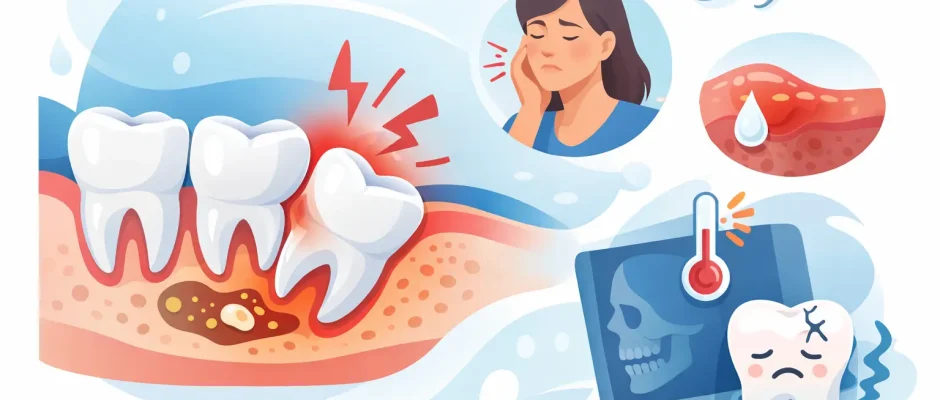
Wisdom Tooth Removal Complications and Warning Signs
A difficult lower wisdom tooth can sit close to the mandibular nerve, while an upper tooth may be near the maxillary sinus. That anatomy is why wisdom tooth removal complications deserve a clear, individual discussion before treatment – not a frightening list handed to every patient. Most extractions heal routinely. The purpose of informed planning is to recognize the situations that require additional precision, explain what recovery should look like, and act quickly if healing does not follow the expected course.
What Is Normal After Wisdom Tooth Removal?
Swelling, tenderness, limited mouth opening, and mild bruising are common after a surgical extraction, especially when the tooth is impacted or positioned in bone. Swelling often increases during the first 48 to 72 hours, then gradually improves. Discomfort should become more manageable each day with the prescribed pain-control plan.
A small amount of blood-tinged saliva during the first day is also expected. The extraction socket may appear dark because of the blood clot, then develop a whitish or yellowish healing layer. This does not automatically mean infection. The key question is the overall direction of recovery: symptoms should stabilize and then improve, rather than becoming noticeably worse after several days.
The complexity of surgery matters. A fully erupted wisdom tooth may be removed relatively simply. A retained or horizontally positioned lower wisdom tooth can require a surgical flap, careful bone removal, and division of the tooth into sections. That is not a sign that something has gone wrong. It is often the safest way to remove the tooth while protecting adjacent structures.
Wisdom Tooth Removal Complications: The Main Concerns
Dry socket
Dry socket, also called alveolar osteitis, occurs when the protective blood clot in the socket breaks down or is displaced before the underlying bone has healed. It most often causes increasing, deep pain two to five days after extraction. The pain may radiate toward the ear, temple, or jaw and can be accompanied by an unpleasant taste or odor.
Dry socket is uncomfortable, but it is treatable and is not usually a dangerous infection. The surgical team can gently assess and irrigate the area and place a soothing dressing when indicated. Smoking, vigorous rinsing, spitting, using straws, and poor clot stability can raise the risk. Following postoperative instructions carefully during the first few days makes a meaningful difference.
Infection and delayed healing
Infection after extraction is not the same as normal postoperative swelling. Warning signs include pain and swelling that intensify after initial improvement, fever, pus-like discharge, increasing facial asymmetry, or difficulty swallowing. Some patients may also notice persistent bad taste and enlarged, tender lymph nodes.
Antibiotics are not automatically required for every wisdom tooth extraction. Their use depends on the clinical situation, the extent of infection before surgery, medical history, and findings during follow-up. When infection is suspected, the priority is an examination. The cause may be local inflammation, trapped debris, a collection requiring drainage, or another issue that cannot be resolved by medication alone.
Nerve irritation or altered sensation
Lower wisdom tooth roots can lie close to the inferior alveolar nerve and, less commonly, the lingual nerve. These nerves provide sensation to the lower lip, chin, gums, and tongue. Temporary numbness, tingling, or altered sensation is an uncommon but recognized risk in anatomically complex cases.
A panoramic X-ray provides initial information, but when roots appear close to the nerve canal, three-dimensional CBCT imaging may be appropriate. It allows the surgeon to evaluate the relationship between the roots, bone, and nerve more accurately. In selected high-risk cases, a different approach, such as coronectomy – removal of the crown while leaving stable roots in place – may be discussed. This is not suitable for every tooth, but it can reduce nerve risk in carefully chosen situations.
Any new numbness after surgery should be reported promptly. In many cases it improves over time, but early documentation and follow-up help guide care.
Sinus communication after upper wisdom tooth removal
The roots of upper wisdom teeth may be close to the maxillary sinus. Rarely, extraction can create a communication between the mouth and the sinus. Symptoms may include fluid passing from the mouth toward the nose, a sensation of air movement through the socket, or persistent sinus pressure.
Small communications may heal with protective measures, while larger ones may require surgical closure. Patients should not forcefully blow their nose after an upper extraction unless specifically instructed otherwise. Sneezing with the mouth open can also reduce pressure in the sinus area during early healing.
Bleeding, bruising, and jaw stiffness
Persistent bleeding is uncommon, but prolonged oozing can occur, particularly in patients taking blood-thinning medication or those with certain medical conditions. Never stop prescribed anticoagulants independently before dental surgery. The surgeon should coordinate the plan based on the medication, reason for its use, and the expected complexity of extraction.
Bruising and reduced mouth opening can be more pronounced after a longer or more difficult procedure. Cold compresses during the first day, then gentle jaw movement as advised, can help. However, worsening stiffness, significant swelling under the jaw, breathing difficulty, or inability to swallow saliva requires urgent medical assessment.
Why Preoperative Planning Changes the Risk Profile
Complications cannot be reduced to zero, because anatomy and individual healing differ. They can, however, be anticipated and managed more safely. A careful consultation begins with the patient’s symptoms, medical history, medications, smoking status, prior surgical experiences, and goals for the adjacent teeth.
Imaging is central to this process. The surgeon evaluates root shape, tooth position, proximity to nerves or the sinus, signs of cystic change, infection, and the condition of the neighboring second molar. For complex retained teeth, CBCT imaging may clarify details that are not visible on a two-dimensional image. This supports a surgical plan based on anatomy rather than assumptions.
Technique matters as well. A controlled surgical approach, adequate visibility, gentle tissue handling, and precise sectioning of the tooth can limit unnecessary trauma. When appropriate, microsurgical principles and atraumatic extraction techniques support soft-tissue management and predictable healing. PRF may also be considered in selected cases as part of a broader healing protocol, not as a substitute for sound surgery or proper aftercare.
For patients in Tel Aviv seeking removal of a complicated wisdom tooth, the consultation should produce a practical plan: what imaging is needed, whether the procedure is routine or surgical, what anesthesia is planned, which risks are relevant in that specific case, and how follow-up will be organized.
How to Protect the Extraction Site at Home
The first 24 hours are focused on protecting the blood clot. Bite on gauze exactly as instructed, rest, choose cool or lukewarm soft foods, and avoid smoking, alcohol, strenuous exercise, straws, and forceful rinsing. Do not probe the socket with a finger, toothbrush, or tongue.
After the initial period, oral hygiene remains essential. Gentle brushing around the area and any prescribed rinsing protocol help reduce plaque accumulation without disturbing the wound. Eat on the opposite side when possible and return gradually to normal foods as comfort allows. Pain medication should be taken only as directed, with attention to medical contraindications and interactions.
Patients sometimes assume that severe pain is simply part of recovery and wait too long to call. It is better to contact the surgical team when symptoms change unexpectedly. A brief assessment can distinguish normal healing from a problem that needs treatment.
When to Contact the Surgeon Urgently
Contact the clinic promptly if pain becomes significantly worse after day two or three, bleeding does not slow with firm gauze pressure, swelling rapidly expands, or you develop fever, pus-like discharge, or a foul taste with increasing pain. New or persistent numbness of the lip, chin, or tongue should also be reported.
Seek urgent medical care for trouble breathing, difficulty swallowing, spreading swelling of the face or neck, severe allergic symptoms, or uncontrolled bleeding. These symptoms are unusual, but they should never be managed by waiting at home.
A well-planned wisdom tooth extraction is not only about removing the tooth. It is about protecting nearby nerves and tissues, giving you realistic expectations, and remaining available during recovery when a question or warning sign needs a professional answer.


