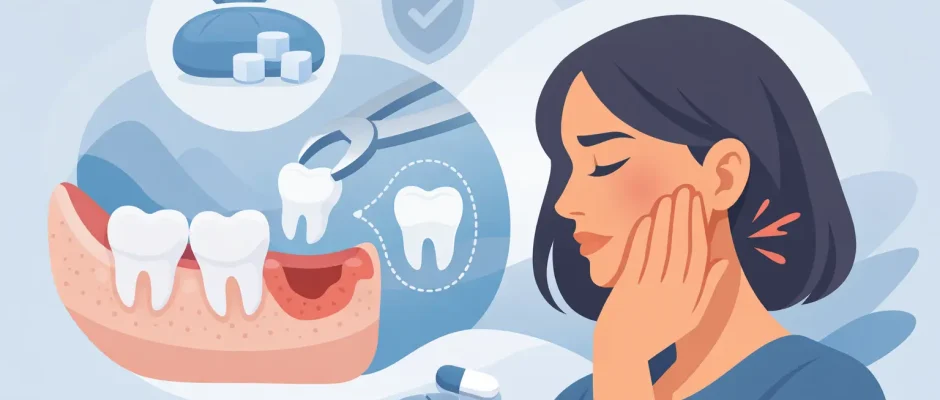
The part that worries most patients is not the extraction itself. It is day 2 or 3, when the numbness is gone, the jaw feels tight, and you start asking whether this level of discomfort is expected. Wisdom tooth pain after extraction is common, but the pattern of that pain matters far more than the number on a pain scale.
A predictable recovery usually follows a clear course. Soreness, swelling, and limited mouth opening are expected after lower wisdom tooth removal, especially if the tooth was impacted, covered by bone, or positioned close to the nerve. Mild to moderate pain that improves with prescribed medication, feels manageable, and gradually settles over several days is usually part of normal healing. Pain that suddenly intensifies, radiates sharply, or comes with a bad taste, fever, or worsening swelling deserves closer attention.
Wisdom tooth pain after extraction: what is normal
After surgical removal, your body starts an inflammatory healing response. That sounds alarming, but it is how tissue repair begins. Blood fills the socket, a clot forms, and the surrounding gum and bone begin the early phases of recovery. During this period, tenderness is expected.
Most patients notice the first 24 hours are relatively controlled because local anesthesia may linger and pain medication is started early. Swelling often peaks around 48 to 72 hours. That means pain can feel more noticeable on the second or third day than it did on the evening after surgery. This does not automatically mean something is wrong.
Normal postoperative pain is usually dull, throbbing, or pressure-like. It is often worse when chewing, opening wide, or lying flat. If the extraction was technically difficult, nearby muscles can react as well, creating jaw stiffness and pain near the ear or temple. In many cases, this muscular component is underestimated by patients.
A routine recovery can include soreness for 3 to 7 days, jaw tightness for up to 1 to 2 weeks, and sensitivity in the area for longer. That timeline varies. A simple erupted wisdom tooth and a deeply impacted lower third molar are very different surgeries, so recovery should not be compared as if they are the same procedure.
Why pain happens after wisdom tooth removal
Pain after extraction is not caused by one thing. It is a combination of tissue injury, inflammation, muscle tension, and the mechanical effect of surgery on the bone and gums.
When a tooth must be sectioned, bone must be gently removed, or a flap must be raised to access the tooth, the procedure becomes more invasive. The result can still be excellent and controlled, but more surgical manipulation usually means more postoperative discomfort. This is one reason why careful technique matters. Precise surgical planning, controlled bone removal, gentle soft tissue handling, irrigation, and stable clot formation all influence how the first days feel.
There is also an anatomic factor. Lower wisdom teeth tend to produce more postoperative pain than upper ones. The bone in the lower jaw is denser, access is often more limited, and impacted lower third molars are more likely to involve a larger surgical field.
The role of clotting and early healing
The blood clot inside the socket is not just a byproduct of surgery. It protects the bone and nerve endings and acts as the foundation for healing. If that clot remains stable, discomfort usually follows an expected curve. If it breaks down too early or is dislodged, pain can become much more severe.
This is why postoperative instructions are not a formality. Forceful rinsing, smoking, spitting repeatedly, using a straw, or intense physical activity too soon can interfere with early healing. Not every patient who does these things develops a complication, but the risk is real.
When pain is not normal
The most common cause of severe pain several days after extraction is dry socket, also called alveolar osteitis. This typically appears after an initial period of relative stability. Instead of gradual improvement, pain becomes sharper, deeper, and more persistent, often around day 3 to 5. It may radiate to the ear, temple, or along the jaw. Patients often describe it as pain that painkillers barely touch.
A bad odor or unpleasant taste may appear, although not always. The socket may look empty or grayish rather than filled with a dark clot. Dry socket is painful, but it is different from infection. It is a local healing complication rather than a true pus-forming infection in most cases.
Infection is less common, but it matters. Warning signs include swelling that worsens after day 3, fever, pus, increasing redness, significant difficulty swallowing, or pain that is getting stronger rather than weaker. These symptoms should prompt direct evaluation by your surgeon.
Another scenario is trauma to the surrounding tissue. Sometimes the pain comes less from the socket and more from pressure on the neighboring molar, irritation from sutures, cheek biting while numb, or muscular strain from keeping the mouth open during surgery. This kind of pain can mimic a complication, but the treatment approach is different.
Numbness versus pain
Not every unusual sensation is pain. Temporary numbness, tingling, or altered sensation in the lip, chin, or tongue can occur after lower wisdom tooth extraction when the tooth is close to the inferior alveolar or lingual nerve. This is a separate issue from routine postoperative discomfort. It should be reported promptly, especially if it is pronounced or not improving, but it does not necessarily mean permanent injury.
What usually helps
The best pain control starts before pain becomes intense. If your surgeon prescribed anti-inflammatory medication, the timing matters. Taking it on schedule during the first 48 to 72 hours often works better than waiting until the pain escalates.
Cold packs can help in the first day by limiting swelling. After that, warm compresses may be more useful if jaw stiffness is the main problem. Soft food, hydration, and keeping the head elevated at night can reduce pressure and irritation. Gentle oral hygiene is also part of pain control because a clean surgical area usually heals more comfortably.
Patients sometimes worry that brushing near the extraction site will damage healing. Aggressive brushing can irritate tissue, but avoiding hygiene entirely is also a mistake. The balance is simple: keep the rest of the mouth clean, follow rinsing instructions exactly, and treat the surgical area gently.
If pain is increasing instead of stabilizing, do not keep changing over-the-counter medications on your own for days. Persistent postoperative pain deserves an exam, not just stronger painkillers.
Wisdom tooth pain after extraction and recovery timelines
A useful question is not “Should I have pain?” but “Is my pain following the expected timeline?” In uncomplicated healing, the answer is usually yes if discomfort peaks early and then slowly declines.
Day 1 is often manageable with numbness and medication. Days 2 and 3 may feel worse because swelling and inflammation peak. By days 4 to 5, most patients should notice at least some improvement. By the end of the first week, pain is usually substantially reduced, even if the area still feels tender.
That timeline shifts in more complex cases. Deep impactions, significant bone removal, existing inflammation around the wisdom tooth, or difficult anatomy can extend recovery. Patients over 30 also sometimes heal more slowly than younger patients. That is not a failure of treatment. It is biology.
A precise surgical protocol can improve comfort, but it does not erase the fact that wisdom tooth surgery is still surgery. The goal is not zero sensation. The goal is controlled healing, manageable symptoms, and early recognition if recovery moves off track.
When to call your oral surgeon
Contact your surgeon if pain becomes dramatically worse after a period of improvement, if swelling keeps increasing after the third day, or if you develop fever, pus, foul taste, or difficulty swallowing. Reach out as well if you cannot open your mouth enough to drink, if bleeding continues despite pressure, or if numbness in the lip or tongue is significant and persistent.
A good postoperative review is not an inconvenience to the doctor. It is part of treatment. In surgical dentistry, reassurance matters, but clinical verification matters more. Sometimes the socket only needs irrigation and local care. Sometimes medication needs adjustment. Sometimes the issue is simply that the recovery is normal for the difficulty of the case. The only reliable way to know is assessment.
For patients seeking care in Tel Aviv, this is one reason it helps to choose a surgeon who treats complex extractions routinely and gives clear follow-up instructions. Experience is not only about the operation itself. It also shows in how recovery is monitored and how complications are prevented, recognized, and managed.
If your pain is improving, even slowly, that is usually a good sign. If it is becoming sharper, deeper, or harder to control, listen to that change – the recovery story is often written in the pattern, not just the presence, of pain.


