Does Gum Disease Affect Implants? The Real Risks
A dental implant can look and feel like a new tooth, but it still depends on healthy surrounding tissue. So, does gum disease affect implants? Yes. Active gum disease can compromise healing, raise the risk of infection around an implant, and contribute to bone loss that threatens long-term stability.
This does not mean that a person with a history of periodontitis cannot receive implants. It means the surgical plan must begin with controlling inflammation, assessing bone and gum conditions carefully, and creating a maintenance plan that protects the result for years, not just the first months after surgery.
How gum disease affects dental implants
Periodontal disease is a chronic inflammatory infection caused by bacterial plaque accumulating around teeth and beneath the gumline. In its early form, gingivitis causes bleeding and swelling. When it progresses to periodontitis, the inflammation destroys the ligament and bone supporting the teeth.
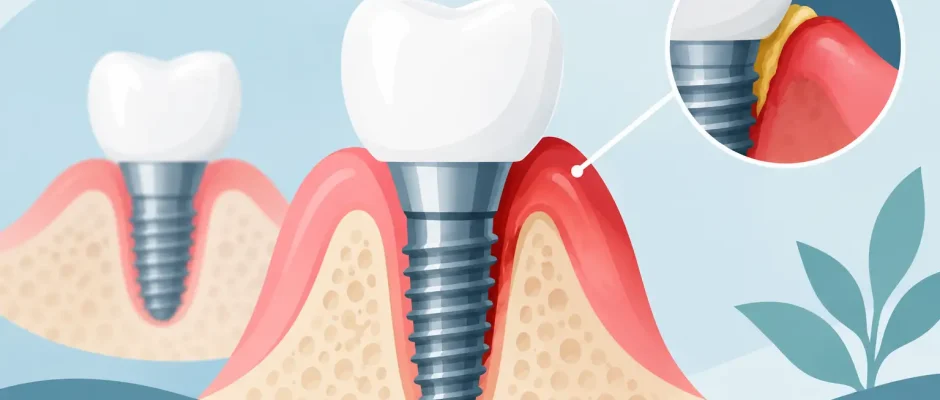
An implant does not have the same biological attachment as a natural tooth. It is integrated directly with bone, while the soft tissue around it forms a protective seal. This seal can be disrupted by plaque, inflammation, excess cement from a restoration, poorly designed prosthetics, or difficulties with daily cleaning. Once inflammation reaches the bone around an implant, the condition is called peri-implantitis.
Peri-implantitis can cause bleeding, suppuration, deepening pockets, and progressive bone loss. It may advance quietly, especially when a patient has little pain. That is why a stable implant is not judged only by whether it feels firm. Regular clinical measurements and X-rays are needed to evaluate the bone level and the health of the surrounding tissues.
A previous diagnosis is a risk factor, not a verdict
Patients who have lost teeth because of periodontitis have a higher risk of peri-implant disease than patients without a periodontal history. The reasons are practical: the bacterial environment may persist, inflammation can recur if hygiene declines, and bone loss may already limit implant positioning.
Risk is not the same as inevitability. Many patients with previously treated periodontal disease maintain implants successfully for many years. The difference is usually not a special implant brand or a single surgical technique. It is disease control before surgery, precise implant and crown planning, and consistent professional follow-up afterward.
Can implants be placed if gum disease is active?
In most situations, placing an implant through active, untreated periodontal inflammation is not the preferred approach. Bleeding gums, pus, untreated deep pockets, mobile teeth, or uncontrolled plaque are signs that the mouth needs stabilization first.
Treatment may include professional hygiene, removal of bacterial deposits below the gums, treatment of infected teeth, correction of factors that make cleaning difficult, and in selected cases periodontal surgery. Teeth with a poor long-term prognosis may need to be removed, but this decision should be based on prognosis rather than made automatically. Preserving a treatable natural tooth is often preferable to replacing it with an implant.
Once inflammation is controlled, the surgeon evaluates the implant site with a clinical examination and three-dimensional imaging when indicated. The plan considers bone volume, soft-tissue thickness, bite forces, esthetic requirements, and the condition of adjacent teeth. If bone has been lost, guided bone regeneration, bone grafting, or a sinus lift may be necessary before or at the time of implant placement.
Immediate implant placement after extraction can be appropriate in selected cases, including some sites with local infection. However, it is not a shortcut around periodontal treatment. The socket must be thoroughly debrided, the implant must achieve reliable primary stability, and the remaining hard and soft tissues must support a predictable result. Each case requires an individual decision.
Why implant planning matters when there is bone loss
An implant needs enough bone in the right position, not simply enough bone somewhere in the jaw. If it is placed too far toward the cheek, too close to a neighboring tooth, or at an unsuitable depth, cleaning may become difficult and the gum contour may be unstable. These compromises can increase the risk of inflammation later.
Digital planning and surgical guides can help transfer a carefully planned implant position to surgery. In complex cases, this improves control of angulation and available anatomy. It does not replace surgical judgment, but it supports a more precise and safer protocol.
Soft tissue also deserves attention. Thick, stable gum tissue around an implant can make hygiene more comfortable and may help maintain a better protective barrier. When necessary, periodontal plastic surgery can be incorporated into the treatment plan to improve tissue volume or contour. The aim is not only to create an attractive smile, but to create conditions the patient can clean and maintain.
The factors that raise the chance of peri-implantitis
Gum disease is one major factor, but it rarely acts alone. The long-term outcome depends on a combination of biology, habits, restoration design, and follow-up. The most relevant risks include:
- Untreated or recurring periodontitis around remaining natural teeth
- Inadequate plaque control around implants, bridges, or full-arch restorations
- Smoking or nicotine use, which impairs healing and increases inflammatory risk
- Poorly controlled diabetes and other conditions that affect healing
- A history of severe bone loss, irregular maintenance visits, or poorly fitting restorations
Grinding and clenching deserve separate consideration. They do not directly cause infection, but excessive forces can create technical complications such as loosening or fracture of prosthetic components. If inflammation and overload occur together, the situation becomes more difficult to manage. A night guard may be recommended when signs of bruxism are present.
How to protect implants after treatment
The first months after implant placement are important, but prevention continues for the life of the restoration. Home care must be adapted to the design of the crown, bridge, or full-arch prosthesis. A single crown requires careful brushing at the gumline and cleaning between teeth. A bridge or implant-supported full arch may require interdental brushes, floss threaders, or a water flosser as additional tools.
The correct technique matters more than owning many products. During follow-up visits, the clinician or hygienist should show exactly how to clean beneath and around the restoration. If a patient cannot access a surface easily, the prosthetic design or hygiene routine may need to be adjusted.
Maintenance intervals are individualized. A patient with no periodontal history and excellent plaque control may need a different schedule from someone who previously had advanced periodontitis. For higher-risk patients, professional periodontal and implant maintenance every three to four months is often considered. The visit should include assessment of bleeding, plaque, pocket depths where appropriate, bite, restoration condition, and radiographic bone levels at clinically suitable intervals.
Do not wait for pain
Early peri-implant mucositis is inflammation limited to the soft tissue around an implant. It often presents as bleeding during brushing or professional probing, redness, or swelling. At this stage, it can frequently be controlled through improved cleaning and professional treatment.
Peri-implantitis involves bone loss and is more complex. Treatment may include nonsurgical decontamination, modification of the restoration to improve access, antimicrobial measures in selected cases, and regenerative or resective surgery depending on the defect. The earlier it is identified, the more options are available to preserve the implant.
If you notice persistent bleeding, bad taste, swelling, a change in the gumline, looseness of a crown, or discomfort when chewing, schedule an examination rather than trying to solve the problem with mouthwash alone.
A predictable implant result starts before surgery
The safest answer to gum disease is not to ignore it and not to assume it rules out implants forever. It is to diagnose the cause of inflammation, treat it systematically, and build the implant plan around the condition of the bone, gums, bite, and remaining teeth.
For patients with complex bone loss or a history of periodontitis, careful planning may add time to treatment. That extra step is often what protects the investment in surgery and helps create a result that is comfortable, cleanable, and stable. A calm, detailed consultation should leave you with a clear answer about what must be treated first and what is realistically achievable afterward.


