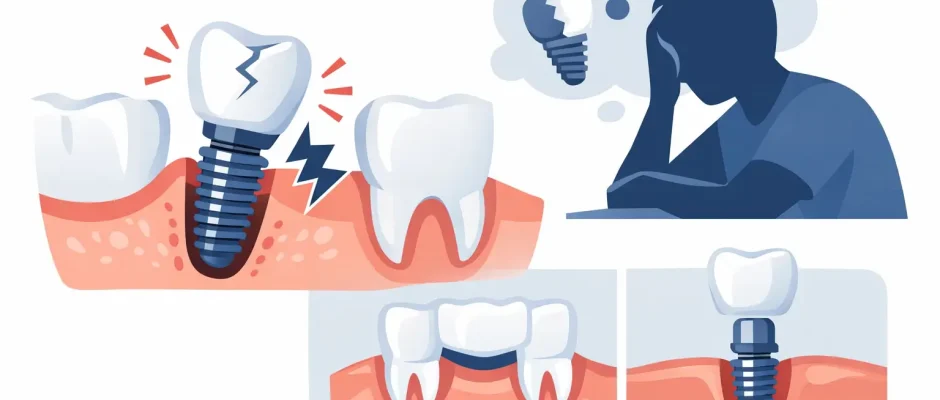
A dental implant is supposed to feel like the end of the problem, not the start of a new one. So when an implant becomes loose, painful, swollen, or simply never feels right, the first question is usually immediate and practical: failed dental implant – what to do?
The short answer is this: do not wait, do not try to “let it settle,” and do not assume every failed implant has to be removed. The right next step is a clinical evaluation with imaging and an honest review of what failed, why it failed, and whether the implant can be treated, replaced, or revised with a more predictable protocol.
Failed dental implant – what to do first
The first priority is diagnosis, not panic. Implant problems can look similar to a patient, but the treatment pathway depends on the actual cause. A loose crown is very different from a loose implant. Inflamed gums around an otherwise stable implant are different from bone loss caused by peri-implantitis. Pain on biting can point to overload, while constant throbbing may suggest infection.
If you suspect failure, avoid chewing on that side and schedule an examination promptly. A proper assessment usually includes a clinical exam, percussion and mobility testing, evaluation of the soft tissues, bite analysis, and imaging. In many cases, a periapical X-ray or CBCT scan is needed to see the bone around the implant and check its position relative to neighboring structures.
This is also the moment to gather details from the original treatment if available: when the implant was placed, whether bone grafting was done, whether the implant ever integrated properly, when symptoms began, and whether the problem started before or after the crown was attached.
What counts as implant failure
Patients often use the word “failure” for any post-implant problem. Clinically, it helps to separate true implant failure from a complication that can still be corrected.
A true failure usually means the implant has lost stability or failed to integrate with bone. This can happen early, during healing, or later, after months or years of function. In other cases, the implant itself remains integrated, but the surrounding tissues become diseased. That may still threaten the long-term outcome if not treated quickly.
Common warning signs include mobility, persistent pain, recurrent swelling, pus, bad taste, gum recession around the implant, difficulty chewing, or progressive bone loss seen on imaging. Sometimes the implant feels “off” without major pain. That also deserves attention. Comfortable neglect is one of the reasons manageable problems become major revisions.
Why dental implants fail
There is rarely a single universal reason. Most failures happen because biology, mechanics, and planning intersect.
Early failure often relates to lack of osseointegration. Causes may include overheating of bone during drilling, micromovement during healing, infection, poor bone quality, smoking, uncontrolled diabetes, or placement into a site that was not ideal for immediate loading. Sometimes the implant was simply placed in a way that made stable healing less likely.
Late failure is more often associated with peri-implantitis, overload, or prosthetic design issues. If the bite forces are excessive, if the implant diameter or number of implants was not well matched to the case, or if hygiene access is poor, bone can gradually be lost around the implant. Teeth grinding can accelerate this process. So can untreated periodontal disease in the rest of the mouth.
There are also anatomical and planning factors. Insufficient bone volume, compromised soft tissue, and lack of prosthetically driven positioning can all make an implant vulnerable. This is why modern digital planning, surgical guides, and a careful restorative-surgical sequence matter so much. They do not eliminate risk, but they reduce avoidable errors.
When a failed dental implant is urgent
Not every implant complication is an emergency, but some situations should be seen quickly. Increasing swelling, fever, drainage of pus, severe pain, facial asymmetry, or sudden mobility after trauma should not be left for “next month.” The same applies if a recently placed implant becomes noticeably loose.
Urgency also depends on where the implant is. In the esthetic zone, delay can affect both bone and soft tissue architecture, which may make later reconstruction more difficult. In the posterior maxilla or mandible, delayed treatment can still allow infection or progressive bone destruction.
Can a failed implant be saved?
Sometimes yes, sometimes no. That depends on whether the implant itself is stable, how much bone has been lost, where the defect is located, and whether the main problem is biological or mechanical.
If the implant is stable and the issue is inflammation of the surrounding tissues, treatment may focus on decontamination, improving hygiene access, correcting the prosthetic design, reducing overload, and in selected cases performing regenerative surgery. If the problem is a loose abutment screw or crown, the implant may be entirely sound and only the restoration needs correction.
If the implant is mobile, it usually cannot be “tightened back” into the bone. A mobile implant generally needs removal. The key question then becomes how to remove it atraumatically, preserve as much bone as possible, control infection, and prepare the site for future reconstruction.
This is where microsurgical technique and careful tissue handling matter. The goal is not just to take out a failed implant. It is to leave the patient with the best possible foundation for the next attempt.
What treatment may look like after implant failure
The treatment plan can be simple or staged. In a favorable case, the failed implant is removed, the site is cleaned, and a replacement implant may be placed either immediately or after a short healing period. In a more complex case, removal is followed by bone grafting, soft tissue conditioning, and delayed re-implantation once the site is biologically ready.
It depends on the reason for failure. If infection caused major bone loss, immediate replacement may be less predictable. If the issue was mainly implant position or prosthetic overload, a revised plan with digital guidance may provide a far better long-term result. If the patient has parafunction, a night guard and bite adjustment may become part of the protocol, not an optional extra.
Patients often worry that one failed implant means they are “not a candidate” for implants at all. That is usually not true. A previous failure changes the level of planning required. It does not automatically close the door.
How a specialist approaches a revision case
Revision implantology is not just repeat implant placement. It starts with identifying the reason the first treatment failed and removing that risk where possible. That may mean managing residual infection, rebuilding deficient bone with guided bone regeneration, improving soft tissue thickness, changing implant dimensions or position, using a surgical guide, or modifying the loading protocol.
A careful surgeon also looks beyond the implant site itself. Is there active gum disease elsewhere? Is the patient clenching? Was oral hygiene instruction adequate? Is the restorative plan forcing compromise because of limited space or poor angulation? The best revision plans are comprehensive, not reactive.
In complex cases, especially where bone is limited, digital planning and CBCT-based assessment help convert uncertainty into measurable decisions. That is one reason patients seeking predictable surgical care often do well with a structured consultation process rather than rushing straight to treatment.
What you can do right now
If you think your implant may be failing, keep the area clean, avoid loading it, and get evaluated. Do not try home fixes. Do not keep testing whether it is loose with your tongue or fingers. Repeated movement can make things worse.
Bring previous records if you have them, but do not delay care if you do not. A fresh clinical exam and imaging are usually more important than trying to reconstruct every detail from memory. Ask direct questions: Is the implant stable? Is there infection? How much bone has been lost? Can it be treated or does it need removal? If replacement is possible, what will be done differently this time?
Clear answers matter. So does a treatment plan that explains timing, healing, grafting if needed, and how risk will be reduced going forward.
For patients in Tel Aviv or elsewhere in Israel, this is exactly the kind of situation where an experienced surgical implantologist can add value: not by promising that every implant can be saved, but by making the next step rational, safe, and predictable.
A failed implant is frustrating, but it is not the end of the story. In many cases, it is the point where better diagnosis, better planning, and more precise surgery finally put the case on the right path.


