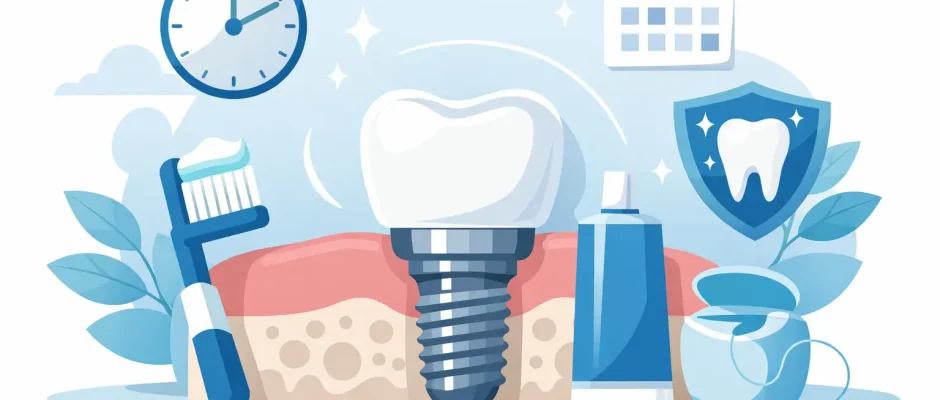
When Can You Brush After Implant Surgery?
The first time you look in the mirror after implant surgery, the question is usually not about the implant itself. It is much more practical: when can you brush after implant surgery without harming the site, opening the wound, or making bleeding worse? That question matters because good hygiene supports healing, but brushing too aggressively too early can interfere with it.
The short answer is this: you usually keep brushing the rest of your mouth the same day, but you avoid direct brushing over the implant surgery area for the first few days, or exactly as your surgeon instructs. The precise timing depends on whether you had a simple implant placement, stitches, a flap, bone grafting, sinus lift, or immediate implant placement after extraction. In surgery, small details change aftercare.
When can you brush after implant surgery in the surgical area?
For most patients, direct brushing on the surgical site is postponed for about 3 to 7 days. In some straightforward cases, very gentle cleaning near the area can begin earlier. In more complex cases, especially when bone graft material, membranes, or extensive suturing are involved, the area may need a longer period of protection.
This is why generic advice can be misleading. “Brush after 24 hours” may be safe for one patient and too early for another. The safest rule is simple: brush all non-operated teeth normally, but do not touch the implant site with a toothbrush until your surgeon says the tissue is stable enough.
If you were given a written postoperative protocol, follow that rather than a general internet timeline. After implant surgery, the best hygiene plan is the one matched to your procedure.
What you should do on the first day
On the day of surgery, the goal is protection, not perfect cleanliness around the wound. A blood clot and early tissue sealing need time. Mechanical trauma from bristles, vigorous rinsing, or poking at the site can disrupt that early phase.
You can usually brush the teeth away from the surgical area that same evening, as long as you do it carefully. Keep the toothbrush away from the implant site. Do not spit forcefully. Do not swish hard. If your surgeon prescribed a chlorhexidine rinse or another antiseptic mouthwash, use it exactly as directed, because overuse can also irritate tissues and affect taste.
If there is some blood staining on nearby teeth, that does not mean you should scrub. In the first 24 hours, gentleness matters more than cosmetic cleanliness.
Why early brushing can be a problem
The issue is not that a toothbrush is “bad” for implants. In fact, long-term implant success depends heavily on excellent plaque control. The problem is timing.
In the first few days, the tissues around the implant are fragile. Sutures may be holding the gum in a very specific position. If brushing displaces the clot, traumatizes the incision line, or moves the flap, you can increase bleeding, pain, swelling, and the risk of delayed healing. In grafted cases, you may also disturb the architecture your surgeon created to support the final result.
That is why postoperative care often sounds conservative. It is not about being overly cautious. It is about protecting precision work.
A practical timeline for brushing after implant surgery
A simple, uncomplicated implant placement often follows a predictable pattern. For the first 24 hours, brush the rest of the mouth but avoid the surgical site completely. From day 2 or 3, many patients can clean adjacent teeth more closely while still not touching the incision directly. Around day 5 to 7, very gentle brushing over or near the site may be allowed if the tissue looks calm and the surgeon approves. After suture removal, or once the wound edges are stable, brushing gradually returns to normal.
But that timeline can shift.
If you had immediate implant placement after tooth extraction, the tissue may be more sensitive than in a healed site. If you had guided bone regeneration, a sinus lift, or soft tissue grafting, the brushing restriction may be longer. If a healing abutment is already visible through the gum, cleaning instructions can also differ from cases where the implant is fully covered.
This is where surgeon-specific protocols matter. In an experienced surgical practice, aftercare is not one-size-fits-all because the procedure is not one-size-fits-all.
What kind of toothbrush is best?
When your surgeon clears you to start brushing near the implant site, use an extra-soft or ultrasoft toothbrush. A small brush head gives you better control and reduces the chance of accidental trauma. Electric toothbrushes can be excellent for long-term plaque control, but they are not always the best choice in the first days around a fresh surgical site, especially if the oscillation makes you less precise.
Technique matters more than brand. Short, gentle strokes are safer than trying to “deep clean.” If the tissue blanches, bleeds, or stings sharply when touched, you are likely doing too much.
What about toothpaste, salt water, and mouthwash?
Toothpaste is usually fine for the non-surgical areas from the first day, but around the implant site it is less important than being mechanically gentle. Foam and flavoring agents are not the goal in the first phase. Controlled cleaning is.
Warm salt water rinses are commonly recommended after the first 24 hours because they can help keep the mouth clean without direct brushing on the wound. The key word is gentle. Rinsing should be passive, not vigorous.
If you were prescribed chlorhexidine, use the exact schedule provided. More is not better. Too much can stain teeth, alter taste, and irritate tissues. It is a useful tool, but it does not replace careful brushing once brushing is allowed.
Signs you are ready to brush the area
Healing does not follow the calendar perfectly, but there are clues that tissues are becoming more stable. Swelling starts to settle. The gum looks more sealed. Light contact is no longer sharply painful. Bleeding has stopped. The area feels tender, but not raw.
Even then, “ready to brush” does not mean “ready to brush normally.” The transition should be gradual. Start by cleaning the neighboring tooth surfaces and approaching the site carefully. If your implant has a healing abutment exposed, plaque can accumulate around it quickly, so cleaning becomes important early, but still in a controlled way.
If you are unsure, asking for a photo-based postoperative check or follow-up exam is better than guessing.
When should you not brush the implant site yet?
Do not start direct brushing if the site is still actively bleeding, if the wound edges look open, or if touching the area causes significant pain. Also avoid brushing if your surgeon specifically told you to keep the area untouched until a review visit.
Be especially cautious if you notice white graft particles, a loose suture, or tissue that seems to have shifted. Those findings do not always mean something is wrong, but they are reasons to pause and get instructions before resuming direct cleaning.
Persistent bad taste, increasing swelling after day 3, pus, fever, or throbbing pain are also not normal “just healing” signs. In that situation, the question is no longer when can you brush after implant surgery. The question is whether the site needs to be examined.
Common mistakes that delay healing
The most frequent problem is not poor hygiene. It is overcleaning too early. Patients often feel they are being responsible by brushing aggressively around the implant because they want to prevent infection. Unfortunately, trauma from brushing can create the very inflammation they are trying to avoid.
Another common mistake is ignoring the rest of the mouth. If the surgical area must be protected, some patients stop brushing almost entirely for several days. That is also unhelpful. Plaque accumulation in the rest of the mouth increases bacterial load and makes overall recovery less favorable.
Smoking, forceful spitting, using a water flosser too early, and trying to remove debris with fingers or dental picks are also frequent setbacks. The cleaner the method, the safer it feels. In reality, simpler and gentler is usually better.
The longer-term picture
Once the tissue has healed, brushing becomes one of the most important parts of protecting the implant. An implant cannot get a cavity, but it can develop inflammation of the surrounding tissues if plaque control is poor. That begins as peri-implant mucositis and can progress to peri-implantitis, with bone loss around the implant.
This is why surgical aftercare and long-term maintenance belong to the same conversation. The early restriction on brushing is temporary. The long-term expectation is excellent, consistent hygiene with professional follow-up.
In practices focused on surgical precision and predictable outcomes, postoperative instructions are not a small add-on. They are part of the treatment itself. A well-placed implant still depends on disciplined healing.
If you had implant surgery and are not sure whether it is safe to brush the area yet, do not rely on a standard timeline alone. Look at the type of surgery you had, how the tissue looks today, and the exact instructions you received. A toothbrush is absolutely part of successful implant care. The only real question is when your tissues are ready for it, not when the calendar says they should be.


