Zygomatic Implants Explained for Bone Loss
When the upper jaw has lost too much bone for conventional implants, being told that a fixed smile is not possible can feel discouraging. Zygomatic implants explained simply: they are longer, specialized implants anchored in the zygomatic bone, commonly called the cheekbone, rather than relying only on the weakened bone of the upper jaw.
For the right patient, this approach can avoid extensive bone grafting and make fixed full-arch restoration possible. It is not a standard implant procedure, however. Zygomatic implant treatment requires detailed three-dimensional planning, surgical experience, and careful selection of both the implant position and the final prosthetic design.
What Are Zygomatic Implants?
A conventional dental implant is placed in the alveolar bone, the part of the jaw that once supported the roots of the teeth. After teeth are lost, particularly when removable dentures have been worn for many years, this bone can gradually resorb. In the posterior upper jaw, the maxillary sinus may also expand, leaving very little bone height for a conventional implant.
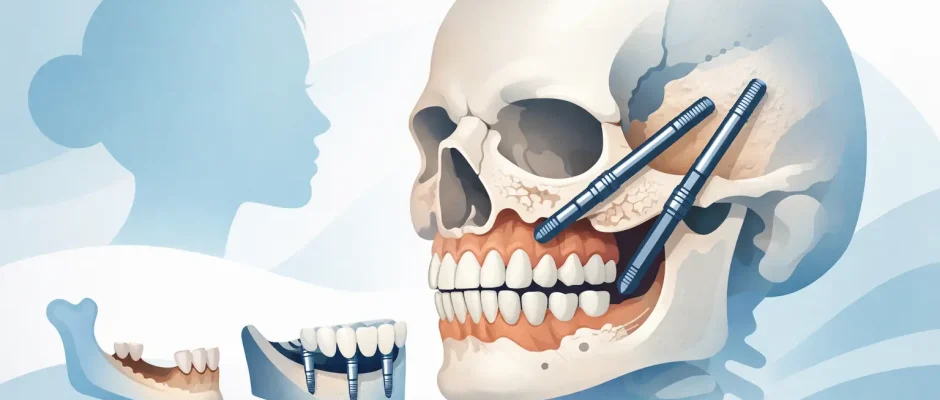
A zygomatic implant is much longer than a standard implant. It begins in the upper jaw and is anchored in the dense zygomatic bone. This bone generally retains good volume even in patients with severe maxillary atrophy. Depending on the clinical situation, zygomatic implants may be combined with conventional implants placed in the front part of the upper jaw, or used as part of a more extensive full-arch concept.
The aim is not merely to place implants where bone is available. The aim is to create stable support for a fixed restoration while keeping the plan biologically sound, comfortable to maintain, and predictable over time.
Who May Benefit From Zygomatic Implants?
This treatment is usually considered for patients with major bone loss in the upper jaw, especially when conventional implants would otherwise require large-volume bone grafting or bilateral sinus lifts. It can also be relevant after unsuccessful prior implant treatment, following trauma, or after surgery that has altered the anatomy of the upper jaw.
Many candidates are people who are struggling with an upper removable denture and want a fixed solution. Others already have a failing bridge or multiple failing implants and need a new full-arch plan. In some cases, a zygomatic approach can shorten the overall treatment timeline because it may reduce or eliminate the need to wait for grafted bone to mature.
That does not mean it is the best answer for every person with bone loss. If the remaining jawbone can support conventional implants with a limited, well-planned augmentation, that option may be less invasive. The choice depends on the amount and distribution of bone, sinus anatomy, gum condition, medical history, bite forces, oral hygiene, and the desired final restoration.
Why Cheekbone Anchorage Changes the Plan
The zygomatic bone is structurally different from the thin posterior bone of a severely resorbed upper jaw. Its density can provide strong anchorage for implants, which is why zygomatic implants can support a fixed bridge in situations once considered extremely difficult.
A key advantage is that treatment may avoid major sinus grafting. Sinus lift procedures and guided bone regeneration remain valuable, predictable options in many cases. Yet when bone loss is extensive, multiple grafting stages can add surgical procedures, healing time, cost, and uncertainty. Zygomatic implants offer an alternative route when the clinical goal is a stable fixed arch without building a large amount of new bone first.
The trade-off is complexity. These implants pass through an anatomically demanding area near the maxillary sinus, orbit, and other important structures. Their placement should never be approached as a quick substitute for conventional implantology. It is a procedure for an experienced surgical team working from detailed imaging and a disciplined protocol.
Zygomatic Implants Explained: Planning Comes First
The quality of the plan is as important as the surgery itself. Treatment begins with a clinical examination, review of medical history, and cone beam CT scan. The scan allows the surgeon to assess the residual upper-jaw bone, shape and volume of the zygomatic bone, sinus anatomy, nasal cavity, and the relationship to adjacent structures.
The final teeth must be planned before implant positions are confirmed. This prosthetically driven approach determines where the bridge needs to sit for speech, lip support, smile appearance, and comfortable chewing. The surgeon can then select implant trajectories that provide secure anchorage while allowing hygienic, accessible prosthetic contours.
Digital planning and surgical guides can improve precision in appropriate cases, but technology does not replace surgical judgment. Anatomical variation, tissue quality, and intraoperative findings all matter. A safe plan includes alternatives: for example, whether conventional implants can be used in the front of the jaw, whether one or two zygomatic implants are needed on each side, and whether immediate loading is advisable.
What Happens During Treatment?
Zygomatic implant surgery is typically performed under local anesthesia with sedation or under general anesthesia, depending on the extent of treatment, the patient’s health, and anxiety level. For full-arch reconstruction, remaining non-restorable teeth may be removed during the same procedure when indicated.
The surgeon places the implants through carefully planned access points, securing them in the cheekbone. The exact implant path can be intrasinus, extrasinus, or adapted to the individual anatomy. These are technical distinctions that influence soft-tissue management, sinus considerations, and the emergence of the implant into the mouth.
When implants achieve adequate primary stability, a temporary fixed bridge can often be attached shortly after surgery. This is called immediate loading. It allows the patient to leave with fixed teeth rather than a removable denture, but it is not guaranteed in every case. Implant stability, bite conditions, the number and distribution of implants, and the quality of the provisional restoration determine whether immediate loading is responsible.
After healing, the temporary bridge is replaced with the definitive prosthesis. This final stage is not cosmetic decoration. The shape of the bridge, access for cleaning, bite adjustment, and support of the lips and facial profile all contribute to long-term comfort and success.
Recovery, Risks, and Long-Term Care
Swelling, bruising, nasal congestion, and discomfort are possible after surgery. Most patients need several days of reduced activity and receive clear instructions for pain control, oral hygiene, diet, and follow-up visits. Recovery varies according to the extent of surgery, whether teeth were removed, and whether additional procedures were performed.
As with any surgical treatment, there are risks. These include infection, sinus-related complications, soft-tissue irritation, temporary sensory changes, failure of implant integration, and prosthetic complications such as loosening or wear. Rare but serious complications are one reason the procedure requires careful imaging, appropriate training, and a surgeon who understands the anatomy beyond routine implant placement.
Long-term success also depends on maintenance. A fixed full-arch bridge must be cleaned underneath and around the implant connections using tools recommended by the clinical team. Regular professional examinations are necessary to monitor the gums, bite, screws, bridge materials, and any signs of inflammation. Smoking, uncontrolled diabetes, untreated gum disease, and poor home care can increase risk, even when surgery was technically excellent.
Questions Worth Asking Before You Decide
A consultation should give you more than a promise of fixed teeth. Ask whether conventional implants with grafting are a realistic alternative, why a zygomatic approach is recommended in your specific anatomy, and whether immediate fixed teeth are expected or only possible if stability is confirmed during surgery.
It is also reasonable to ask how the final bridge will be cleaned, what follow-up care is included, and how complications would be managed. A clear treatment plan should explain the sequence of surgery, provisional teeth, healing, and definitive restoration, along with the limitations and risks that apply to your case.
For patients with advanced upper-jaw bone loss, zygomatic implants can be a life-changing option, but they should never be chosen from an X-ray alone or because they sound faster. The right decision begins with a three-dimensional diagnosis and a plan designed around safe surgery, stable function, and teeth you can live with comfortably for years.


