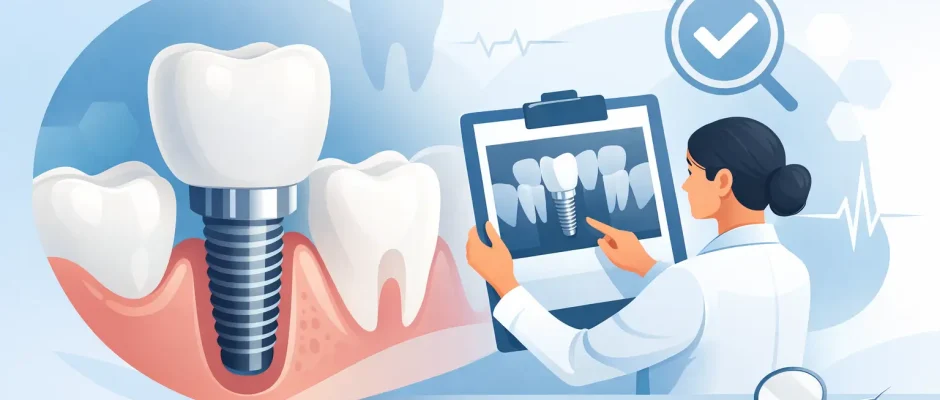
A missing tooth can change more than a smile. Patients often begin avoiding one side while chewing, choosing softer foods, or covering their mouth in photos. When they ask, “are dental implants worth it?”, the real question is usually broader: will this treatment give me a stable result that feels natural, and is that result worth the surgery, time, and expense?
For many patients, the answer is yes. A well-planned implant can replace a missing tooth without preparing adjacent healthy teeth, restore chewing function, and help preserve the bone in the area of the lost tooth. But an implant is not automatically the best choice in every clinical situation. Its value depends on diagnosis, surgical planning, overall health, oral hygiene, and the quality of the final restoration.
What You Are Actually Paying For
A dental implant is not simply a titanium screw placed in bone. It is a treatment sequence that should begin with a careful examination and three-dimensional imaging. The surgeon evaluates bone volume, the position of the maxillary sinus or mandibular nerve, the condition of nearby teeth and gums, bite forces, and the cause of tooth loss.
The implant itself acts as an artificial root. After it integrates with the jawbone, a crown, bridge, or full-arch prosthesis is attached. The goal is not just to fill a gap, but to create a restoration that is stable, cleanable, comfortable, and appropriate for the patient’s bite.
This distinction matters when comparing prices. A lower initial quote may not include diagnostic imaging, a surgical guide, bone grafting materials, membrane placement, PRF, follow-up care, or the final crown. Conversely, not every patient needs every additional procedure. A transparent treatment plan should explain what is necessary in your case and why.
When Dental Implants Are Usually Worth It
Implants tend to offer the strongest long-term value when a patient has one or more missing teeth, wants a fixed solution, and has the ability to maintain excellent oral hygiene. Unlike a conventional bridge, an implant-supported crown usually does not require reducing the neighboring teeth to support it. This can be a meaningful advantage when those teeth are intact.
An implant can also improve everyday function. Removable dentures may move during speech or meals, while a properly designed implant-supported restoration is fixed in place. For patients missing several teeth or struggling with an unstable full denture, full-arch concepts such as All-on-4 may provide a substantial improvement in stability and confidence.
Bone preservation is another consideration. After extraction, the jawbone gradually resorbs because it no longer receives functional loading from a tooth root. An implant cannot reverse all bone changes, but it can help maintain bone around the implant when the surrounding tissues remain healthy.
The greatest value is often felt in ordinary moments: eating comfortably in public, speaking without worrying about a denture shifting, or no longer planning meals around a missing tooth. These outcomes are difficult to place on a price list, but they matter to patients.
Are Dental Implants Worth It if Bone Is Limited?
Yes, often they are, but the treatment may require more planning. Bone loss does not automatically mean implants are impossible. It means the surgeon must identify why bone was lost and choose a protocol that balances safety, predictability, treatment time, and cost.
In the upper jaw, the maxillary sinus can limit implant length. A sinus lift may create the bone volume needed for a stable implant. In other areas, guided bone regeneration with graft material and a membrane may be appropriate. In selected cases, short or angled implants can avoid more extensive grafting. There is no universal best technique.
Patients should be cautious of promises that every case can be completed immediately or without grafting. Immediate implant placement after extraction can be an excellent option when infection is controlled, the bone walls are favorable, and primary stability can be achieved. In other cases, allowing the site to heal first is the safer choice.
Digital planning and surgical guides can be particularly valuable in anatomically complex cases. They help transfer a prosthetically driven plan to the surgical field, improving control of implant position relative to bone, neighboring roots, the sinus, and nerves. Technology does not replace surgical judgment, but it supports a more precise and predictable protocol.
The Trade-Offs: Surgery, Healing, and Maintenance
Implant treatment requires a surgical procedure. Modern local anesthesia and careful technique make the process manageable for most patients, but it is still surgery. Mild swelling, tenderness, and temporary dietary restrictions are common after placement or bone grafting. Complex procedures may involve a longer recovery period.
Healing also takes time. Depending on the clinical situation, the final crown may be placed after several months of integration. Some patients can receive an immediate temporary tooth, but a temporary restoration is not the same as a final load-bearing crown. Rushing the final stage can compromise esthetics, tissue stability, or implant longevity.
Implants are highly successful, but they are not maintenance-free and they do not develop immunity to inflammation. Plaque accumulation can lead to peri-implant mucositis and, if untreated, peri-implantitis with bone loss around the implant. Smoking, uncontrolled diabetes, untreated gum disease, heavy grinding, and inconsistent maintenance can increase risk.
For this reason, the long-term cost includes professional hygiene visits, periodic examinations, and, when indicated, protective night guards. These are not optional extras designed to complicate treatment. They protect the biological and mechanical result you have invested in.
When Another Option May Make More Sense
An implant is not always the right first recommendation. If a natural tooth can be predictably treated and maintained, preserving it is often preferable to extraction. Root canal treatment, microsurgical endodontic procedures, periodontal therapy, or restorative treatment may be reasonable options depending on the diagnosis.
A conventional bridge can be appropriate when adjacent teeth already need crowns, when surgery is medically unsuitable, or when a patient prefers a shorter treatment timeline. A removable partial denture may be a practical temporary solution or a more affordable choice in certain situations. Each option has advantages and limitations, and a responsible consultation should discuss them clearly.
The key is not to compare an implant only with “doing nothing.” Compare it with the realistic alternatives for your specific tooth, bite, bone level, and long-term goals. A lower-cost treatment can be sensible if it meets your needs. An implant becomes poor value when it is placed without sufficient bone, into active infection, or without a clear plan for the final restoration.
Questions That Help You Judge Value
Before committing to treatment, ask what caused the tooth loss and whether that cause has been addressed. If gum disease, clenching, uncontrolled diabetes, or smoking contributed to the problem, those factors need management before and after implant placement.
Ask whether a CBCT scan is needed, whether bone grafting is recommended, and what would happen if grafting is not performed. Request clarity on the timeline: extraction, healing, implant placement, integration, temporary restoration, final crown, and follow-up visits. You should also understand who is responsible for the surgical phase and who designs the final prosthetic result.
A thoughtful plan should include the implant position, not merely the implant brand. The crown must emerge in a way that allows cleaning, supports the gum contours, and handles chewing forces appropriately. This is especially important in the visible front teeth and in full-arch rehabilitation.
For patients considering treatment in Tel Aviv, a consultation with an implant surgeon should feel structured rather than rushed: examination, imaging review, discussion of alternatives, and a written sequence of treatment. Confidence should come from understanding the plan, not from pressure to decide quickly.
Value Is Measured Over Years, Not One Appointment
A dental implant is usually worth it when it is selected for the right indication and completed with disciplined planning. The initial expense can be significant, particularly when bone regeneration or complex reconstruction is needed. Yet a stable, functional restoration may serve for many years when it is properly placed and maintained.
The right question is not whether implants are universally worth it. It is whether an implant is the most predictable way to restore your function, comfort, and oral health – and whether the plan accounts honestly for the biology of your individual case.


