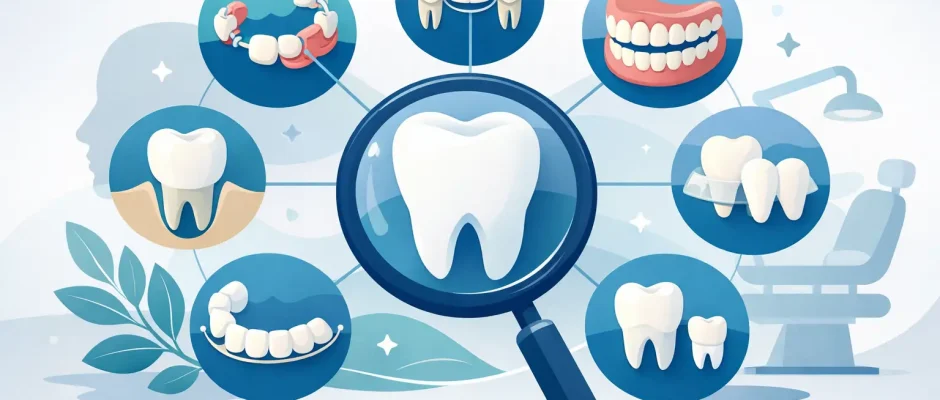
A missing tooth is not always an automatic indication for an implant. Some patients need a quicker temporary solution, some prefer to avoid surgery, and others still have a tooth that can be saved with precise endodontic, periodontal, or microsurgical treatment. The right alternatives to dental implants depend on what is missing, the condition of nearby teeth and bone, bite forces, general health, and your expectations for comfort and appearance.
The key question is not simply, “What is cheaper than an implant?” It is: “Which option will be safe and stable in my specific clinical situation?” A restoration that looks acceptable at first can create problems later if it overloads adjacent teeth, irritates the gums, or allows the bite to change.
Why an Implant May Not Be the First Choice
Dental implants are designed to replace a missing root and support a crown, bridge, or full-arch prosthesis. They are often an excellent long-term solution, particularly when neighboring teeth are healthy and preserving them matters. But implant placement is still a surgical procedure, and not every case should be approached in the same way.
An implant may be postponed when infection must first be controlled, when a patient is in the middle of orthodontic treatment, or when bone volume requires staged regeneration. Smoking, uncontrolled diabetes, active periodontal disease, certain medications, and difficulties maintaining oral hygiene can also affect risk and timing. None of these factors automatically rule out implant treatment, but they may change the protocol.
Sometimes the priority is to preserve the natural tooth. If a damaged tooth has a favorable prognosis after root canal treatment, crown restoration, periodontal therapy, or microsurgery, extraction and replacement may be unnecessarily aggressive. A natural tooth that can be predictably maintained is usually worth saving.
Alternatives to Dental Implants for One Missing Tooth
A Conventional Dental Bridge
A conventional bridge replaces a missing tooth by connecting an artificial tooth to crowns on the teeth beside the gap. It is fixed in place, so it does not need to be removed for cleaning, and it can restore chewing and appearance relatively quickly.
The trade-off is that the supporting teeth must usually be prepared for crowns. If those teeth already have large fillings, crowns, fractures, or need protection, a bridge can be a practical and reasonable choice. If they are completely healthy, removing enamel to support a bridge deserves careful consideration.
A bridge also requires meticulous cleaning beneath the artificial tooth. Without it, plaque can accumulate around the supporting teeth and increase the risk of decay or gum inflammation. The longevity of a bridge depends as much on hygiene and bite management as on the laboratory work.
A Resin-Bonded Bridge
A resin-bonded bridge, sometimes called a Maryland bridge, is attached to the back of one or both neighboring teeth with thin bonding wings. It generally requires little or no drilling and can be an elegant option for a front tooth, especially in younger patients or when a temporary solution is needed before definitive treatment.
This option has limits. It is less suitable for areas with heavy chewing forces, such as the back of the mouth, and it may occasionally loosen. A resin-bonded bridge is often best when the bite is favorable, neighboring teeth are intact, and the patient understands that rebonding may be necessary over time.
A Removable Partial Denture
A removable partial denture replaces one or several missing teeth and can often be made without surgery or significant preparation of adjacent teeth. It may be acrylic, metal-based, or flexible, depending on the design and clinical need.
For patients missing multiple teeth, a well-designed partial denture can restore function at a lower initial cost than several implants. It can also be used as an interim prosthesis while gums heal after extractions or while bone grafting matures.
Comfort and stability vary considerably. Some partial dentures use clasps that may be visible or place pressure on supporting teeth. They must be removed for cleaning, and they can feel bulky at first. Over time, changes in the jawbone and gums may require adjustment or replacement.
When the Best Option Is to Save the Tooth
The most overlooked alternative to an implant is not a prosthesis. It is successful treatment of the tooth already present.
A tooth with deep decay, a large old filling, prior root canal treatment, or an infection near the root tip may still be treatable. Depending on the diagnosis, the plan may include root canal treatment or retreatment, a crown, treatment of a crack, periodontal therapy, or an apical microsurgery procedure such as root-end resection.
The decision should be based on prognosis, not optimism alone. A tooth with a vertical root fracture, severely compromised support, or decay extending too far below the gumline may not be predictable to retain. On the other hand, extracting a tooth that could have served reliably for years may lead to more extensive treatment than necessary.
A three-dimensional scan, focused clinical examination, periodontal measurements, and assessment of bite forces help clarify the real condition. This is particularly valuable when the choice between tooth preservation and extraction is not obvious.
Options When Several Teeth Are Missing
When multiple teeth are absent, the treatment goal changes from replacing one space to restoring stable chewing, speech, facial support, and a balanced bite.
A fixed bridge may replace several missing teeth when strong supporting teeth are available. However, a long bridge places substantial force on those supports. In some cases, this is appropriate; in others, it creates an unfavorable lever effect and a higher risk of technical or biological complications.
A removable partial denture can be useful when many teeth are missing, when surgery is not desired, or when medical or financial circumstances make staged treatment more appropriate. It is not inherently a “second-rate” option. Its success depends on design, support from remaining teeth and tissues, regular follow-up, and realistic expectations.
For a full arch with no remaining teeth, a conventional complete denture remains an option. Modern dentures can be esthetic and functional, but lower dentures are often less stable because of tongue and muscle movement and ongoing bone remodeling. Adhesives may improve retention, but they do not stop bone loss or provide the fixed feeling many patients want.
The Difference Between a Temporary and Definitive Solution
Temporary replacement has a legitimate clinical role. After extraction, an immediate removable tooth, temporary bridge, or provisional denture can maintain appearance and help the patient function during healing. It also gives the clinician time to evaluate gum healing, bone contours, and the final esthetic plan.
The problem arises when a temporary device is treated as a definitive solution without maintenance or review. A loose partial denture can rub the gums. A poorly fitting temporary bridge can trap food or stress supporting teeth. A changing bite may cause jaw discomfort or fracture a restoration.
Before choosing any non-implant option, ask whether it is intended for weeks, months, or years. The answer affects materials, cost, maintenance, and the need for future treatment.
How to Compare Your Options Safely
A useful treatment discussion should include more than a price comparison. It should address the condition of adjacent teeth, gum health, bone volume, bite, esthetic demands, hygiene ability, and the likely maintenance over the next several years.
For example, a bridge may have a lower initial cost than an implant but may involve two neighboring teeth and future replacement of several connected crowns. A removable denture may avoid surgery but require periodic relining as the ridge changes. Tooth-saving treatment may be less invasive, yet only makes sense if the long-term prognosis is favorable.
Digital imaging and treatment planning help make these choices more predictable. When an implant remains the best option but bone is limited, guided bone regeneration, sinus lift procedures, PRF protocols, or carefully planned immediate implantation may make treatment possible. The presence of bone deficiency does not mean that a removable denture is the only alternative.
At Implantolog.co.il, complex decisions are approached as a diagnostic process rather than a standard sales pathway. The aim is to identify the most conservative treatment that can still deliver a stable, safe result.
A Decision Should Protect Your Future Options
The best alternative is not always the least expensive, fastest, or most technologically advanced option. It is the option that respects your anatomy, protects healthy teeth where possible, and remains manageable over time.
If you are considering alternatives to dental implants, begin with a careful diagnosis and a clear conversation about prognosis. A calm, individualized plan can prevent rushed treatment now and preserve more choices for the future.


