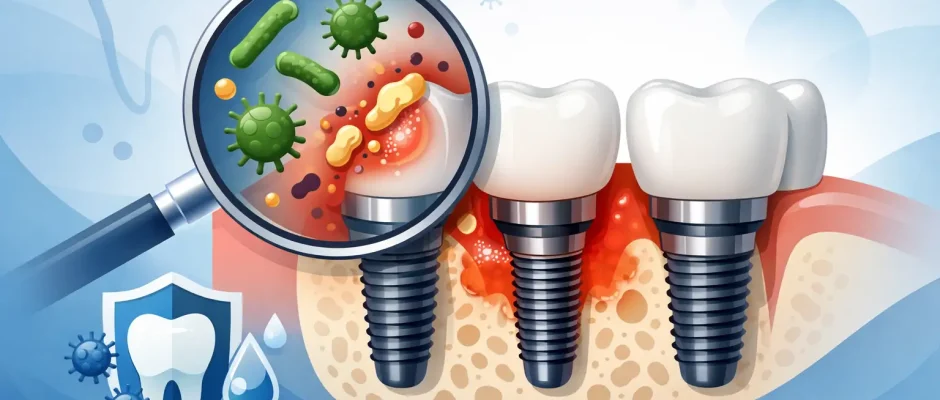
Can Dental Implants Get Infected?
Most patients worry about pain during implant surgery. Clinically, the more important question is often this: can dental implants get infected? Yes, they can – but the picture is more specific than many people assume. An implant itself is made of titanium or another biocompatible material and does not “rot” like a natural tooth. The tissues around it, however, can become inflamed or infected, and if that process is ignored, it can threaten the stability of the implant.
That distinction matters because early inflammation is usually manageable. Advanced infection is more difficult, more expensive, and more likely to require additional surgery. For patients considering implant treatment, understanding the real risks helps replace vague fear with a clear plan.
Can dental implants get infected after placement?
They can, but the timing and cause vary. Some problems appear early, in the healing phase after surgery. Others develop months or even years later, after the implant has already integrated with the bone and is supporting a crown or bridge.
In the early stage, infection may be related to bacterial contamination, poor healing conditions, residual infection from a tooth that was removed, excessive surgical trauma, or uncontrolled systemic factors such as smoking or poorly controlled diabetes. In the later stage, the more common issue is peri-implant disease – inflammation affecting the gum and bone around the implant.
Doctors usually separate these conditions into peri-implant mucositis and peri-implantitis. Mucositis is inflammation limited mainly to the soft tissue. Peri-implantitis means inflammation is accompanied by loss of supporting bone. That difference is critical because mucositis is often reversible, while peri-implantitis can compromise the long-term prognosis of the implant.
What an implant infection actually looks like
Patients often expect a dramatic picture – severe swelling, intense pain, obvious pus. Sometimes that happens, but not always. Implant infections can be subtle, especially in the beginning.
A healthy implant should feel stable and comfortable. The gums around it should not bleed easily during routine brushing or professional examination. Warning signs include redness, swelling, bad taste, bleeding around the implant, tenderness when chewing, and persistent bad breath localized to that area. In more advanced cases, there may be pus, gum recession, deep pockets around the implant, or a feeling that the implant-supported tooth is “different” when biting.
Pain is an unreliable guide. Some patients with significant bone loss report very little discomfort. Others experience sensitivity from surrounding tissues even when the implant itself is stable. This is one reason regular follow-up matters. A radiograph and careful periodontal probing can reveal changes long before the patient recognizes a serious problem.
Why infections happen around implants
The main cause is bacterial biofilm. In simple terms, plaque accumulates on implant surfaces and around the gumline, triggering inflammation. That sounds similar to gum disease around natural teeth, but implants have biological differences that make the situation less forgiving.
Natural teeth are attached to bone and gum through a periodontal ligament. Implants are not. The soft tissue seal around an implant is more vulnerable if prosthetic design, hygiene access, or tissue quality is poor. If plaque is allowed to remain undisturbed, inflammation can spread into the supporting bone more quickly in some cases.
Several factors increase risk. A history of periodontitis is one of the most important. Smoking is another major factor because it impairs blood supply and healing. Poorly controlled diabetes, inadequate oral hygiene, excess cement around a crown, poorly positioned implants, overload from an unfavorable bite, and prosthetic designs that are difficult to clean can all contribute.
There is also a planning component. Not every implant problem is caused by patient behavior after surgery. If an implant is placed in a compromised site without proper management of infection, bone volume, or soft tissue conditions, the long-term risk rises. This is where careful diagnostics, 3D imaging, and precise surgical protocols become more than marketing language – they directly affect prognosis.
Can dental implants get infected years later?
Yes. In fact, some infections appear long after the surgical phase is over. A patient may have had an uneventful placement, a successful crown, and several years of function before signs of peri-implantitis become visible.
This delayed pattern usually reflects maintenance issues rather than a sudden surgical failure. Plaque control may decline gradually. The prosthetic design may make home cleaning difficult. The patient may stop attending maintenance visits. In other cases, the implant remains clean enough, but mechanical overload, clenching, or progressive tissue recession creates conditions that make inflammation more likely.
That is why implant treatment should be viewed as a long-term rehabilitation, not a one-day procedure. Surgery is only one phase. The restoration, the bite, the soft tissue contour, and the maintenance plan all influence whether the result remains stable over many years.
How implant infections are diagnosed
Diagnosis starts with clinical examination, not guesswork. Bleeding on probing, suppuration, increased probing depths, gum changes, discomfort, and radiographic bone loss all help define the problem.
An isolated episode of gum irritation does not always mean peri-implantitis. Sometimes the issue is excess cement, a poorly contoured crown, food trapping, or inflammation in adjacent teeth. Occasionally, what seems like an implant infection is actually a prosthetic complication or bite-related trauma. That is why treatment should not begin with internet advice or mouthwash alone.
A proper evaluation may include comparison with previous radiographs, assessment of oral hygiene technique, and review of systemic risk factors. In advanced cases, it is also important to determine whether the implant is still mechanically stable and whether the bone loss pattern is treatable.
How infected dental implants are treated
Treatment depends on stage. Early mucositis is often managed with professional debridement, improved home hygiene, antiseptic support when appropriate, and correction of local contributing factors. If the prosthetic design traps plaque, it may need to be modified or temporarily removed so the area can be cleaned properly.
Peri-implantitis is more complex. Non-surgical treatment alone may help reduce inflammation, but it is often not enough once bone loss is established. In many cases, surgical access is needed to decontaminate the implant surface, remove inflamed tissue, and reshape or regenerate the bone depending on the defect morphology.
This is where the answer becomes very individual. Some defects respond better to regenerative procedures, while others are treated with resective approaches. If the implant position is poor or the bone loss is severe and circumferential, saving the implant may not be the best option. Removal and replacement after site reconstruction can sometimes offer a more predictable result than repeated rescue attempts.
Antibiotics may be prescribed in selected cases, but they are not a standalone solution. If plaque-retentive surfaces, excess cement, poor access for cleaning, or unstable prosthetics remain in place, infection tends to return. Good treatment addresses the cause, not only the bacteria.
Can an infected implant be saved?
Often yes, but not always. The outcome depends on how early the problem is detected, how much bone has been lost, whether the implant is still stable, and whether the local anatomy allows effective treatment.
A small area of soft tissue inflammation around an otherwise healthy implant has a much better prognosis than an implant with advanced bone loss, mobility, and recurrent suppuration. Patients sometimes wait too long because the implant “doesn’t hurt much.” Unfortunately, delayed treatment narrows the available options.
The good news is that many failing situations are preventable, and many early-stage problems are treatable. The realistic goal is not to promise that every infected implant can be saved. The goal is to identify the issue early enough to preserve function whenever possible and avoid more extensive reconstruction.
How to reduce the risk before and after surgery
Prevention starts before the implant is placed. Active gum disease should be treated first. Teeth with questionable prognosis should be evaluated honestly. Bone and soft tissue conditions should be assessed with proper imaging, and implant position should be planned prosthetically, not just surgically. In more demanding cases, guided placement and microsurgical protocols can improve precision and reduce unnecessary trauma.
After placement, meticulous home care matters more than many patients expect. The right technique depends on the type of restoration. A single implant requires a different cleaning strategy than a bridge or a full-arch prosthesis. Patients should know exactly how to clean under and around their restoration, not simply be told to “brush better.”
Maintenance visits are part of treatment, not an optional extra. Professional monitoring helps detect bleeding, pocketing, cement remnants, prosthetic wear, and bite changes early. For patients with a history of periodontitis, smoking, or complex implant rehabilitation, the recall schedule may need to be more frequent.
When to seek help without waiting
If you notice bleeding around an implant, swelling, a bad taste, pus, new gum recession, or discomfort during chewing, do not wait for it to become painful. The earlier the evaluation, the more conservative the treatment usually is.
For patients who want implant treatment done with a strong focus on planning, tissue management, and long-term stability, that careful approach is exactly what reduces the chance of these complications in the first place. At Implantolog in Tel Aviv, this means not only placing implants, but building treatment around diagnostics, surgical precision, and maintenance logic.
A dental implant can serve for many years, but it should never be treated as maintenance-free. The most reliable results come when good surgery, well-designed restorations, and consistent follow-up work together from the start.


