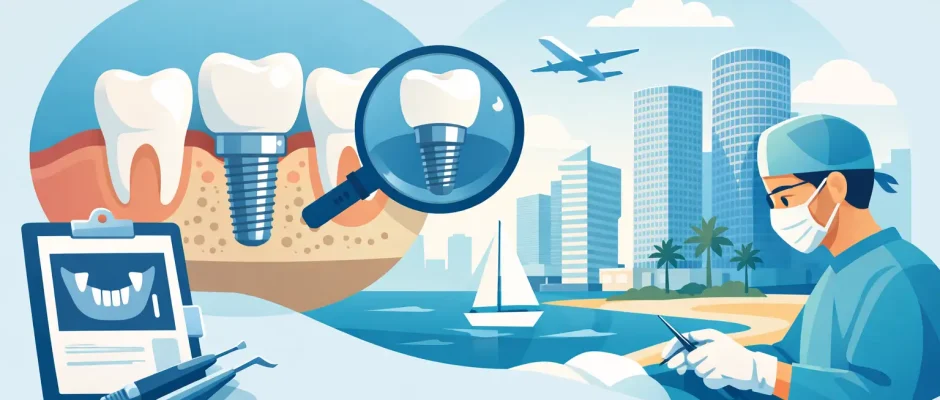
Implant Surgery in Tel Aviv for Complex Cases
A missing tooth changes more than a smile. It can affect chewing, speech, the position of neighboring teeth, and confidence during everyday conversations. For patients considering implant surgery in Tel Aviv, the main question is rarely just whether an implant can be placed. It is whether treatment can be planned safely, comfortably, and with a result that remains stable over time.
A dental implant is not a prefabricated replacement that works the same way for every patient. It is a titanium fixture placed in the jawbone to support a crown, bridge, or full-arch restoration. Its long-term success depends on a detailed assessment of bone, gums, bite forces, general health, and the final prosthetic plan. The surgical procedure is one important stage, but predictable treatment begins well before the day of surgery.
What a Proper Implant Consultation Should Establish
The consultation should turn uncertainty into a clear clinical plan. It starts with your medical and dental history: medications, smoking or vaping, diabetes control, past periodontal disease, teeth grinding, prior extractions, and any previous implant treatment. These factors do not automatically prevent implant placement, but they can affect timing, healing, and the choice of surgical protocol.
Clinical examination is followed by imaging, often including a 3D cone beam CT scan. A standard X-ray can show the general area, while three-dimensional imaging helps assess bone width and height, the position of the maxillary sinus in the upper jaw, and the location of important nerves in the lower jaw. This information is especially valuable when bone is limited or when an implant must be placed in the esthetic zone.
The final tooth should guide the surgery, not the other way around. Before placing an implant, the surgeon and restorative dentist need to determine where the future crown or bridge should emerge, how it will meet the opposing teeth, and how the gumline should look. Placing an implant where bone happens to be available can create a compromise in function or appearance. Digital planning helps avoid that compromise whenever possible.
Implant Surgery in Tel Aviv: From Digital Plan to Placement
Digital planning combines clinical examination, 3D imaging, and a model of the teeth or planned restoration. In selected cases, this allows fabrication of a surgical guide. The guide transfers the virtual plan to the mouth and helps control implant position, angle, and depth.
A surgical guide is not necessary in every case, and it is not a substitute for surgical judgment. However, it can be particularly useful for multiple implants, full-arch treatment, limited bone volume, and situations where an implant must be positioned precisely for a future crown. Its value is in improving planning accuracy and making the procedure more predictable.
Implant placement is generally performed under local anesthesia. Patients should not feel pain during the surgery, though they may notice pressure or vibration. For patients with significant dental anxiety, additional sedation options may be discussed depending on the clinical setting and medical history. A calm treatment environment, clear explanations, and adequate anesthesia are not minor details. They are part of safe surgical care.
The surgeon prepares the implant site according to the bone quality and the planned implant size, then places the implant with controlled stability. In some cases, a healing cap is visible above the gum. In others, the implant is covered by the gum during the initial healing period. Sutures may be used, particularly when extraction, grafting, or soft-tissue work is performed at the same appointment.
Can an Implant Be Placed Immediately After Extraction?
Sometimes, yes. Immediate implant placement means placing an implant in the same visit as tooth extraction. It can reduce the number of surgical appointments and may help preserve the shape of bone and gum tissue. It is often considered for a front tooth that cannot be saved, provided the surrounding tissues are favorable and infection is controlled.
But immediate placement is not automatically the best option. If there is extensive inflammation, a large bone defect, insufficient stability, or an unfavorable gum condition, a staged approach may be safer. This may involve careful extraction, socket preservation with grafting material, a healing period, and later implant placement.
The distinction matters because a faster timeline is not always a better timeline. The correct protocol is the one that protects the final result, not simply the one that finishes surgery sooner.
When Bone Grafting or a Sinus Lift Is Needed
Bone loss after tooth loss is common. The jawbone naturally remodels when it no longer receives chewing forces through a tooth root. Periodontal disease, trauma, infection, long-standing dentures, and difficult extractions can further reduce bone volume.
When bone is insufficient for a properly sized and positioned implant, bone augmentation may be recommended. Guided bone regeneration uses grafting material and, when indicated, a barrier membrane to support new bone formation in a protected space. In some clinical situations, platelet-rich fibrin, or PRF, may be used as an adjunct to support soft-tissue healing and surgical wound management.
In the upper back jaw, the maxillary sinus can limit available bone height. A sinus lift creates space below the sinus membrane so bone graft material can be placed. Depending on the amount of existing bone, an implant may be placed during the same procedure or after a period of healing.
These procedures sound complex because they are technically demanding. Yet complexity should not be presented as a reason for alarm. With sound diagnostics, careful technique, and appropriate healing time, grafting can make implant treatment possible where a standard approach would be unreliable.
Healing, Temporary Teeth, and the Final Restoration
Implants need time to integrate with bone, a process called osseointegration. Healing time varies according to implant stability, bone quality, whether grafting was performed, and the forces expected on the area. Some patients can receive a temporary tooth immediately, particularly in visible areas. Others should avoid loading the implant until integration is confirmed.
An immediate temporary is not the same as an immediate permanent crown. A temporary restoration may be designed to avoid heavy biting forces while protecting appearance and supporting the contour of the gums. The permanent crown is fabricated after healing and after the implant position, bite, and soft tissues are ready for the final result.
For patients missing many or all teeth, full-arch protocols such as All-on-4 may offer a fixed restoration supported by a limited number of implants. Whether this approach is suitable depends on bone anatomy, oral hygiene, bite, medical factors, and the quality of the planned final prosthesis. It should be evaluated as a complete rehabilitation plan, not as a marketing label.
Recovery: What Patients Usually Experience
Most patients manage post-operative discomfort with medication prescribed or recommended by their clinician. Mild swelling, tenderness, and limited mouth opening are possible, especially after bone grafting, sinus surgery, or multiple implant placement. Swelling often reaches its peak within the first two to three days and then improves.
For the first days after surgery, patients are generally advised to choose softer foods, avoid smoking, maintain careful oral hygiene as instructed, and avoid disturbing the surgical site. Physical exertion may need to be limited briefly. Follow-up visits are essential for checking healing, removing sutures if needed, and identifying any issue before it becomes more serious.
Contact the clinic promptly if pain becomes stronger after initially improving, swelling continues to increase, fever develops, bleeding does not stop, or a temporary restoration feels loose. Early communication is part of responsible post-operative care.
Choosing a Surgeon for a Complex Implant Case
Experience matters most when the case is not straightforward: a failed tooth near the sinus, a narrow ridge in the front of the mouth, significant periodontal bone loss, a failed implant, or a need for simultaneous extraction and grafting. In these situations, the plan should account for both surgery and the future restoration from the beginning.
Ask how diagnosis is performed, whether 3D planning is used when indicated, who coordinates the restorative phase, and what alternatives exist if immediate placement is not ideal. You should also receive a clear explanation of included stages: anesthesia, implant placement, grafting materials when needed, surgical guides, PRF, sutures, and post-operative visits. A transparent plan makes it easier to understand both the medical reasoning and the expected costs.
At Implantolog.co.il, the focus is on combining digital diagnostics and microsurgical principles with an individualized treatment plan. That means respecting proven protocols while adapting them to the anatomy, tissue condition, and goals of the person in the chair.
A successful implant should feel like an ordinary part of life: stable when you eat, natural when you speak, and no longer something you have to think about. The path to that result begins with a careful evaluation and a plan built for your specific case.


