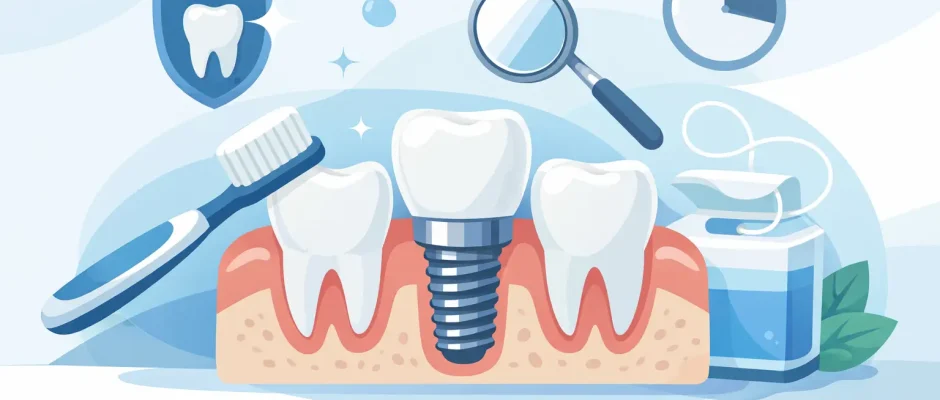
How to Maintain Dental Implants for the Long Term
A dental implant is designed to function like a natural tooth root, but it does not maintain itself. Knowing how to maintain dental implants protects the bone and gum tissue that support them, helps preserve the final crown or bridge, and gives a small concern the best chance of being treated before it becomes a complex problem.
Implants cannot develop cavities, yet the tissues around them can become inflamed or infected. Long-term success depends on precise home care, regular professional monitoring, and attention to changes in comfort, appearance, or bite. This is particularly relevant after treatment involving bone grafting, sinus lift surgery, immediate implantation, or a full-arch restoration, where preserving stable tissue is part of protecting the entire result.
How to Maintain Dental Implants Every Day
Daily hygiene should be consistent rather than aggressive. Brush twice a day with a soft manual or electric toothbrush, taking time to clean the gumline where the implant crown meets the gum. Gentle pressure is enough. Scrubbing hard does not make an implant cleaner and can irritate delicate gum tissue or contribute to recession over time.
A low-abrasive toothpaste is usually a sensible choice. Highly abrasive whitening products may scratch certain restoration surfaces, depending on the material used for the crown or bridge. A dentist or hygienist can recommend products appropriate for your specific restoration, especially if you have a ceramic crown, zirconia bridge, or implant-supported full arch.
Cleaning between teeth is not optional. A toothbrush cannot adequately clean contact areas or the sides of an implant crown. The right method depends on the shape of the restoration and the available space. Dental floss, implant-safe floss, interdental brushes, or a water flosser may be recommended. An interdental brush should fit with light resistance, not force. If it bends, catches, or feels too tight, a smaller size may be necessary.
For a single implant crown, flossing is often similar to flossing around a natural tooth. With a bridge, several connected teeth, or an All-on-4 restoration, cleaning under the bridge requires more deliberate technique. Threading floss or using a water flosser can help remove plaque and food debris from areas that are difficult to reach. Your clinical team should demonstrate the method rather than simply advise you to “clean better.” Small differences in design change the best hygiene routine.
The Gum Around an Implant Needs Attention
The implant itself is titanium or another biocompatible material. It does not feel pain in the same way as a natural tooth because it has no nerve inside it. This can be misleading. Inflammation may develop around an implant before there is significant discomfort.
The earliest stage is often called peri-implant mucositis. The gum may look red, bleed during brushing, or feel tender. At this stage, inflammation is commonly reversible when plaque is removed effectively and professional cleaning is performed. If inflammation progresses and begins affecting the supporting bone, it is called peri-implantitis. Treatment can become more involved and may require decontamination of the implant surface, surgical access, regenerative procedures, or changes to the restoration design.
Bleeding around an implant should not be accepted as normal simply because the implant is not a natural tooth. It is a reason to improve cleaning and arrange an examination, particularly if it continues for more than several days.
Professional Maintenance Is Part of Implant Treatment
The surgical procedure and final crown are not the last steps of implant care. Maintenance visits allow the dentist to assess the tissues that cannot be evaluated accurately at home. During these appointments, the team may check the gum contour, plaque accumulation, bleeding, probing measurements when appropriate, bite contacts, crown stability, and radiographic bone levels.
The recall interval is individual. Many patients benefit from professional maintenance every three to six months, while others with excellent hygiene and low periodontal risk may require less frequent visits. A history of gum disease, smoking, diabetes, multiple implants, limited dexterity, or a complex full-arch restoration usually justifies closer monitoring.
Professional cleaning around implants requires suitable instruments and techniques. The goal is to remove deposits without damaging the restoration or implant surface. If you receive routine hygiene care from another provider, make sure they know you have implants and where they are located.
Radiographs are also used selectively to compare bone levels over time. A single image is less informative than a sequence of properly taken images. Stable bone around an implant is one of the most meaningful indicators of long-term health.
Protect the Implant From Excessive Force
An implant is firmly anchored in bone, but it does not have the same shock-absorbing periodontal ligament as a natural tooth. Excessive bite force can affect the crown, connecting screw, restoration material, and surrounding bone.
If you clench or grind your teeth, a custom night guard may be recommended. Signs include waking with jaw tension, worn natural teeth, frequent headaches, chipped ceramics, or repeated loosening of a restoration. A night guard does not treat the cause of grinding in every case, but it can reduce damaging force on implants and natural teeth.
Avoid using implant crowns to open packaging, cut fishing line, crack nuts, or bite hard objects. These habits can fracture ceramic or loosen components. Chewing a normal diet is expected once healing is complete, but forceful habits are different from ordinary function.
Your bite can change over time due to tooth movement, wear, loss of another tooth, or changes in a bridge. If an implant crown begins to feel “high,” hits first, or creates pressure when you close your teeth, schedule an assessment. Adjusting the bite early can prevent repeated overload.
Lifestyle and Medical Factors Matter
Smoking and vaping can compromise blood supply and increase the risk of inflammation and impaired healing around implants. The risk is particularly relevant after implant placement, bone grafting, or soft-tissue grafting, but it remains important throughout the life of the implant. Reducing or stopping nicotine use is a meaningful investment in the treatment result.
Diabetes does not automatically prevent implant treatment, but blood sugar that is poorly controlled can make healing and infection control more difficult. Regular medical follow-up, good oral hygiene, and coordinated care are especially valuable for patients with diabetes.
Dry mouth can also increase plaque accumulation and discomfort. It may be related to medications, dehydration, certain medical conditions, or mouth breathing. If dry mouth is persistent, discuss it with your dentist and physician. The solution may involve hydration, saliva-supporting products, medication review, and a more frequent maintenance schedule.
When to Contact Your Implant Dentist
Do not wait for severe pain. Contact your dental team if you notice any of the following changes:
- bleeding, swelling, pus, or a persistent bad taste near the implant
- a crown, bridge, or full-arch restoration that feels loose or clicks
- pain during chewing, a new pressure point, or a bite that feels different
- gum recession that exposes part of the implant component
- a change in speech, chewing ability, or the way food collects around the restoration
A loose crown is not always a failed implant. Sometimes the issue is a loose screw or a damaged restoration component that can be addressed promptly. However, trying to tighten, glue, or adjust a restoration at home can create more damage. Keep the area clean, avoid chewing on it, and arrange a clinical visit.
The First Months After Implant Treatment
The maintenance routine changes during healing. Immediately after surgery, follow the postoperative instructions provided for your case. These may include prescribed medication, gentle antiseptic rinsing, a soft diet, restricted brushing near the surgical site for a defined period, and scheduled examinations. Do not substitute general internet advice for the protocol given by your surgeon.
After immediate implant placement or bone augmentation, protecting the surgical area is especially important. The visible appearance of the gum can change as swelling resolves and tissue matures. This does not necessarily indicate a problem, but it should be assessed during planned follow-up visits.
Once the final restoration is placed, ask for a practical hygiene demonstration. You should leave knowing exactly where to brush, how to clean under and between the restoration, which tools fit your anatomy, and how often your maintenance visits should occur.
A well-planned implant can serve for many years, but longevity is not guaranteed by the procedure alone. Careful daily cleaning and timely professional review are the quiet, repeatable habits that preserve the surgical work, the supporting bone, and your confidence when you smile and chew.


